
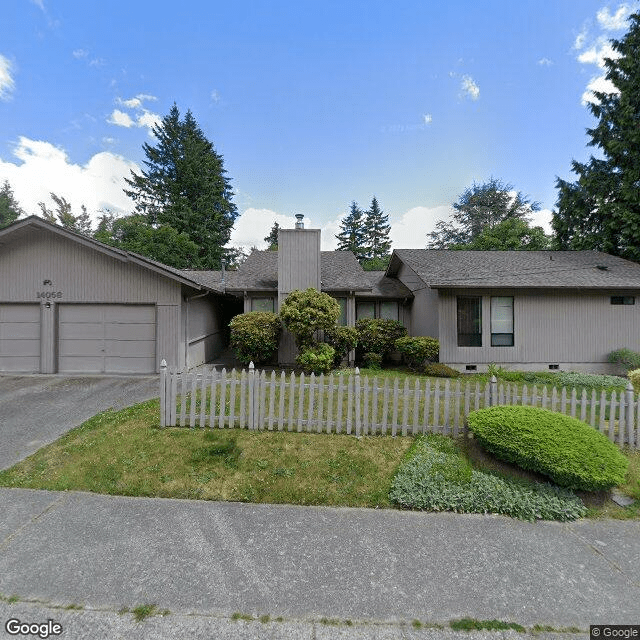
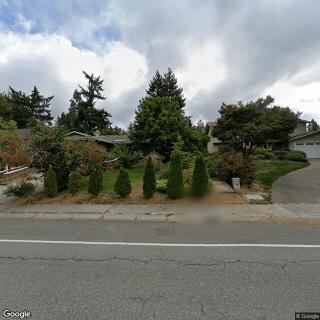
14056 80th Ave NE, Kirkland, WA 98011
To contact a resident: (206) 931-3072
For more information about senior living options: (866) 208-4318
Amazing Star AFH Costs & Pricing
Amazing Star AFH presents a compelling value proposition for residents seeking assisted living options in the region. With monthly costs for a semi-private room at $3,500, it is notably more affordable than the average rates in Snohomish County, which stand at $4,320, and the broader state average of $4,267. Similarly, both private rooms and one-bedroom accommodations are offered at $4,000 each - again undercutting county averages of $4,834 and $5,080 respectively. This pricing structure not only highlights Amazing Star AFH as a competitive choice within the local market but also underscores its commitment to providing quality care without compromising on affordability.
| Floor plans | Amazing Star AFH | Snohomish County | Washington |
|---|---|---|---|
| Semi-Private | $3,500 | $4,320 | $4,272 |
| Private | $4,000 | $4,834 | $4,774 |
| 1 Bedroom | $4,000 | $5,080 | $4,634 |
Memory care communities with a similar price nearby
-
About the same
Dignity Life
$3,500 / month7.8 miles away -
from -$125 / mo
Evergreen Manor Senior Care Inc
$3,375 to $7,500 / month3.7 miles away -
from -$500 / mo
Caring Adult Family Home #1
$3,000 / month3.0 miles away -
from +$500 / mo

Riverton Home Care
$4,000 to $5,000 / month17.6 miles away -
from -$500 / mo
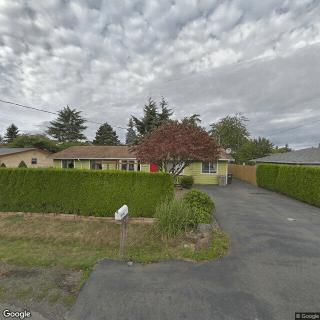
Home Care in Kent Inc.
$3,000 to $3,500 / month23.5 miles away
Overall Review of Amazing Star AFH
Pros
 Elilta Keleta, owner of Amazing Adult Family Home, took on the husband’s care with exceptional compassion and professionalism.
- She handled all transition details, set him up comfortably, and coordinated with hospice with efficiency.
- Her care, efficiency, and empathy extended to both the husband and his family.
- Nosi and Gail are lovely, caring, and professional members of the staff.
- The reviewer would gladly recommend Amazing Adult Family Home to anyone in need of such care.
Review
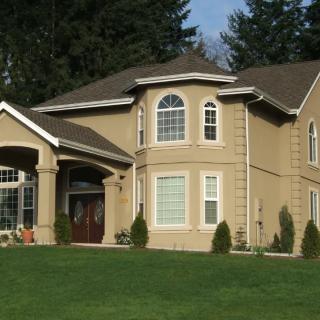
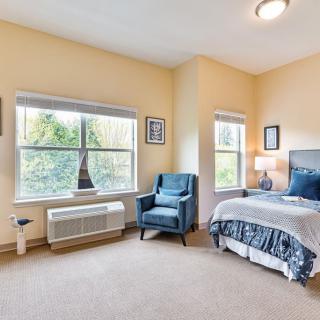
Amazing Star AFH in Kirkland is best suited for families seeking an intimate, hands-on adult family home where a loved one with significant health needs can transition from hospital care to ongoing support with minimal friction. It shines when the decision-maker values direct access to the owner-operator, rapid problem-solving, and a small, empathetic team that treats care as a relationship rather than a checklist. In essence, this community is ideal for someone who benefits from highly personalized attention, hospice coordination handled in-house, and a home-like atmosphere during a vulnerable health phase.
Those evaluating alternatives should consider options with greater medical infrastructure, broader staffing coverage, or specialized programs. If the priority is 24/7 medical oversight, expansive amenities, or a campus with multiple levels of care and clearly delineated transition pathways, a larger assisted living or skilled nursing facility may be a better match. For families seeking robust clinical resources, more extensive therapy services, or dementia-specific programming, exploring bigger settings will likely yield clearer alignment with those expectations.
The strongest pros center on leadership and relational care. Owner Elilta Keleta takes on the health transition with a calm, proactive stance, handling setup, logistics, and hospice coordination in a way that minimizes stress for families. The care is delivered with evident empathy, and staff members such as Nosi and Gail are described as lovely, caring, and professional. The operational efficiency around moving from hospital to home, minus the bureaucratic tangles, is a meaningful advantage. These capabilities mitigate common AFH gaps in medical continuity and can make the difference between a smooth transition and ongoing caregiver churn.
Yet, a candid look acknowledges typical limits of a small home setting. Smaller teams can mean less continuous medical oversight, fewer on-site clinical resources, and potential gaps during off-hours or emergencies. For loved ones requiring complex medical management, intensive rehabilitation, or specialized memory-care programming, this environment may not meet every need. Families should validate the depth of nursing presence, the reliability of round-the-clock coordination with hospice, and the contingency plans in place for emergencies to ensure readiness beyond the owner’s immediate reach.
Despite these caveats, the narrative emphasizes trust built through direct leadership access and a proven track record of graceful transitions. The hands-on style translates into quicker adjustments to changing health status, clearer communication channels, and a tighter collaboration with hospice teams, attributes that translate into real peace of mind for anxious families. The positive testimony about Nosi and Gail reinforces that day-to-day experiences, responsiveness, warmth, and professional conduct, serve as a crucial safeguard during a vulnerable period and can significantly ease the caregiving burden.
Bottom line: for Kirkland families facing hospital discharge or a hospice-anchored care plan, Amazing Star AFH offers a compelling fit if the priority is intimate, responsive, person-centered care delivered by a dedicated owner and a small, loyal team. The strongest advantages, swift transition management, empathetic staff, and coordinated hospice support, often offset the inherent limits of a smaller home setting. If those factors align with the loved one’s needs and the family’s expectations, a visit is strongly advised. If instead the need is for broader medical depth, a wider array of therapies, or dementia-specific programming, it remains prudent to explore alternatives that match those requirements more closely.
 Board and Care Home
 Memory Care
 Activities off-site
 Bath tubs
 Beautician on-site
 Devotional services off-site
 Indoor common areas
 Outdoor common areas
 Private
 Respite or short term stays offered
 Wheelchair accessible showers
 Seattle-Tacoma International (20 miles away)
 Diabetic care
 High acuity care
 Incontinence care
 Medication management
 Meals provided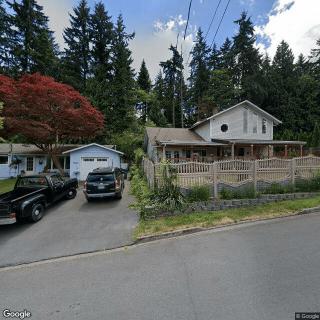
 22 Remarkable Caregiver Support Groups Available Online and In-Person
 Understanding Medicaid Coverage for Assisted Living: A Comprehensive Guide
 How and When Medicaid May Cover Assisted Living Costs