
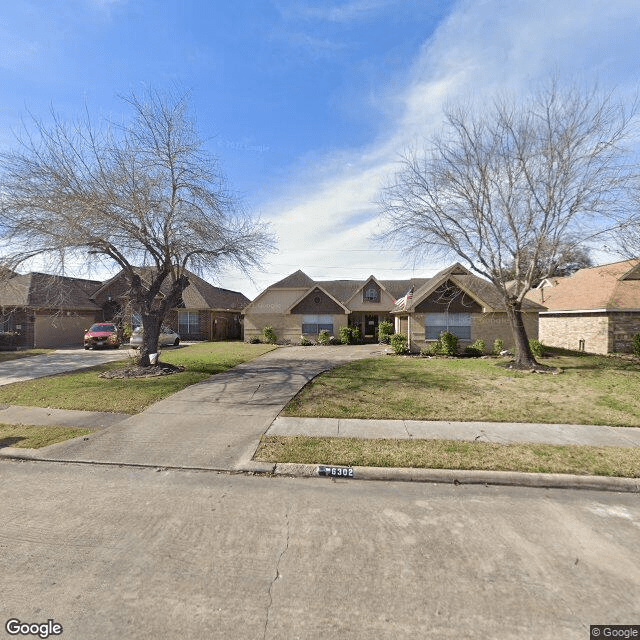
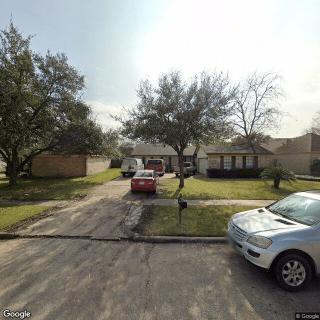
6302 Vista Camino Dr, Houston, TX 77083
To contact a resident: (281) 762-3381
For more information about senior living options: (866) 208-4318
Faith Assisted Living #3 Costs & Pricing
Faith Assisted Living #3 offers competitive pricing for its residents, particularly when compared to the average costs in Harris County and throughout Texas. For a semi-private room, Faith Assisted Living charges $3,000 per month, notably lower than the county's average of $3,518 and the state rate of $3,680. Those opting for a studio will find that Faith Assisted Living's rate of $3,500 is more affordable than both the county's average of $4,021 and the state's average of $3,758. Similarly, in terms of private rooms, Faith maintains a cost-effective approach with its monthly fee of $3,500 compared to Harris County's higher rate of $3,784 and Texas' average at $4,096. Overall, Faith Assisted Living #3 positions itself as an accessible choice for quality care within the local landscape.
| Floor plans | Faith Assisted Living #3 | Harris County | Texas |
|---|---|---|---|
| Semi-Private | $3,000 | $3,518 | $3,680 |
| Studio | $3,500 | $4,021 | $3,758 |
| Private | $3,500 | $3,784 | $4,096 |
Memory care communities with a similar price nearby
-
from +$500 / mo

San Antonio - A-Z Senior Care 2
$3,500 / month11.0 miles away -
from +$450 / mo

Cypress Assisted Living- Drake Prairie Lane
$3,450 / month16.8 miles away -
from +$500 / mo
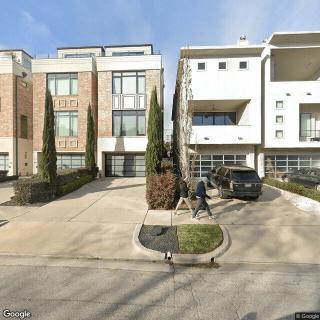
Houston - Arad Senior Care 1
$3,500 / month15.3 miles away -
from -$500 / mo
Northgate Assisted Living
$2,500 to $3,000 / month22.6 miles away -
from -$200 / mo

Wenzy’s Place Boarding and Personal Care Home
$2,800 / month16.1 miles away
Overall Review of Faith Assisted Living #3
Pros
 They highly recommend Faith Personal Home Care for its quality caregivers and attentive management staff, calling them top of the class.
- Debo and the Faith team are praised for compassion, patience, and the exceptional care they provide to residents.
- The service to residents is described as exceptional, with attentive, reliable care and peace of mind for families.
- The facility is noted as clean and comfortable, with professional and polite staff.
- Residents report liking the food and forming friendships with their roommates.
- The home provides 24-hour supervision and coordinates care with geriatric physicians, visiting nurses, social workers, and psychiatric nurses; the staff are described as wonderful.
- Debo personally arranges preferred meals for residents when desired, such as Whataburger.
Cons
 The home is toxic and abusive, with bruising and unexplained injuries that prompted an Attorney General investigation.
- The staff are uncaring, disregard residents' requests, and treat them as a burden.
- The facility is dirty, chaotic, undertrained, and unprofessional, with the health department intervening.
- Residents are reportedly locked in chairs waiting to die, with little to no activities or meaningful interaction.
- The place is filthy and poorly maintained, with horrible cooking and questionable management by the owner who runs multiple homes.
- Caregivers are underpaid and overworked, leading to substandard care and long shifts.
- The owner operates several homes, raising concerns about profit motives and quality control.
- There is minimal social engagement or human connection; residents mainly have a TV for company.
- The overall environment is unsafe and should be shut down.
Review
Faith Assisted Living #3 in Houston presents a narrow appeal for a specific kind of family: those seeking a small, home‑like setting with highly engaged ownership and a willingness to be an active, vigilant advocate for a loved one. When the administrator and a core nursing team are present, residents can experience attentive hands‑on care and a direct line to leadership. For families who want to be intimately involved, who value timely updates, and who accept a live‑in owner dynamic as part of daily operations, the setting can feel personal in a way larger facilities rarely deliver. The space can be clean and reasonably comfortable, and some residents have thrived under the care of particular nurses and caregivers who go the extra mile.
But the favorable picture comes with a steep caveat. The community’s history, as reflected in the most damaging reviews and an Attorney General inquiry, raises serious questions about safety, staffing, and day‑to‑day governance. Multiple reviewers describe physical and verbal abuse, neglect of ordinary resident needs, and a culture that sounds chaotic and under‑trained. The same facility that occasionally earns praise for compassion and responsiveness also carries allegations of overwork, underpayment, and management lapses that undermine consistent quality. In short, safety and reliability are the hinge points that determine whether this is a viable match.
The strongest pros, responsive, personable caregivers and a management team that can be highly accessible, do not consistently neutralize the most troubling cons. When staff are praised, it is usually for warmth, prompt attention to requests, and a capacity to coordinate with outside professionals (physicians, visiting nurses, social workers). Yet those positive threads do not always hold under scrutiny, and the negative threads, claims of abuse, untrained personnel, and under‑resourced operations, tend to dominate the overall impression in many reviews. For families facing dementia or otherwise vulnerable residents, those gaps become decisive risk factors that overshadow individual moments of good care.
This is not a facility to accept passively. Families with residents who require predictable routines, robust social programming, and rigorous oversight will want to consider alternatives. If safety, consistent staffing, and transparent operations are non‑negotiable, look toward larger, well‑established communities with clear licensing histories, stronger staff ratios, and verifiable incident records. For memory care or hospice‑level needs, seek facilities with specialized programs, consistent frontline staffing, and formal quality improvement processes. The reality here is that the most compelling in‑house strengths can be undermined by the broader concerns raised by other families and regulatory scrutiny.
For anyone still evaluating Faith, the focus should be on concrete, actionable assurances before move‑in. Demand current, in‑person discussions with the administrator and the nursing lead; request current staff‑to‑resident ratios for each shift; review the latest licensing and inspection reports; and ask for recent incident logs and care plans tailored to the resident’s needs. Visit unannounced, speak with several residents and families, and insist on a trial period with a clearly defined safety net and rapid escalation path. Have a plan for regular external oversight, consulting geriatric specialists, home health services, and a trusted family caregiver, so accountability is never left to chance.
The bottom line is practical and firm: Faith Assisted Living #3 can deliver individualized attention and a degree of homelike comfort, but the case for it rests on managing profound safety and governance risks. For many families, the potential for harm, inconsistent staffing, and reports of neglect render alternatives more prudent unless rigorous oversight and a proven track record are in place. If pursuing this community, enter with a concrete oversight plan, strict care protocols, and an exit strategy that preserves options for relocation at the first sign of trouble. For families prioritizing safety, transparency, and sustained quality of life, directing attention toward better‑vetted options will produce a more reliable path to peace of mind.
 Board and Care Home
 Memory Care
 Activities off-site
 Bath tubs
 Beautician on-site
 Indoor common areas
 Outdoor common areas
 Private
 Respite or short term stays offered
 Wheelchair accessible showers
 William P X (23 miles away)
 Ambulatory care
 Diabetic care
 High acuity care
 Kosher



 How to Communicate with a Loved One Living with Dementia: 10 Supportive Strategies
 Comprehensive Guide to VA Nursing Homes: A Crucial Long-Term Care Resource for Veterans
 Estimating the Expenses of At-Home Dementia Care: A Detailed Exploration