

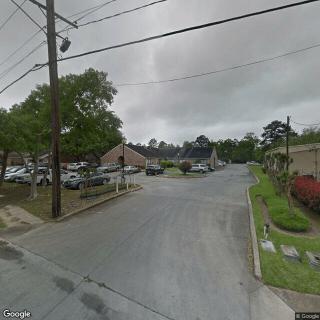
4195 Milam Street, Beaumont, TX 77707
For more information about senior living options: (866) 208-4318
Overall Review of Php The Oaks At Beaumont
Pros
 The staff take good care and seem to know what they are doing in Alzheimer's and memory care.
- They do a good job with Alzheimer's and memory care.
- She is able to go around and interact with the other residents.
- She is very happy there.
Review
The Oaks at Beaumont is best suited for families seeking a memory-care focused community where Alzheimer's care is the central promise and daily life emphasizes engagement. In Beaumont, TX, this facility presents as a purpose-built option for residents who require structured dementia support and who benefit from activities and interactions tailored to memory-care needs. The strongest signal from the available feedback is that staff members know what they are doing and that residents can move about, socialize, and appear content in a caring setting. For families prioritizing a calm, caregiving-oriented environment with a clear focus on memory care, this community aligns with those goals.
Those who should consider alternatives are those whose loved ones require broader levels of care beyond memory support, or whose decision hinges on specifics like cost transparency, access to medical oversight, or a wider range of on-site services. If independent living, assisted living without a memory emphasis, or larger campuses with more diverse activity menus and financing options are important, other communities may better fit. Similarly, if long-term certainty about staffing ratios, safety features, or nuanced dementia programming matters, it is prudent to compare options before committing.
The key positives here, skillful care, purposeful engagement, and observable happiness in residents, deliver meaningful value for memory-care objectives. When staff demonstrate knowledge and confidence in dementia routines, families gain reassurance that their loved one will be supervised, guided through daily tasks, and kept socially connected. The ability for residents to circulate, interact with peers, and enjoy companionship helps counteract agitation and isolation that often accompany memory loss. Those advantages do not merely comfort family members; they map directly to improved quality of life for the person with dementia, making the investment seem justified in many cases.
Yet the evidence base behind the impressions is deliberately narrow. Two positive reviews offer a favorable slice of experience but do not establish a robust track record across a broad set of residents, timeframes, or care contingencies. Crucially, cost details, care plan customization, staffing ratios, medical oversight, emergency responsiveness, and the range of therapy or activity options remain unclear from the available feedback. For families needing crystal-clear budgeting, predictable care boundaries, or confidence in second-by-second safety protocols, the lack of transparent information invites comparisons with other memory-care providers.
In practice, prospective residents should approach a tour with concrete questions that bridge the gap between impression and expectation. Probe the staff-to-resident ratio during peak hours; ask about dementia-specific training, wandering prevention, and nighttime security; request details on daily schedules, group versus one-on-one activities, and how individual preferences are incorporated into care plans. Inquire about medical oversight, physician visits, medication management, and coordination with external clinicians, as well as respite options and how transitions to higher levels of care would be handled. Understanding financing, admission criteria, and discharge policies will also sharpen the decision.
The bottom-line takeaway is practical and targeted: The Oaks at Beaumont presents as a credible, well-intentioned memory-care option where caregivers appear capable and residents tend to be happy and engaged. For families whose top priority is a dementia-focused environment with reliable daily care, this community deserves serious consideration and a structured visit. However, if cost transparency, broader service lines, or more expansive dementia programming are non-negotiable, or if future progression of memory impairment is a significant concern, it is wise to cast a wider net and compare alternatives before making a final choice.
 214 resident community capacity
 Memory Care
 Skilled Nursing Facility
 Air-conditioning
 Beauty salon
 Cable or satellite TV
 Computer center
 Dining room
 Fitness room
 Fully furnished
 Gaming room
 Garden
 Housekeeping services
 Kitchenette
 Move-in coordination
 Outdoor space
 Private bathrooms
 Restaurant-style dining
 Small library
 Telephone
 Wellness center
 Wi-Fi/high-speed internet available
 Southeast Texas Regional (11 miles away)
 Community operated transportation
 12-16 hour nursing
 24-hour call system
 Activities of daily living assistance
 Assistance with bathing
 Assistance with dressing
 Assistance with transfers
 Diabetes diet
 High acuity care
 Medication management
 Mental wellness program
 Special dietary restrictions
 Concierge services
 Planned day trips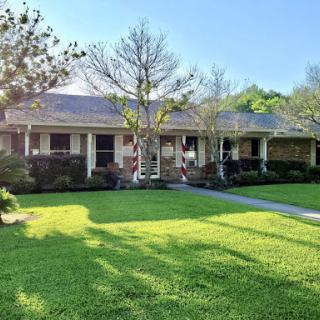

 How to Communicate with a Loved One Living with Dementia: 10 Supportive Strategies
 Comprehensive Guide to VA Nursing Homes: A Crucial Long-Term Care Resource for Veterans
 Estimating the Expenses of At-Home Dementia Care: A Detailed Exploration