
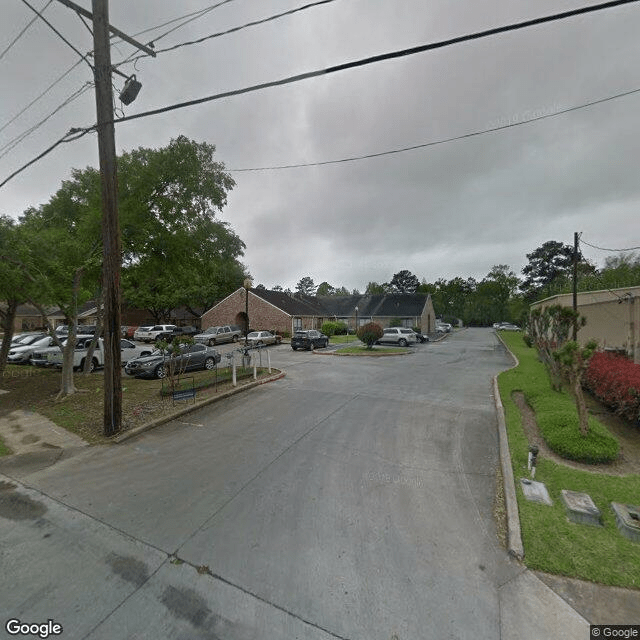
1020 South 23Rd Street, Beaumont, TX 77707
For more information about senior living options: (866) 208-4318
Clairmont Beaumont Costs & Pricing
Clairmont Beaumont presents a competitive pricing structure for its semi-private accommodations, with a monthly cost of $4,205. This rate is notably lower than the average in Jefferson County, which stands at $4,412, but it exceeds the state average in Texas of $3,680. This positioning reflects an attractive option for those seeking care in a community that balances quality services with manageable costs while remaining mindful of local market trends. Clairmont Beaumont's pricing not only aims to be accessible to residents but also reflects the value offered in terms of amenities and support services that are integral to enhancing the overall living experience.
| Floor plans | Clairmont Beaumont | Jefferson County | Texas |
|---|---|---|---|
| Semi-Private | $4,205 | $4,412 | $3,680 |
Overall Review of Clairmont Beaumont
Pros
 The staff was nice and the rehabilitation services were good.
- The admissions staff were friendly and tried to help.
- Weekend nurses were great.
- The building and rooms looked clean and well maintained.
- The staff was pleasant and residents seemed content.
- The facility had an on-staff physician and psychiatrist to monitor care.
- Clairmont Beaumont impressed the reviewer with its pleasant staff and content residents.
- It offered a secure all-women Alzheimer's unit.
Cons
 They describe the discharge attempt as gross negligence, saying a family member was at risk in unlivable conditions with no power and no provider available seven days a week.
- They characterize the staff as incompetent with poor communication about regulations and procedures needed for a safe discharge.
- They claim administrative staff lied or misinformed them about insurance coverage, and there was little cross-department coordination.
- They state the facility is chronically short-staffed, leading to missed medical appointments and abysmal, inedible food.
- They allege the doctor never visited, medications were mishandled, and orders for physical therapy were not completed after discharge.
- They warn the facility is unsafe for residents, with administrators hard to reach and promises that are not fulfilled.
- They note sanitation and maintenance neglect, including dirty floors and rooms, and poor upkeep such as broken lights and unfinished cleaning.
Review
Clairmont Beaumont in Beaumont, TX is best suited for families that must balance memory-care security with active advocacy. The facility markets a women-only Alzheimer's unit and a campus designed to support rehabilitation through on-site therapy and medical oversight, which can be appealing for loved ones with memory care needs or post-acute rehab goals. However, this community is not a universal solution. Those requiring consistently reliable communication, steady staffing, and transparent discharge planning should consider alternatives. In short, the strongest case for Clairmont Beaumont rests on a structured memory-care environment backed by available on-site clinical attention, if families are prepared to supervise closely and push for accountability.
On the plus side, several reviewers highlight positive impressions of staff behavior in some settings, and there is mention of an organized activity space and dedicated memory-care programming. The presence of an all-female Alzheimer’s unit appeals to families seeking a specialized atmosphere with a clear care focus. A few accounts praise the rehab pathway, including physical therapy support, and some visitors observed courteous weekend nursing staff. For families prioritizing a built-in memory-care framework and visible activity programming, these elements offer practical value and can support day-to-day routines when operations run smoothly.
The overwhelming weight of the reviews, though, points to systemic shortcomings that repeatedly undermine the promise. Chronic understaffing and inconsistent communication appear as recurring themes, with families reporting missed appointments, disjointed care plans, and difficulty getting timely answers from administrative channels. Discharge planning stands out as a danger signal in several accounts: families describe discharges arranged without proper medical readiness or adequate provider coverage, leaving residents vulnerable. Medication management errors, lost or inaccessible medical equipment, and gaps between nursing, PT, and medical staff further erode trust in the facility’s ability to deliver safe, coordinated care.
Sanitation and physical conditions surface as another persistent concern. Several visits describe dirty rooms, unmade beds, or lingering odors, along with maintenance issues such as inadequate lighting and broken or poorly functioning amenities. Food quality is criticized by some, and basic comforts like in-room connectivity or TV access are uneven. When a building shows these signs, it becomes hard to separate episodic lapses from a pattern of routine neglect. In this context, the pros of a specialized unit and on-site providers do not sufficiently offset the risk that care can be misaligned, delayed, or unsafe.
Families weighing Clairmont Beaumont against alternatives should weigh the critical need for consistent, proactive care against the risk of operational instability. For residents with complex rehab or memory-care needs who can tolerate strong advocacy and frequent check-ins, the community may still be a workable option. For others, particularly those who require reliable daily communication, steady staffing, and predictable medical oversight, the negative patterns documented by multiple reviewers make a different setting a prudent choice. The question becomes whether the level of risk is acceptable given the potential benefits.
Practical steps for families considering Clairmont Beaumont are clear. Schedule multiple visits at different times to observe staffing flows, talk directly with the administrator about discharge planning processes, and request recent care-planning documentation to gauge how well the team coordinates across nursing, PT, and medicine. Probe ownership and management history, including the reported name change to Spindletop Clairmont, and ask what concrete measures have been taken to address staffing shortfalls and sanitation concerns. Finally, compare with nearby facilities that offer similarly sized memory-care or rehab programs but with stronger reputations for communication and consistent care. The choice should prioritize safety, reliability, and transparent oversight over any single positive feature.
 148 resident community capacity
 Memory Care
 Skilled Nursing Facility
 Air-conditioning
 Beauty salon
 Cable or satellite TV
 Computer center
 Dining room
 Fitness room
 Fully furnished
 Gaming room
 Garden
 Housekeeping services
 Kitchenette
 Move-in coordination
 Outdoor space
 Private bathrooms
 Restaurant-style dining
 Small library
 Telephone
 Wellness center
 Wi-Fi/high-speed internet available
 Southeast Texas Regional (11 miles away)
 Community operated transportation
 12-16 hour nursing
 24-hour call system
 Activities of daily living assistance
 Assistance with bathing
 Assistance with dressing
 Assistance with transfers
 Diabetes diet
 High acuity care
 Medication management
 Mental wellness program
 Special dietary restrictions
 Concierge services
 Planned day trips


 Delving into the Inner World of Dementia: Insights into Thoughts and Awareness
 Five Subtle Dementia Indicators to Observe: An In-Depth Guide to Understanding “Does My Mom Have Dementia?”
 Dementia, Paranoia, and Caregiver Guidance: Understanding the Connection