For more information about senior living options: (866) 208-4318
4.1 from 53 reviews
5 stars
28
4 stars
16
3 stars
1
2 stars
2
1 stars
6
Cedar Crest Alzheimer's Special Care Center Costs & Pricing
Cedar Crest Alzheimer's Special Care Center offers specialized care for individuals with Alzheimer's, and its pricing reflects the level of services provided. The monthly cost for a studio room is $6,400, significantly higher than the average costs in Washington County at $3,909 and Oregon as a whole at $3,815. For those requiring more space or additional accommodations, the semi-private room rate stands at $8,200, which again surpasses both county and state averages - $4,848 and $4,457 respectively. While these costs may be on the higher end of the spectrum locally and statewide, they can often be justified by the enhanced support tailored specifically for residents living with memory-related challenges.
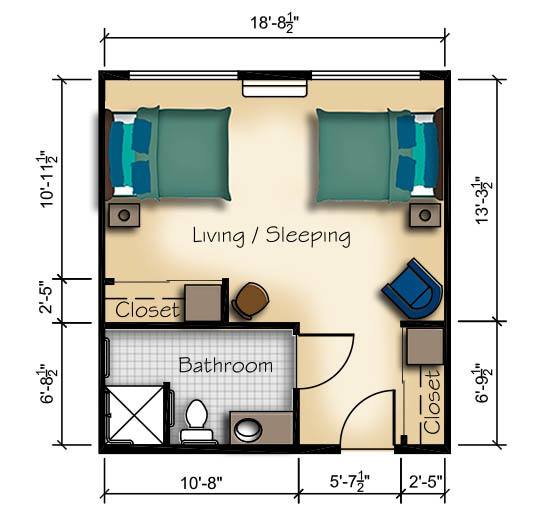
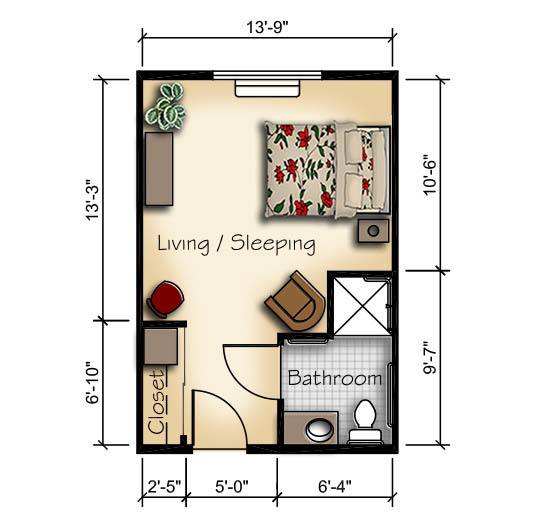
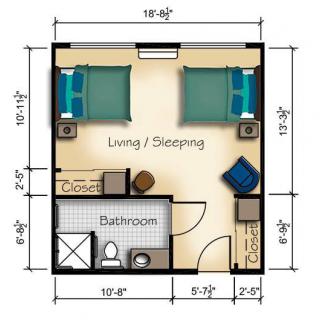
Floor plans
Cedar Crest Alzheimer's Special Care Center
Washington County
Oregon
Studio
$6,400
$3,909
$3,815
Semi-Private
$8,200
$4,848
$4,457
Memory care communities with a similar price nearby
Overall Review of Cedar Crest Alzheimer's Special Care Center
common28 reviews mention this
Staff compassion stands out
Residents and families consistently describe compassionate, attentive staff throughout daily care.
Many reviews focus on how caring and responsive the staff are, including their attentiveness to condition changes and willingness to answer questions. Several families say the staff treated their loved ones with patience and kindness, and that communication was steady and reassuring. A few reviews also mention times when staffing or management support felt lacking, but even those often recognize the effort from individual caregivers.
differentiator10 reviews mention this
Memory care feels homey
The community’s memory care setting is repeatedly described as home-like and easy to settle into.
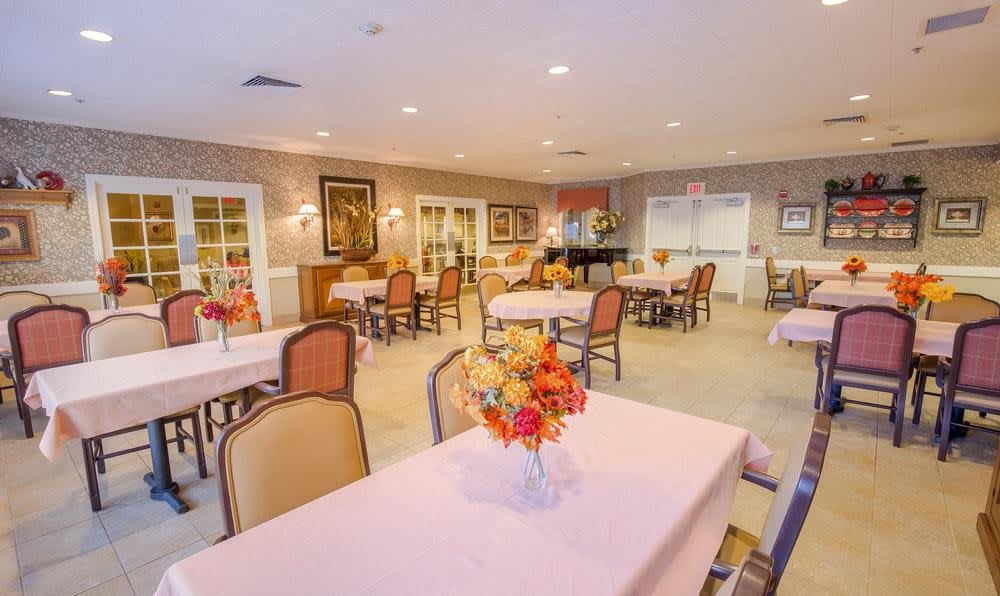
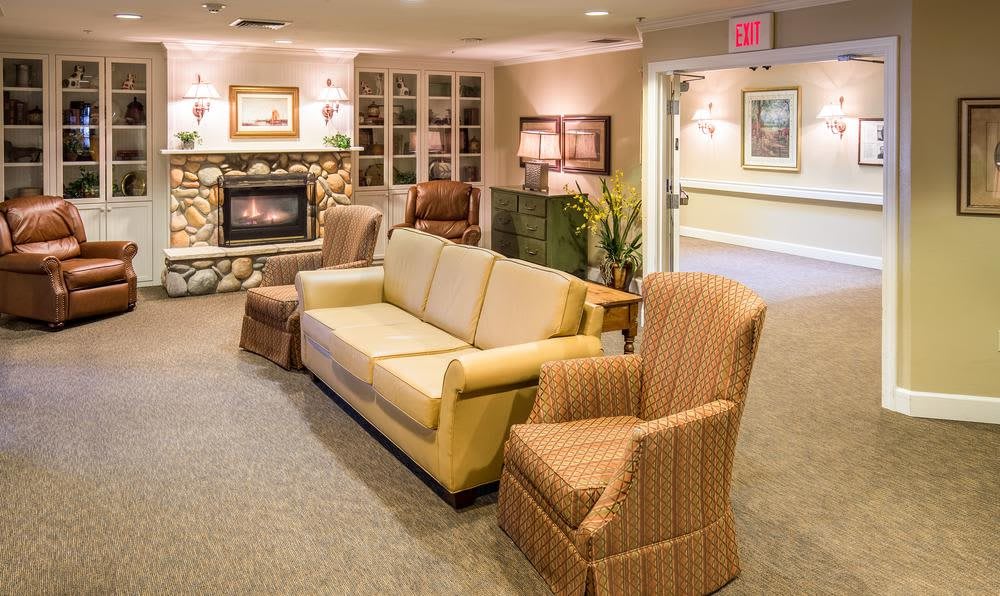
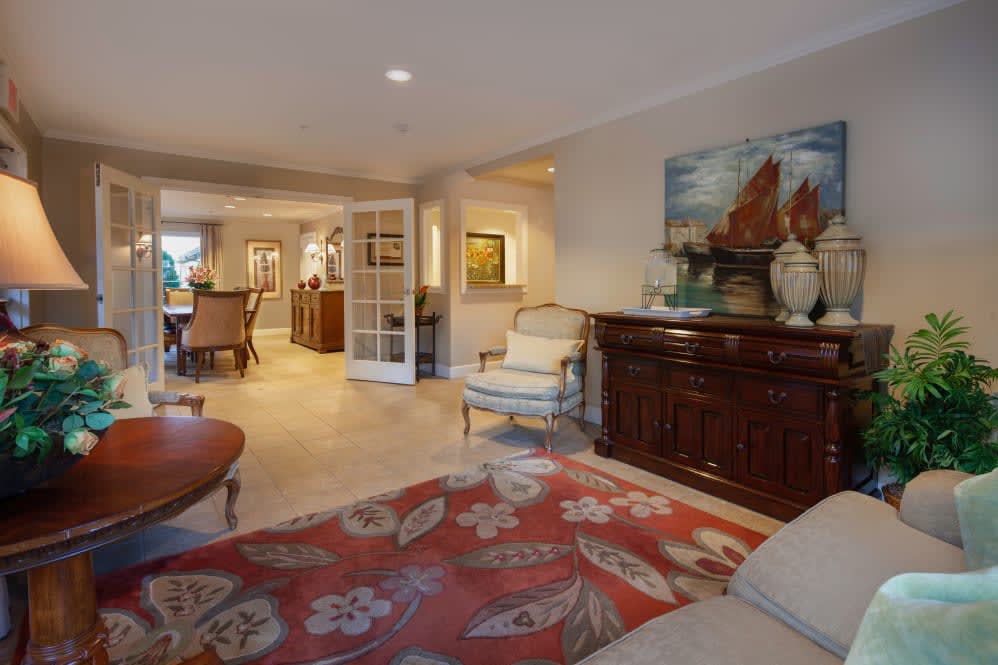
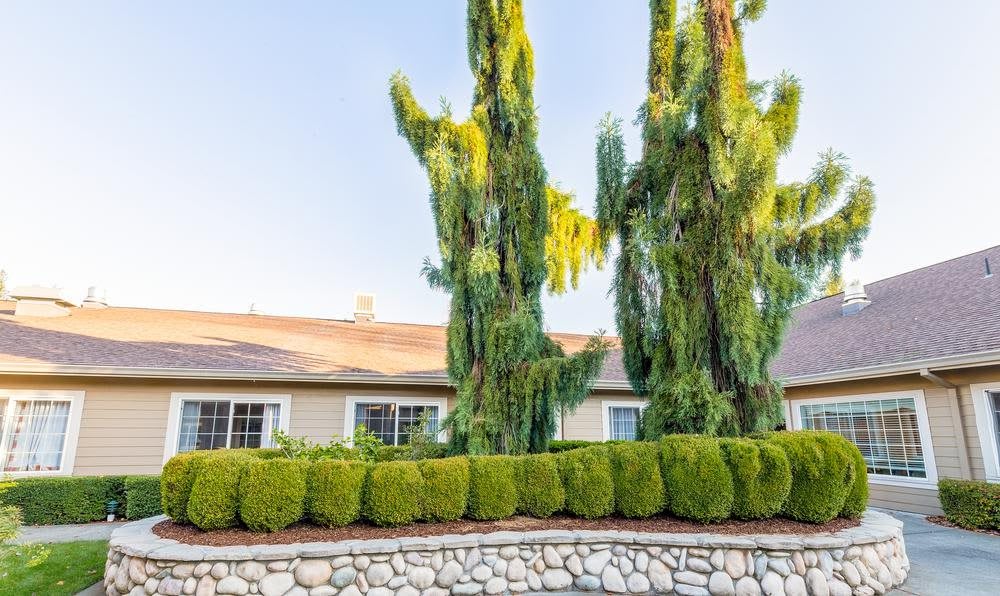
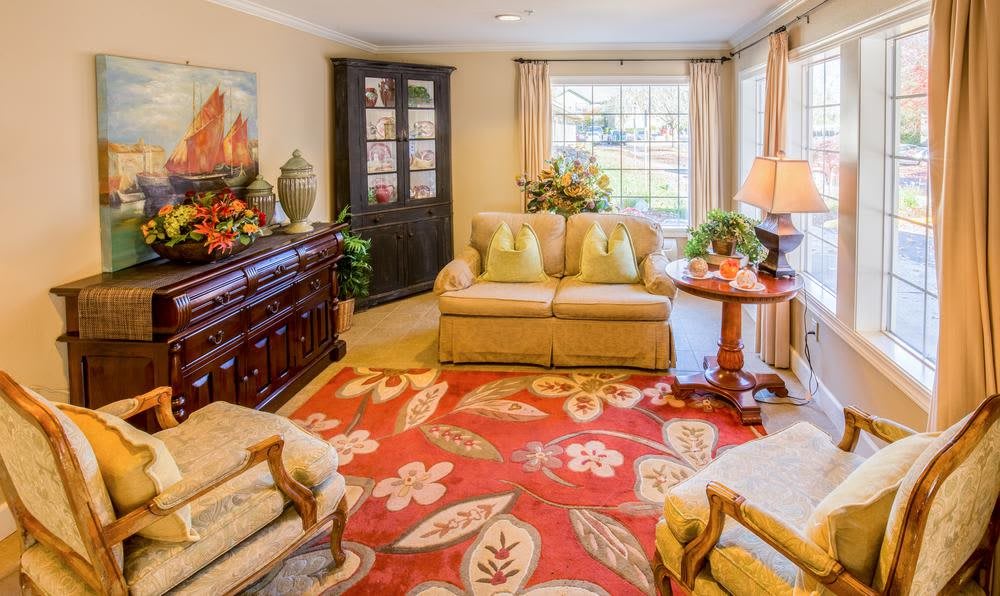
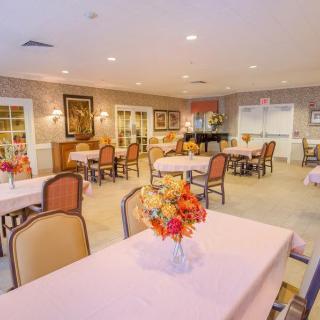
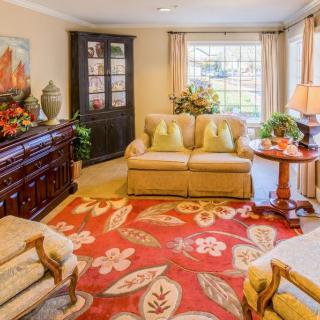
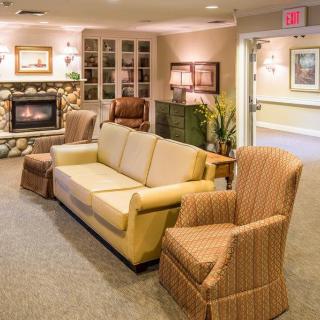
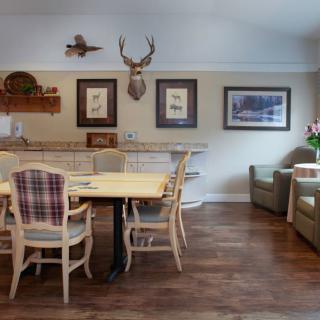
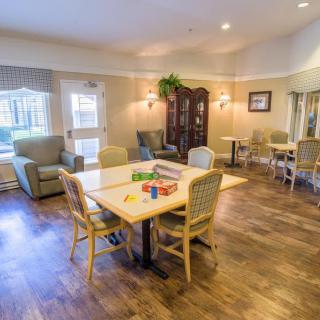
Residents and families describe a warm, cozy atmosphere rather than something that feels institutional. Reviews mention central gathering spaces, fireplaces/TV lounges, and outdoor areas like a courtyard and gardens where residents can spend time. Tour comments also describe decorating that helps make rooms and daily life feel more familiar for people living with dementia.
common9 reviews mention this
Activities help residents stay engaged
Activities and engagement are a recurring theme in how families describe day-to-day life.
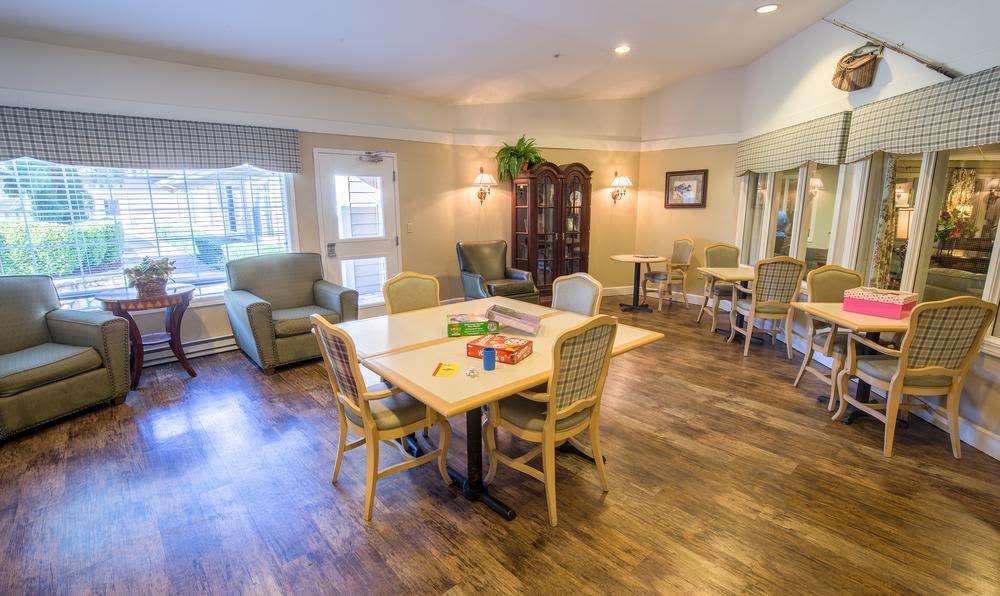
Multiple reviews say there are plenty of daily activities, with an emphasis on keeping residents active and out of their rooms. Families mention arts and crafts, games, devotional activities, cooking-related activities, and other scheduled programs. A few reviewers say they wish their loved one participated more, but still describe the community as offering a full calendar.
caveat6 reviews mention this
Dining and meals are a mixed bag
Dining gets both praise for quality and criticism for how it’s set up.
Some residents and visitors describe meals as good, including specific positive comments about breakfast and fresh food served at lunch. Others say the dining area felt more cafeteria-like than restaurant-style, or that they were unsure about trying the food. Overall, reviews suggest the kitchen and meal experience can vary by what families notice during their visits.
caveat5 reviews mention this
Communication and management vary
Several reviews raise concerns about family communication and management responsiveness.
A recurring concern is that families can struggle to reach the right person or get updates consistently, with specific mentions of phone access and whether staff reach out proactively. Some reviews also describe understaffing or management gaps that affected safety and follow-through. At the same time, other families report quick responses and regular check-ins, which suggests the experience may depend on circumstances at the time of care.
caveat2 reviews mention this
Pricing is well above benchmarks
Pricing runs high compared with typical county and state levels across unit types.
Pricing information indicates the community’s rates are substantially higher than county and state benchmarks for both studio and semi-private options. Reviews in this set don’t focus heavily on cost, but price context may matter given how many families described major life changes and care transitions.
How we summarize
Counts show how many written reviews mention each theme; a review can touch several themes, and only frequently mentioned themes are displayed.
Features
Housing
Studio apartments
Types of Care
Memory Care
Amenities
Activities off-site
Activities on-site
Air-conditioning
Beautician on-site
Cable or satellite TV
Devotional services on-site
Dining room
Financing advice
Garden
Ground floor units
Guasts at mealtime
Guest parking
Handicap accessible
Housekeeping services
Indoor common areas
Laundry
Outdoor common areas
Party space
Private bathrooms
Respite or short term stays offered
Security gate
TV room
Wheelchair accessible showers
Wi-Fi/high-speed internet available
Transportation
Portland International (17 miles away)
Care Services
Diabetic care
High acuity care
Hospice care
Incontinence care
Medication management
Physical therapy
Dining
Guest meals
Low / no sodium
Meals provided
No Sugar
Restaurant style dining
Room service
Special dining programs
Vegetarian
Activities
Activities off-site
Art classes
Arts and crafts
Book club
Cooking classes
Cooking club
Day trips and outings
Devotional activities on-site
Educational speakers / life long learning
Fitness programs
Games
Gardening club
Karaoke
Live dance or theater performances
Live musical performances
Religious services
Stories
Stretching classes
Visiting chaplain or priest
Yoga / chair yoga
Videos
Nearby Places of Interest
Located in Tualatin, Oregon, this area is a vibrant and convenient community with a variety of amenities to support a comfortable senior living experience. With several restaurants offering diverse culinary options, such as Stickmen Brewing Company and SuperDeluxe, residents can enjoy dining out without having to travel far. Nearby parks like Cook Park Soccer Fields and Tualatin Community Park provide ample opportunities for outdoor recreation and relaxation. For healthcare needs, there are multiple pharmacies and medical facilities in close proximity, including EyeHealth Northwest and Providence Immediate Care. Additionally, transportation options like TriMet Bus Stop ID 3655 make it easy to get around the area. Overall, this part of Tualatin offers a well-rounded lifestyle with access to essential services and recreational activities for seniors looking to settle down in a welcoming community.
Restaurants
Stickmen Brewing Company (0.8 miles)
Chipotle Mexican Grill (1.9 miles)
SuperDeluxe (2 miles)
McDonald's (2.3 miles)
McDonald's (2.4 miles)
Smockville Brewhouse (2.6 miles)
Generations Bar & Grill (2.9 miles)
Parks
Cook Park Soccer Fields (0.8 miles)
Ibach Park (2.1 miles)
Tualatin Community Park (2.3 miles)
Summerlake Park (3.4 miles)
Florence Pointe Park (5.5 miles)
Safe And Hound (5.6 miles)
Wilsonville Memorial Park (5.9 miles)
Cafes
Starbucks (1.3 miles)
Dutch Bros Coffee (2.3 miles)
Starbucks (2.4 miles)
Dutch Bros Coffee (2.6 miles)
Peet's Coffee and Tea (2.9 miles)
Panera Bread (3 miles)
Well & Good Coffee House (4.1 miles)
Pharmacies
Rite Aid (1.3 miles)
Mc Cann's King City Pharmacy (1.5 miles)
Walmart Pharmacy (1.9 miles)
Walgreens (2.5 miles)
Northwest Compounders (3.2 miles)
Walgreens (3.4 miles)
Walgreens (3.6 miles)
Physicians
EyeHealth Northwest - Tigard Office (1.7 miles)
Northwest Renal Clinic (2.3 miles)
Pacific Medical Group (2.9 miles)
Providence Immediate Care (2.9 miles)
Bridgeport Family Medicine (3.1 miles)
Oregon Spine Care (3.2 miles)
Women's Healthcare Associates (3.3 miles)
Hospitals
Sherwood Family Medicine (1.7 miles)
Legacy Meridian Park Hospital (3.4 miles)
Theaters
Regal Bridgeport Village ScreenX & IMAX (2.9 miles)
Cedar Crest Alzheimer's Special Care Center offers specialized care for individuals with Alzheimer's, and its pricing reflects the level of services provided. The monthly cost for a studio room is $6,400, significantly higher than the average costs in Washington County at $3,909 and Oregon as a whole at $3,815. For those requiring more space or additional accommodations, the semi-private room rate stands at $8,200, which again surpasses both county and state averages - $4,848 and $4,457 respectively. While these costs may be on the higher end of the spectrum locally and statewide, they can often be justified by the enhanced support tailored specifically for residents living with memory-related challenges.
Cedar Crest Alzheimer's Special Care Center offers incontinence care, which ensures that residents feel comfortable and dignified, alleviating stress and anxiety often associated with memory loss. This facility also emphasizes medication management, allowing for the careful monitoring of prescriptions and dosages, which is crucial in maintaining cognitive function and overall health for individuals in various stages of dementia or Alzheimer's disease. Additionally, physical therapy programs are designed to enhance mobility and strength, promoting physical well-being while supporting mental engagement through movement. Together, these features create a holistic approach to care that addresses both the physical and emotional needs of residents facing cognitive challenges.
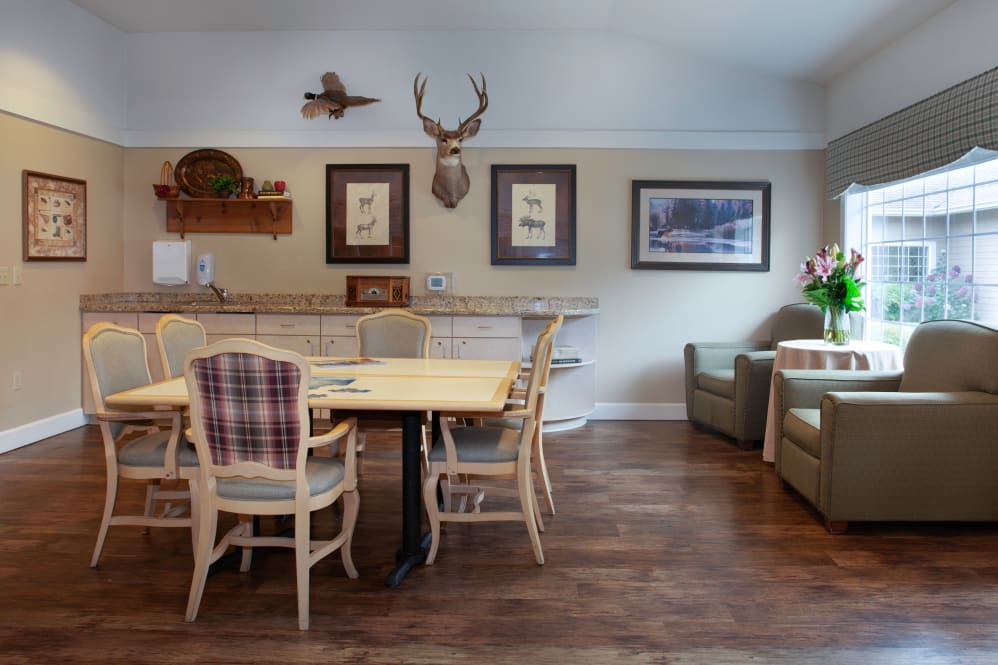
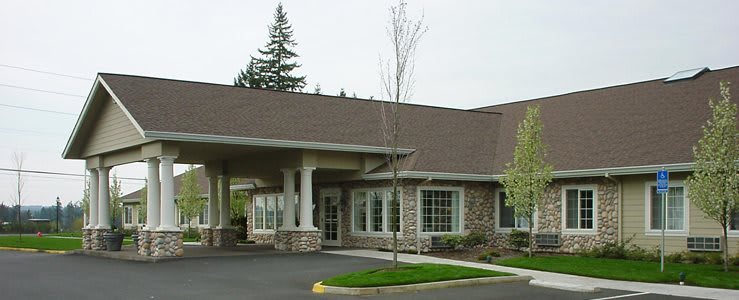
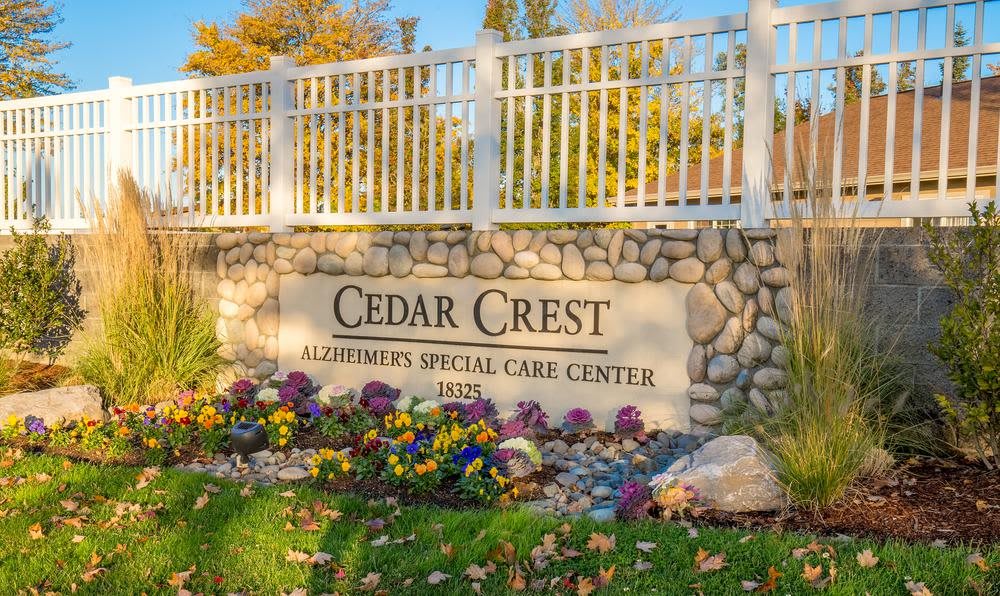
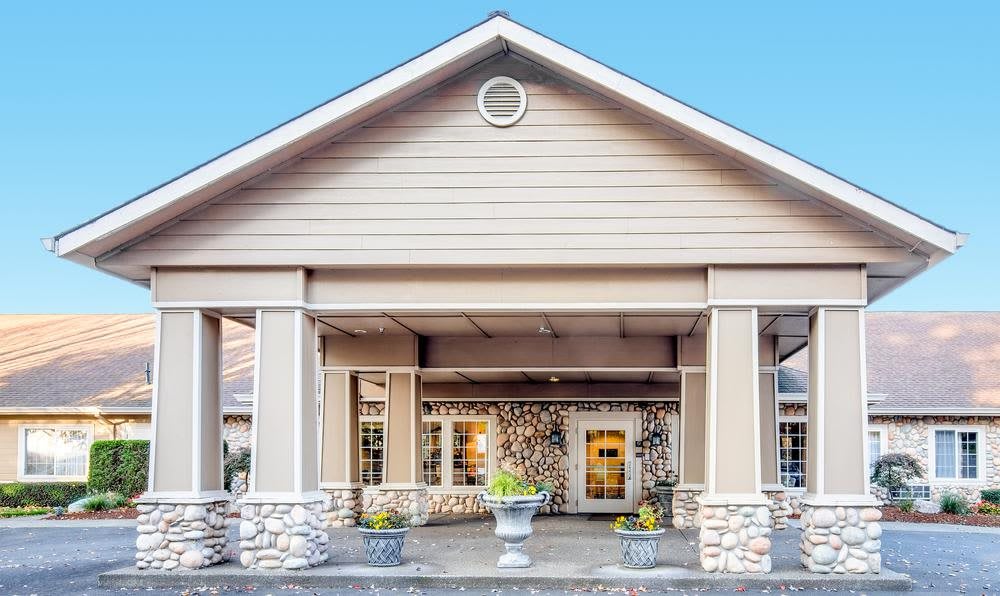
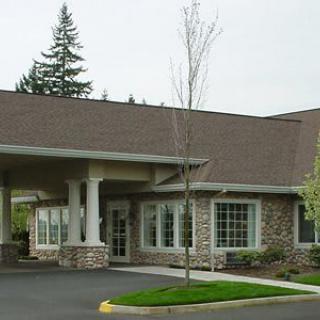
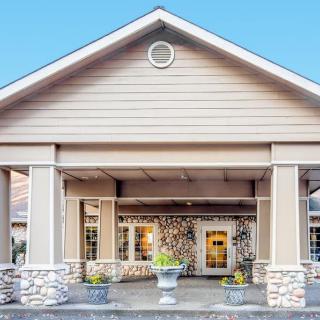
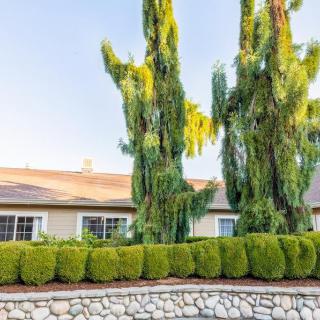
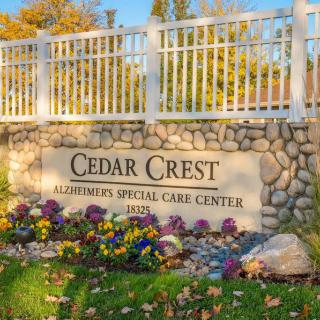
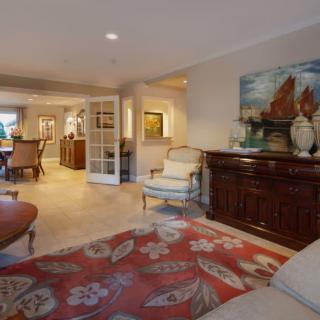
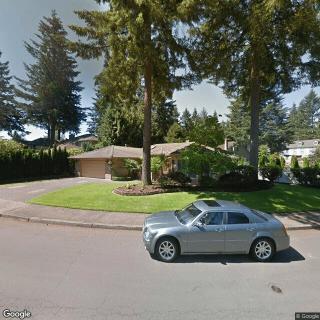
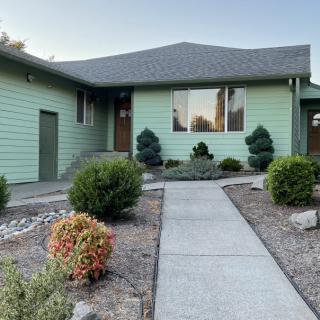
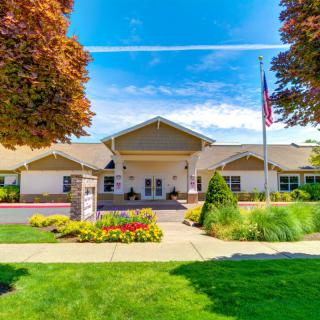
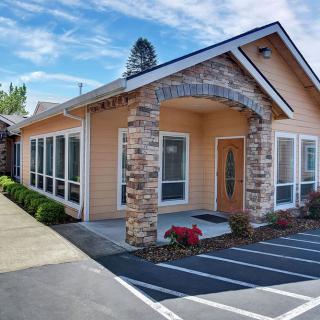
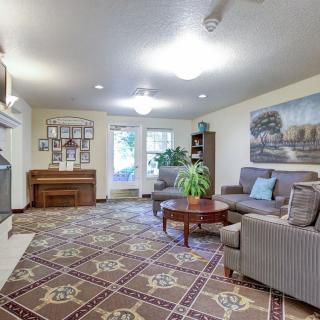
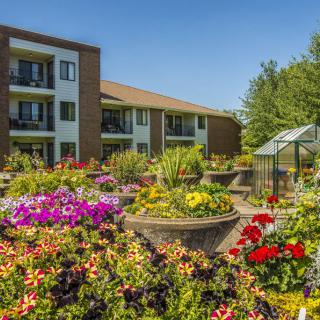
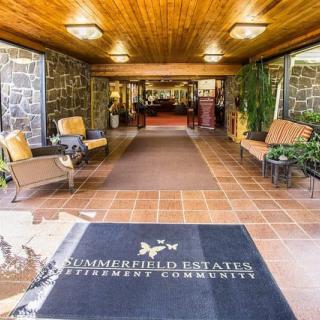
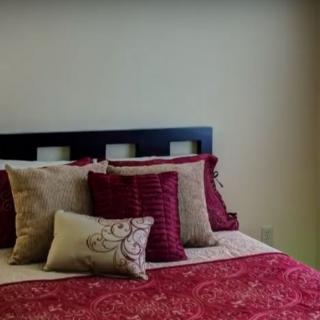
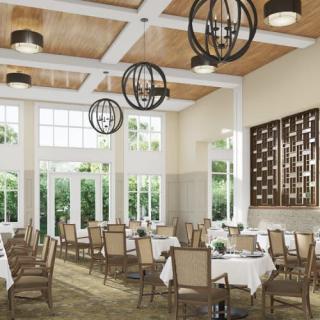
Cedar Crest Alzheimer's Special Care Center on seniors.fyi includes 13 photos including images showing decor, interior, floor plan, living room, dining, landscaping, lighting, building, and more.
Nearby Communities
Cedar Crest Alzheimer’s Special Care Center
Tualatin, OR
3.2 from 18 reviews
Prestige Senior Living Riverwood
Tualatin, OR
4.4 from 55 reviews
$4,215 to $5,185 / month
Friendly staff with a homey, engaging community.
Jurgens Park Senior Living
Tualatin, OR
4.5 from 75 reviews
$4,450 to $5,600 / month
Caring, attentive staff in a warm, well-maintained community with engaging activities.
Highlands
Tigard, OR
4.3 from 9 reviews
Strong connectivity and comprehensive care services.
Avamere Rehabilitation Of King City
Tigard, OR
2.8 from 48 reviews
Some compassionate staff and a clean, newer environment in a convenient location.
King City Senior Village
King City, OR
4.6 from 79 reviews
$2,852 to $3,760 / month
Friendly staff, clean facilities, good dining, and engaging activities.
Summerfield Estates Retirement Community
Tigard, OR
4.4 from 93 reviews
$2,500 to $3,700 / month
Friendly staff, a strong sense of community, and solid amenities with good value.
Marquis Tualatin
Tualatin, OR
3.7 from 19 reviews
$3,803 to $4,999 / month
Caring, attentive staff and engaging activities; clean spaces and ability to accommodate dietary needs.
The Springs at Sherwood
Sherwood, OR
4.6 from 51 reviews
$3,490 to $5,680 / month
Engaged, compassionate staff with a wide range of activities supporting residents' well-being.
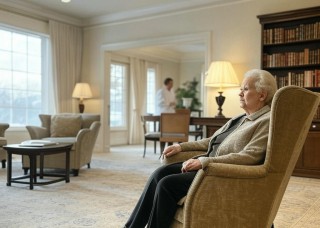
The article presents five subtle indicators of dementia, such as memory lapses and mood swings, to help families assess cognitive decline in loved ones. It emphasizes early detection, open communication, and seeking professional help while providing practical support steps.
Dementia encompasses progressive neurological disorders that impair cognitive functions and can lead to paranoia due to cognitive decline and emotional changes. The article discusses the triggers of paranoia in dementia, caregiver strategies for managing it, and the importance of distinguishing between dementia-related paranoia and other psychiatric conditions.
Memory care activities are essential for improving the quality of life of seniors with cognitive impairments, as they stimulate cognitive function, promote well-being, and encourage social interaction through tailored strategies. These activities combine structured exercises with spontaneous tasks, sensory engagement, physical workouts, creative pursuits, and intergenerational interactions to enhance emotional connection and a sense of purpose.
Cedar Crest Alzheimer's Special Care Center photos
×
Interior
Decor
Living Room
Building
Architecture
Trees
Dining
Landscaping
Lighting
Artwork
Floor Plan
Interior
Decor
Dining
Living Room
Landscaping
Windows
Floor Plan and Studio Apartment
Building and Entrance
Architecture, Porch, and Awning
Bathroom and Living Area
Trees
Lighting
Artwork
Fireplace
Hardwood Floor
Fence
Rug
Stone Wall
Living Space
Table And Chairs
Get PricingAsk A QuestionSchedule A TourContact Senior Advisor
By clicking submit, you agree to our Partner's Terms of Use. You
also consent to receive calls and texts, which may be autodialed, from our Partner. Your consent is not a condition to
using our Partner's service. Please visit our Partner's Privacy Policy for information about their privacy practices.


 Studio apartments
 Memory Care
 Activities off-site
 Air-conditioning
 Beautician on-site
 Cable or satellite TV
 Devotional services on-site
 Dining room
 Financing advice
 Garden
 Ground floor units
 Guest parking
 Handicap accessible
 Housekeeping services
 Indoor common areas
 Laundry
 Outdoor common areas
 Party space
 Private bathrooms
 Respite or short term stays offered
 Security gate
 Wheelchair accessible showers
 Wi-Fi/high-speed internet available
 Portland International (17 miles away)
 Diabetic care
 High acuity care
 Hospice care
 Incontinence care
 Medication management
 Physical therapy
 Guest meals
 Art classes
 Book club
 Cooking classes
 Day trips and outings
 Educational speakers / life long learning
 Fitness programs
 Games
Games Karaoke
 Live dance or theater performances
 Live musical performances
 Stretching classes
 Visiting chaplain or priest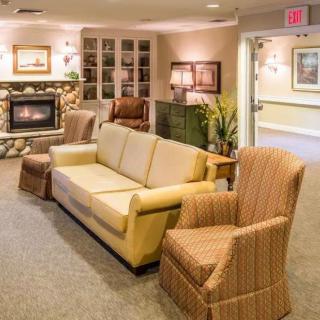
 Friendly staff with a homey, engaging community.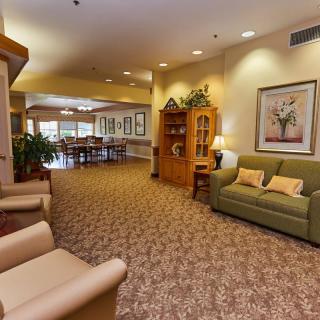


 Five Subtle Dementia Indicators to Observe: An In-Depth Guide to Understanding “Does My Mom Have Dementia?”
 Dementia, Paranoia, and Caregiver Guidance: Understanding the Connection
 Engaging Memory Care Activities That Enhance Quality of Life