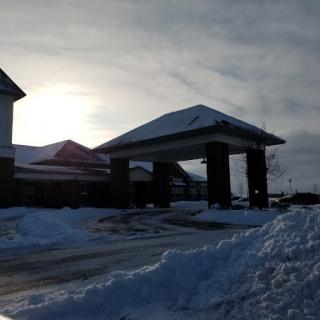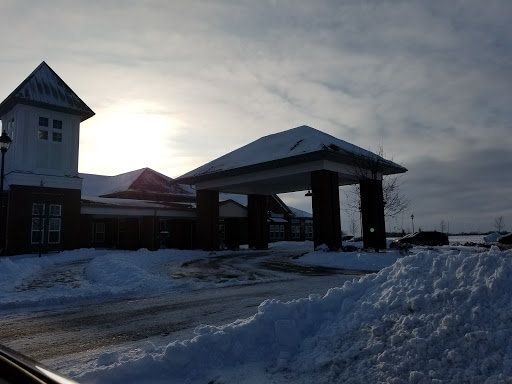
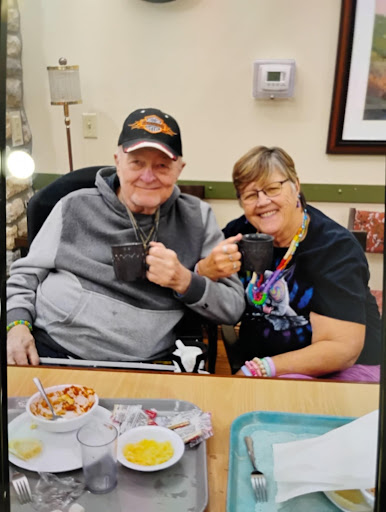
201 Courthouse Parkway, Washingtn C H, OH 43160
For more information about senior living options: (866) 208-4318
Four Seasons Of Washington Nursing And Rehab Costs & Pricing
Four Seasons Of Washington Nursing And Rehab offers its services at a monthly cost of $6,300 for both studio and one-bedroom accommodations. When we compare these rates to the average costs in Ross County, Ohio, it becomes evident that Four Seasons is positioned significantly higher than the local averages - $4,107 for a studio and $4,736 for a one-bedroom in Ross County. The disparity also extends to the state level, where the average costs are notably lower at approximately $3,727 for studios and $3,712 for one-bedroom units. This suggests that while Four Seasons may provide premium care or amenities justifying their higher price point, potential residents should carefully weigh these costs against available options within both the county and the broader state context.
| Floor plans | Four Seasons Of Washington Nursing And Rehab | Ross County | Ohio |
|---|---|---|---|
| 1 Bedroom | $6,300 | $4,736 | $3,712 |
| Studio | $6,300 | $4,107 | $3,727 |
Skilled Nursing Facilities with a similar price nearby
-
from +$450 / mo
Laurels Of Hillsboro
$6,750 / month23.1 miles away
Overall Review of Four Seasons Of Washington Nursing And Rehab
Pros
 The staff and administration have been very helpful and attentive to concerns and questions.
- The patient has been at the facility since October 2020, and so far the care has been good.
- The reviewer expects his good care to continue.
- The reviewer highly recommends this facility.
- The facility is awesome.
Cons
 These people care nothing about human beings.
- This operation is run by the city.
- What the hell business does that City have to be in healthcare?
- GREED
- There were good nurses & then there were ones that talked hateful to him.
- They allowed gangrene to get so bad that his leg had to be amputated above the knee.
- He lost so much weight while in there that he had no muscle tone at all.
- They didn`t help him eat when he shook so bad he couldn`t hold a spoon.
- He had bruises from his armpits down to his hands.
- He had clothes & a watch come up missing.
- And his favorite blanket kept that was bought for him. They said it beloneg to a person that had passed away & took it.
Review
Four Seasons Of Washington Nursing And Rehab in Washington Court House, Ohio is best suited for families that prize hands-on, responsive daily care and a facility where leadership appears accessible and willing to engage. It seems to work well for residents who need skilled nursing with a steady, attentive touch and for families seeking a transition from a prior placement to reassurance that care will be monitored. Positive experiences from some families point to consistent staff attention and a willingness to address questions, suggesting a setting where concerns can be heard and acted upon. The facility can deliver workable, day-to-day care when expectations align with what the staff can sustain. This is not a universal fit, however, and those requiring impeccably consistent, zero-tolerance standards should look elsewhere.
On the other hand, several reviews flag governance and safety concerns that justify considering alternatives. One stark claim frames the operation as city-run and greed-driven, a combination that casts doubt on accountability. Financial friction, missing personal items, and unpaid funds are cited as indicators of an ethics problem that families must weigh carefully. The most troubling reports describe neglect severe enough to cause harm, gangrene progressing to amputation, dramatic weight loss, and a resident who could not be fed properly when tremors or confusion struck. These claims create a risk calculus that makes risk-tolerant care arrangements difficult to defend for long-term placement.
Despite these red flags, the strongest pro narratives center on engaged staff and proactive administration. When staff are attentive and leadership is approachable, families report real, observable care and reassurance. For residents who can participate actively in care planning, request clear answers, and demand consistent communication, the everyday experience can be solid and dependable. A transition from a less satisfactory facility can become a meaningful improvement if staff turnover stays limited and if the facility maintains a shared commitment to addressing problems promptly. The reality is a plausible, steady level of care, but only under conditions of stable, aligned staffing and governance.
The core tension is therefore practical rather than theoretical: does the facility deliver reliable care consistently across shifts, while maintaining ethical standards and transparent, accountable operations? If care is inconsistent or if personal items vanish and financial disputes persist, the usefulness of the positive aspects evaporates quickly. The risk rises when clinical lapses, weight and nutritional decline, wound care gaps, or unaddressed safety concerns, are suspected to be unmitigated. In short, the pros are real but fragile; the cons, if unaddressed, can overwhelm the benefits and undermine trust.
For families who still consider this option, a disciplined, thorough due-diligence plan is essential. Engage the administrator and director of nursing in extended conversations; request the latest state survey summaries and any corrective action plans; tour repeatedly with a focused checklist on wound care, nutrition, incident and grievance handling, and staffing patterns by shift. Require a concrete, written care plan with daily feeding and weight-trajectory monitoring, fall-prevention measures, and a documented escalation process for concerns. If persistent red flags appear, be prepared to pivot to alternatives with stronger reputations for safety, ethical governance, and consistent staffing.
Ultimately, Four Seasons Of Washington Nursing And Rehab can serve as a viable option for families who can tightly monitor care, insist on transparent operations, and tolerate some variability in staffing, and who value a responsive, engaged approach when things go right. It is not appropriate for families seeking unwavering, risk-free care or those unwilling to confront potential governance and safety concerns head-on. The prudent decision is to verify current performance with independent sources, demand concrete assurances on clinical outcomes, and compare against facilities with more uniformly positive risk profiles. When the elements align, stable staffing, clear financial practices, and demonstrable, high-quality care, the facility can meet real needs; when they donā€™t, the safer path is clear.
 75 resident community capacity
 Memory Care
 Skilled Nursing Facility
 Air-conditioning
 Beauty salon
 Cable or satellite TV
 Computer center
 Dining room
 Fitness room
 Fully furnished
 Gaming room
 Garden
 Housekeeping services
 Kitchenette
 Move-in coordination
 Outdoor space
 Private bathrooms
 Restaurant-style dining
 Small library
 Telephone
 Wellness center
 Wi-Fi/high-speed internet available
 Community operated transportation
 12-16 hour nursing
 24-hour call system
 Activities of daily living assistance
 Assistance with bathing
 Assistance with dressing
 Assistance with transfers
 Diabetes diet
 High acuity care
 Medication management
 Mental wellness program
 Special dietary restrictions
 Concierge services
 Planned day trips


 Medications Associated with Dementia Risk: A Comprehensive Overview
 Guiding Your Journey: Understanding Power of Attorney for Elderly Parents
 22 Remarkable Caregiver Support Groups Available Online and In-Person