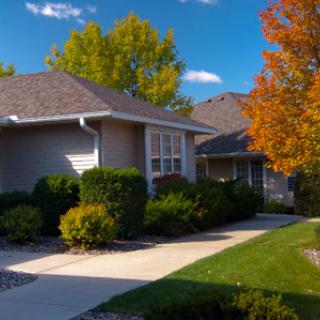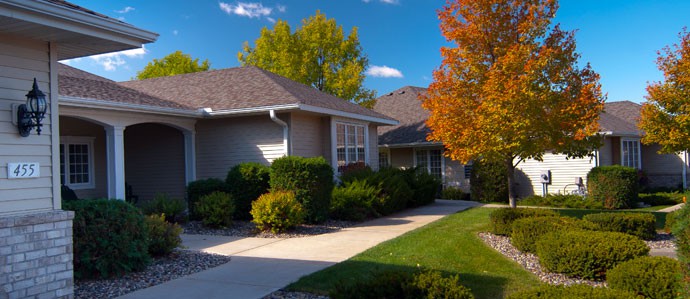
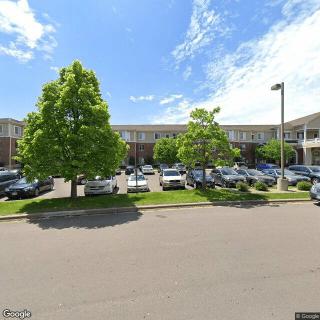
457 East Travelers Trail, Burnsville, MN 55337
For more information about senior living options: (866) 208-4318
Overall Review of Emerald Crest Of Burnsville
Pros
 Emerald Crest is a safe, healthy environment for residents.
- The nurses Lindsay and Javier, Chaplain Solen, and caregiver Binki are amazing.
- Emerald Crest is highly recommended for residents at any stage of dementia or memory loss.
- Emerald Crest has five houses that cater to different stages of dementia.
- Emerald Crest's personal care is managed by licensed nurses and delivered by top-notch, compassionate caregivers.
- Each one-level house is set up like a home, with residents having their own bedrooms, and residents are encouraged to spend time in the living area, dining room, and fenced-in backyard and patio.
- The experience is like having another family, and the staff truly cares about residents and their families.
- Emerald Crest provides spiritual care for everyone, and Chaplain Arlen Solem is phenomenal.
Cons
 The reviewer felt the rating should have been all stars but ended up with only three stars due to rushing through the rating on the phone.
Review
Emerald Crest of Burnsville is best suited for families seeking comprehensive memory-care for a loved one within a warm, home-like setting. The campus is organized around five one-level houses, each designed to accommodate different stages of dementia, so residents live among peers with similar needs. Personal care is overseen by licensed nurses and delivered by compassionate caregivers who know the residents by name and routine. The environment emphasizes safety and everyday normalcy, private bedrooms, shared living and dining spaces, and a fenced outdoor area that invites casual social time. For families, these everyday routines translate into a dependable structure where care feels like an extended family rather than a sterile clinical program.
For those who prize maximum independence or have tighter budget constraints, alternatives deserve consideration. Emerald Crest operates as a dementia-focused community rather than a traditional, independence-forward senior living option, and the care model centers on staged memory support with consistent staffing. Families needing hospital-grade medical oversight or settings engineered for acute medical needs may find the scope here insufficient. In short, this is a strong fit for memory care with a strong caregiving culture, but not a one-size-fits-all solution for every care trajectory or financial plan.
The strongest upside is the powerful pairing of stage-sensitive dementia care with genuine, day-to-day humanity from the staff. The five-house design allows care to match evolving needs, reducing the risk of mismatched services and promoting continuity as residents transition through stages. Licensed nurses oversee personal care while a team of deeply committed caregivers provides steady, empathetic support. Residents retain their own rooms yet enjoy meaningful time in living areas, dining rooms, and the fenced yard, which preserves familiarity and social engagement. Spiritual care is integrated and active, with a chaplain who engages residents in purposeful ways, enriching emotional well-being. Practical extras, like a hair stylist visiting weekly, reinforce the sense of a normal, cared-for life.
A lone 1-star rating among otherwise favorable feedback signals that no facility is perfect for every family. While the specifics behind that rating aren’t detailed here, it serves as a prudent reminder to verify current staffing levels, daily rhythms, and financial terms before committing. Prospective families should request up-to-date references from residents’ families and arrange a candid tour, focusing on staff-to-resident ratios, incident handling, and what service packages actually cover. This cautious approach helps ensure expectations align with the reality on the ground and guards against future disappointment.
Visiting guidance is practical and focused. Meet the care team, especially the licensed nurses and the chaplain or spiritual liaison, to gauge alignment with resident preferences. Walk through the five-house layout to observe whether the home-like atmosphere is maintained and whether residents have opportunities to socialize in dining rooms and activity spaces. Inquire about the dementia-staging approach, daily schedules, and how activities adapt to cognitive fluctuations. Clarify the available service packages, such as hair styling and other personal services, and confirm how these align with budget and lifestyle goals. Families benefit from understanding how updates to families are shared, whether through private social channels or direct communication, so reassurance remains constant.
Overall, Emerald Crest presents a robust, decision-worthy option for families prioritizing compassionate dementia care, a warm, familial atmosphere, and reliable nursing oversight tailored to evolving memory needs. The five-house model is a meaningful strength, enabling residents to stay within a familiar, non-institutional framework as care requirements change. The combination of licensed nursing, attentive caregiving, spiritual enrichment, and practical extras creates a durable value proposition for those who desire connection, routine, and meaningful engagement as central elements of daily life. For families seeking a trusted, engaged community around memory care, this option stands up to scrutiny; for those pursuing less structured independence or higher medical acuity, it is prudent to explore alternatives to ensure a precise fit.
 55 resident community capacity
 Memory Care
 Air-conditioning
 Beauty salon
 Cable or satellite TV
 Computer center
 Dining room
 Fitness room
 Fully furnished
 Gaming room
 Garden
 Housekeeping services
 Kitchenette
 Move-in coordination
 Outdoor space
 Private bathrooms
 Restaurant-style dining
 Small library
 Telephone
 Wellness center
 Wi-Fi/high-speed internet available
 Minneapolis-St Paul International (8 miles away)
 Community operated transportation
 12-16 hour nursing
 24-hour call system
 Activities of daily living assistance
 Assistance with bathing
 Assistance with dressing
 Assistance with transfers
 Diabetes diet
 Medication management
 Mental wellness program
 Special dietary restrictions
 Transportation arrangement (medical)
 Concierge services
 Planned day trips


 Exploring the Contrasts Between Assisted Living and Skilled Nursing
 Vibrant Senior Living: A Comprehensive Guide for Active Older Adults
 Assisted Living and Memory Care: Understanding Their Core Differences