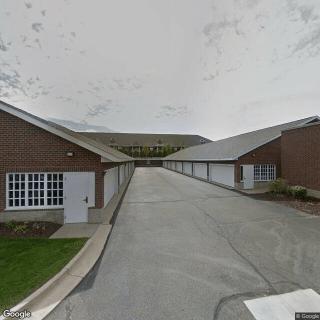
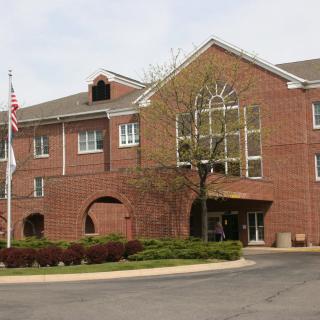
Samaritas Senior Living Grand Rapids - Lodge is a memory care community in Grand Rapids, MI.
Information last verified:
2000 32nd Street SE, Grand Rapids, MI 49508
For more information about senior living options: (866) 208-4318
3.1 from 36 reviews
5 stars
15
4 stars
4
3 stars
1
2 stars
3
1 stars
13
Overall Review of Samaritas Senior Living Grand Rapids - Lodge
caveat9 reviews mention this
Staffing and call responsiveness concerns
Residents and families raise concerns about staffing coverage and timely help.
Several reviewers describe trouble getting the care and attention they expected, including unanswered call lights or delays in responding to needs. Others mention understaffing effects like long waits for meals, plus examples of residents being left in poor conditions longer than families thought was reasonable. A few reviewers also point to higher turnover and difficulty reaching staff for messages. While some residents describe nurses and aides as around regularly, the recurring theme is that coverage can be inconsistent during certain periods.
differentiator4 reviews mention this
Memory care for dementia support
Reviews focus on how the Lodge handles dementia-related needs.
Some families describe their loved ones with dementia as comfortable, with staff interacting gently and meeting social and physical needs. Other reviewers specifically criticize dementia support, describing trouble when behaviors change and concerns about safety and adequate follow-through. The community offers memory care programming and specialized support for mild cognitive impairment and related needs, which aligns with why dementia experience shows up repeatedly in the reviews.
common3 reviews mention this
Dining quality and meal service
Dining is a mixed experience, with both variety and service issues mentioned.
On the positive side, one reviewer highlights meals with different varieties and generous portions, and others reference food service as part of the daily routine. On the negative side, another reviewer describes residents waiting for meals and missing an orderly dining process because staffing for dining seemed insufficient for the number of tables. Restaurant-style dining is part of the community’s offerings, and the reviews suggest the overall experience depends heavily on day-to-day service flow.
common12 reviews mention this
Staff kindness shows up repeatedly
Many reviewers describe staff as caring, pleasant, and attentive.
A large share of reviews praise the people working there, describing them as friendly, gentle, and responsive to questions. Several families highlight nurses and aides as especially kind, and at least one reviewer notes a calm atmosphere created by day-to-day interactions. Even where other problems are mentioned, some reviews still single out specific caregivers as taking good care of residents. One reviewer does note an exception with a particular staff member, but the overall feedback is that staff demeanor is a major strength.
common4 reviews mention this
Therapy and rehab experience
Therapy and rehabilitation are frequently called out in the reviews.
Multiple reviewers mention the therapy team and describe it positively, including comments that therapy was very good. Another review points to physical therapy and occupational therapy as exceptional, tying therapy to day-to-day progress. A separate family describes a rehab stay with the people there as awesome as well. While dining and staffing concerns appear in other reviews, therapy tends to come up as a consistent bright spot.
How we summarize
Counts show how many written reviews mention each theme; a review can touch several themes, and only frequently mentioned themes are displayed.
Features
Housing
125 resident community capacity
Types of Care
Independent Living
Memory Care
Skilled Nursing Facility
Amenities
Air-conditioning
Beauty salon
Cable or satellite TV
Computer center
Dining room
Fitness room
Fully furnished
Gaming room
Garden
Housekeeping services
Kitchenette
Move-in coordination
Outdoor space
Private bathrooms
Restaurant-style dining
Small library
Telephone
Wellness center
Wi-Fi/high-speed internet available
Transportation
Kent County International (5 miles away)
Community operated transportation
Transportation arrangement
Transportation arrangement (non-medical)
Transportation to doctors appointments
Care Services
12-16 hour nursing
24-hour call system
24-hour supervision
Activities of daily living assistance
Assistance with bathing
Assistance with dressing
Assistance with transfers
Diabetes diet
Meal preparation and service
Medication management
Mental wellness program
Mild cognitive impairment
Special dietary restrictions
Specialized memory care programming
Dining
Diabetes diet
Special dietary restrictions
Activities
Community-sponsored activities
Concierge services
Fitness programs
Planned day trips
Resident-run activities
Scheduled daily activities
Nearby Places of Interest
Pharmacies
Walgreens (0.8 miles)
Emergency Response Training (1.5 miles)
Walgreens (1.5 miles)
CVS Pharmacy (1.6 miles)
Walgreens (2.3 miles)
Walgreens (2.8 miles)
CVS Pharmacy (2.9 miles)
Places of Worship
Christ Church-Pca (1.1 miles)
St Mark Lutheran Church (2.5 miles)
Church of the Servant (2.8 miles)
Madison Square Christian Reformed Church (3.1 miles)
Temple Emanuel (4.1 miles)
Our Daily Bread Ministries (4.5 miles)
Restaurants
McDonald's (1.1 miles)
Taco Bell (1.2 miles)
Village Inn (1.4 miles)
Mr Burger (1.5 miles)
Fire Fox (1.7 miles)
Chick-Fil-A (1.9 miles)
Taco Bell (1.9 miles)
Physicians
Rx Optical (1.5 miles)
Spectrum Health (1.6 miles)
Dr. Philip Hunt (1.7 miles)
Keil Lasik Vision Center (1.9 miles)
Adolescent and Family Behavioral Health Services (2.1 miles)
Emergency Care Specialists (2.7 miles)
Dermatology Associates of West Michigan (2.8 miles)
Cafes
Starbucks (1.6 miles)
Starbucks (1.8 miles)
Real Food Cafe (1.8 miles)
Starbucks (3.8 miles)
Starbucks (3.9 miles)
Rowster New American Coffee (3.9 miles)
Starbucks (4.4 miles)
Theaters
Phoenix Theaters (1.7 miles)
Hospitals
Spectrum Health Lab (1.8 miles)
Blodgett Hospital (3.4 miles)
St Marys Hospital (4.4 miles)
Trinity Health Birth Center - Grand Rapids Hospital (4.4 miles)
Richard J. Lacks Sr. Cancer Center (4.4 miles)
Parks
Chesebro Park (2 miles)
Transportation
Amtrak - Grand Rapids Vernon J. Ehlers Station (4.5 miles)
Samaritas Senior Living Grand Rapids - Lodge offers a comprehensive range of features tailored to support residents with dementia or Alzheimer's disease, ensuring their well-being and enhancing their quality of life. Assistance with dressing and bathing helps maintain personal hygiene and dignity, while medication management ensures that residents receive the correct dosages at the right times, reducing anxiety related to health concerns. Meal preparation and service cater to dietary needs, promoting nutrition in an enjoyable manner. Activities of daily living assistance provides support for essential tasks, fostering independence within a safe environment. The 24-hour supervision guarantees immediate help when needed, addressing safety concerns common in memory care scenarios. A mental wellness program and specialized memory care programming focus on cognitive engagement and emotional support, aiding residents' overall mental health. Additionally, provisions for mild cognitive impairment are crucial for early-stage support, allowing for timely interventions that can positively influence cognitive decline progression. These integrated services create a nurturing atmosphere where residents can thrive despite their challenges.
Nearby Communities
Maple Creek
Grand Rapids, MI
4 from 9 reviews
Bright, welcoming environment with friendly, dignified care.
Samaritas Senior Living Grand Rapids - The Terraces
Grand Rapids, MI
Comprehensive care options (independent, memory, skilled nursing) with 24/7 supervision and memory-care programming.
Samaritas Senior Living of Grand Rapids
Grand Rapids, MI
3.6 from 58 reviews
Warm, welcoming community with attentive staff and strong resident camaraderie.
Samaritas Senior Living Grand Rapids - The Woods
Grand Rapids, MI
Comprehensive amenities with dedicated memory care and 24/7 supervision.
Ascension Health Afc
Grand Rapids, MI
2.5 from 2 reviews
Comprehensive assisted living with private furnished rooms, meals, activities, and coordinated medical care.
Ascension Health III
Grand Rapids, MI
Intimate, small-capacity community for personalized care.
Breton Woods of Holland Home
Grand Rapids, MI
4.6 from 7 reviews
$908 / month
Continuum of care with attractive amenities and welcoming staff.
Beacon Hill at Eastgate
Grand Rapids, MI
4.4 from 45 reviews
$1,160 to $2,420 / month
Compassionate staff with comprehensive care options (independent, assisted, memory care) in a peaceful, amenity-rich setting.
Clark Retirement Community at Franklin
Grand Rapids, MI
3.8 from 62 reviews
$1,700 to $2,790 / month
Clean, well-maintained facility with friendly staff, engaging activities, and excellent dining; solid memory care option.
Vibrant Senior Living emphasizes active senior living communities that promote independence and engagement through diverse amenities and activities, fostering wellness and social interaction among older adults. These communities range from independent to assisted living, with a focus on personal growth, family involvement, financial planning, and leveraging technology to enhance residents' experiences.
Assisted living provides moderate support for seniors seeking independence, while memory care offers specialized support for individuals with dementia or cognitive impairments through structured routines and trained staff. Key differences include care approaches, environment security measures, staff training levels, activity types, and cost considerations.
Choosing between assisted living and nursing homes involves evaluating emotional and financial factors, with assisted living offering independence and support for daily activities at a lower cost, while nursing homes provide intensive medical care for individuals with significant health needs. The decision is influenced by personal preferences, health status, cognitive function, and varying Medicaid coverage across states.
Get PricingAsk A QuestionSchedule A TourContact Senior Advisor
By clicking submit, you agree to our Partner's Terms of Use. You
also consent to receive calls and texts, which may be autodialed, from our Partner. Your consent is not a condition to
using our Partner's service. Please visit our Partner's Privacy Policy for information about their privacy practices.

 125 resident community capacity
 Independent Living
 Memory Care
 Skilled Nursing Facility
 Air-conditioning
 Beauty salon
 Cable or satellite TV
 Computer center
 Dining room
 Fitness room
 Fully furnished
 Gaming room
 Garden
 Housekeeping services
 Kitchenette
 Move-in coordination
 Outdoor space
 Private bathrooms
 Restaurant-style dining
 Small library
 Telephone
 Wellness center
 Wi-Fi/high-speed internet available
 Kent County International (5 miles away)
 Community operated transportation
 12-16 hour nursing
 24-hour call system
 Activities of daily living assistance
 Assistance with bathing
 Assistance with dressing
 Assistance with transfers
 Diabetes diet
 Medication management
 Mental wellness program
 Special dietary restrictions
 Concierge services
 Planned day trips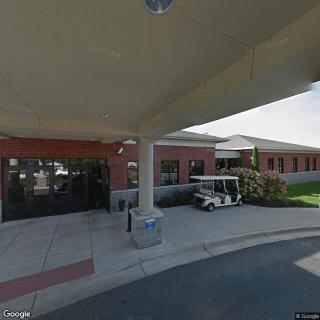
 Bright, welcoming environment with friendly, dignified care.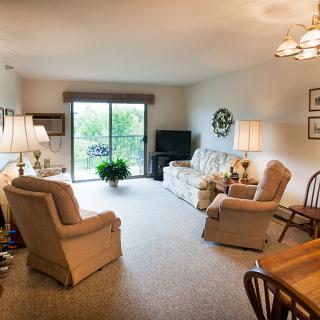


 Vibrant Senior Living: A Comprehensive Guide for Active Older Adults
 Assisted Living and Memory Care: Understanding Their Core Differences
 Choosing the Right Senior Care: A Detailed Exploration of Assisted Living and Nursing Homes