

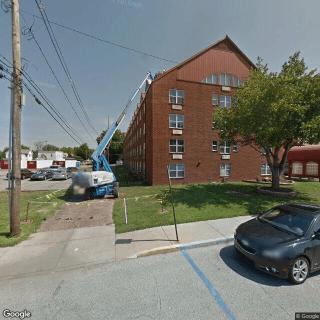
816 First Avenue, Evansville, IN 47710
To contact a resident: (812) 426-2841
For more information about senior living options: (866) 208-4318
Golden Living Center WoodBridge Costs & Pricing
At Golden Living Center WoodBridge, the monthly cost for a private room is set at $4,000, positioning it as a competitive option within Vanderburgh County, where similar accommodations average around $4,070. When compared to the larger Indiana state average of $4,418 for private rooms, WoodBridge offers an appealing value that can help families manage their budgets while still accessing essential care services. This pricing structure reflects a commitment to providing high-quality care at accessible rates in a region that balances affordability with the need for comprehensive support.
| Floor plans | Golden Living Center WoodBridge | Vanderburgh County | Indiana |
|---|---|---|---|
| Private | $4,000 | $4,070 | $4,418 |
Skilled Nursing Facilities with a similar price nearby
-
from -$720 / mo

Solarbron
$3,280 to $3,640 / month6.3 miles away -
from +$530 / mo

Signature Healthcare Of Newburgh
$4,530 / month7.1 miles away -
from -$340 / mo

River Pointe Health Campus
$3,660 to $4,410 / month4.9 miles away -
from -$462 / mo

Woodmont Health Campus
$3,538 to $4,209 / month17.7 miles away -
About the same

Golden Living Center - Brentwood
$3,979 / month1.4 miles away
Overall Review of Golden Living Center WoodBridge
Cons
 The staff spoke to patients in a disrespectful manner.
- Nothing has changed at the facility.
- The reviewer would not recommend this facility.
Review
Golden Living Center WoodBridge in Evansville is best avoided for anyone who expects humane, respectful treatment from the moment of contact. Based on a single, candid account, the environment reveals recurring issues in how patients are addressed and cared for, with the family member and others described as spoken to in ways that prompted immediate withdrawal and a formal complaint to the state. In practical terms, this facility does not convincingly demonstrate the kind of dignity, responsiveness, and professional warmth that families routinely seek. Only if every other option has been exhausted, within tight budget or location constraints, should this community even be under consideration, and even then with a heavy emphasis on close oversight. Put plainly, this community is not best suited for anyone valuing quality care; it should be considered only as a last resort when no credible alternatives exist.
Who may want to consider alternatives? Any family prioritizing safety, respect, and consistent communication should look elsewhere. The concrete signal is a lack of trust in how residents are treated, and the suggestion that management or staff have not changed in response to formal complaints. Families should also consider facilities with solid reputations for staff training, transparent escalation protocols, and real accountability. If a loved one requires reliable interpersonal care, or if family members cannot supervise daily interactions, this is not the pick. In short: prioritize options with proven, tangible commitments to resident dignity.
Pros and cons: the review offers virtually no positive takeaways to balance the negatives. The apparent pro would be basic access to care in a conveniently located facility, but that is overwhelmed by the persistent con of disrespectful treatment and a reported failure to address concerns. The phrase "nothing has changed" signals systemic issues rather than a temporary lapse. When the main risk is neglecting or demeaning residents, even a reasonable cost or convenient proximity cannot compensate. In decision terms, the cons decisively dominate, eroding trust and safety expectations.
Safety and staffing concerns: The account centers on how patients are spoken to, a red flag about daily interactions that implies broader staffing and supervisory problems. If staff treatment is inconsistent or harsh, the likelihood of timely assistance, proper supervision, and medical responsiveness declines. Recurrent complaints without evidence of corrective action also point to a governance weakness: when leadership does not convincingly commit to change, families should assume that problems may persist. The absence of any identified concrete improvements in the review makes the risk profile remain high for a vulnerable population.
Actionable steps for families: ought to be taken to verify current conditions and protect a loved one. Start with an in-person tour and request candid conversations with current residents and staff; prepare a specific list of care expectations and a plan for escalation if concerns emerge. Check the Indiana Department of Health or the state's long-term care complaint process for any formal actions or citations tied to the facility. Review recent inspection reports, staffing ratios, and caregiver qualifications. If possible, arrange a trial period or respite stay to assess day-to-day interactions. Compare with other Evansville options that have transparent grievance handling and demonstrable quality measures.
Bottom line: given the limited, strongly negative signal from independent feedback, Golden Living Center WoodBridge should be approached with caution and treated as a facility of last resort. Families should not settle for a setting where resident dignity is in question and where complaints have reportedly gone unaddressed. The prudent path is to explore alternatives with proven empathy, safety, and accountability, using direct, on-site evaluation and third-party guidance to choose a community that aligns with essential care standards. In many cases, other Evansville options will deliver a safer, more respectful environment without surrendering care quality.
 Memory Care
 Skilled Nursing Facility
 Activities off-site
 Beautician on-site
 Devotional services on-site
 Indoor common areas
 Outdoor common areas
 Private
 Wheelchair accessible showers
 Evansville Regional (4 miles away)
 High acuity care
 Incontinence care
 Meals provided
 24/7 supervision with extensive on-site amenities and services (dining, fitness, salon, transportation, garden).





 How and When Medicaid May Cover Assisted Living Costs
 A Detailed Exploration of Assisted Living Medicaid Waivers Across the United States
 Exploring the Contrasts Between Assisted Living and Skilled Nursing