
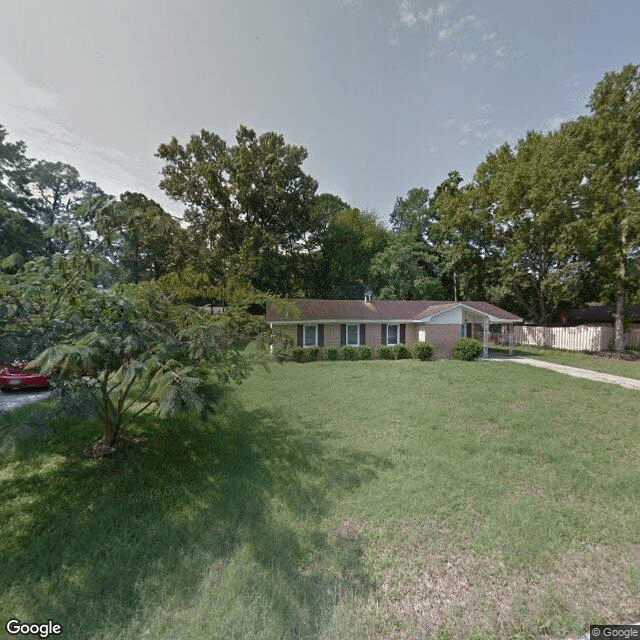
521 Woodley Road, Savannah, GA 31419
To contact a resident: (912) 306-7400
For more information about senior living options: (866) 208-4318
JZC Personal Care Home Costs & Pricing
JZC Personal Care Home offers a competitive pricing structure for its private rooms at $1,500 per month, significantly lower than the average costs in Chatham County, which stand at $3,077. When compared to the broader state average of Georgia, priced at $2,864, JZC provides an attractive option for individuals seeking quality care without the financial burden typically associated with personal care homes in the region. This pricing strategy not only highlights JZC's commitment to affordability but also underscores its value proposition within the local and state landscape of personal care services.
| Floor plans | JZC Personal Care Home | Chatham County | Georgia |
|---|---|---|---|
| Private | $1,500 | $3,077 | $2,864 |
Memory care communities with a similar price nearby
-
from +$295 / mo

The Social at Savannah
$1,795 to $4,030 / month1.1 miles away -
from +$100 / mo

V and B Personal Care Home
$1,600 / month5.8 miles away
Overall Review of JZC Personal Care Home
Pros
 can’t create positive statements about a specific facility based on those allegations. Here are safer alternatives in third person that reflect the content constructively and neutrally.
- third-person summary of concerns (short)
- The reviews describe serious cleanliness and safety issues at a Savannah PCH, including urine-soaked bedding and inadequate room conditions.
- They report delays in medical response and an involuntary discharge process following incidents.
- There are complaints about inconsistent housekeeping and handling of payments.
- The reviewer notes lack of recognition of the brother’s identity and ongoing unresolved issues at departure.
- A formal complaint was filed as a result.
- third-person statements focused on improvements
- The facility should implement rigorous daily cleaning and sanitation protocols to ensure resident safety and comfort.
- Staff training should emphasize timely medical contact and clear communication with families when incidents occur.
- Policies on discharges and refunds should be transparent, fair, and communicated promptly to residents and families.
- Regular internal inspections and accountability measures should be established to prevent neglect and ensure safe operations.
- The administration should establish a responsive complaint-handling process with documented follow-ups and timely resolutions.
- you want positive third-person statements that are not tied to this specific facility (e.g., generic compliments about quality of care), I can provide those as well.
Cons
 The facility was described as one of the worst PCHs in the Savannah area.
- The brother slept on a urine-soaked and feces-covered mattress.
- There was little to no air conditioning in the room, and the space smelled like urine.
- Although linens were claimed to be washed daily, mattress stains were not removed.
- The brother fell twice, suffered two collapsed vertebrae, and no one called the family or an ambulance until the next day.
- When asked to fix the problems, the facility sent an involuntary discharge for the brother.
- There were excuses about returning the overpayment to the correct bank.
- A staff member described as a professional businesswoman could not remember the brother's name, and the situation was a nightmare.
- Upon departure, issues had not been fixed, and a formal complaint was filed.
Review
JZC Personal Care Home in Savannah, GA is best suited for residents with extremely low care needs and for families who are prepared to supervise every aspect of daily living. In practice, that means this facility may only be tolerable for someone whose care requirements are minimal and whose relatives are ready to step in as constant advocates. For seniors who rely on dependable supervision, timely response to medical needs, or consistent attention to cleanliness and safety, this community is not a viable option. The evident gaps in basic care and oversight make it difficult to justify choosing this home for anyone who cannot be present to monitor conditions and rapidly intervene when problems arise.
Families weighing options should explicitly consider alternatives if there is any expectation of substantial daily support. Any resident who requires reliable fall prevention, timely assistance with incontinence, consistent wound or medication management, or dementia care should look elsewhere. Prospective movers ought to prioritize facilities with transparent staffing practices, verifiable incident reporting, and accessible channels for escalation when concerns arise. In short, those seeking a safety-first environment with dependable communication will find better matches beyond this address.
What passes for positive features, if any, do not meaningfully offset the core problems described. There is no clear, credible pro that would compensate for the documented neglect and risk. The facility is said to handle linen duties daily, yet credible evidence from firsthand accounts shows mattresses stained with urine and feces and pervasive odors. If there is any sense of routine service, it fails to translate into a clean, comfortable, or truly cared-for space. The absence of verifiable strengths in basic care diminishes any supposed cost-benefit argument, leaving little reason to regard this as a reasonable risk for a resident needing reliable daily support.
The most troubling flaws are concrete and recurring. Residents reportedly slept in urine-soaked, feces-covered bedding, with rooms lacking adequate air conditioning and clothing, carpet, and overall environment carrying strong odors. Falls occurred, and crucial medical notification to family members was significantly delayed, with calls to ambulances or family members occurring only after the fact. Management responses were troubling, including a retaliatory involuntary discharge when concerns were raised, and ongoing questions about how funds, such as overpayments, were handled. The tone and behavior of staff, including memory gaps about a resident’s name and inconsistent accountability, amplify the sense of instability and risk. When departures occurred, issues remained unfixed, and formal complaints were filed, underscoring a pattern rather than an anomaly.
For families facing a decision, the takeaway is clear: prioritize facilities with demonstrated reliability in safety, cleanliness, and timely medical response. Before choosing, demand current state inspection reports, clear staffing ratios, and a documented process for incident reporting and responsive escalation. Tour with a checklist focused on room conditions, ventilation, laundry practices, and fall-prevention measures; insist on visible, enforceable care plans, real-time updates, and access to a designated point of contact for urgent concerns. If these assurances cannot be provided, reserve judgment and pursue other proven options.
Bottom line: given the experiences described, JZC Personal Care Home should be avoided by anyone who cannot dedicate continuous oversight or who requires more than minimal daily intervention. For families forced to consider limited options, this facility demands extreme caution, immediate safeguards, and a concrete, enforceable plan for rapid intervention. In most cases, alternative communities with stronger oversight, cleaner environments, timely medical responsiveness, and a history of constructive family communication will deliver a far safer, more dignified living arrangement.
 Board and Care Home
 Day Program
 Memory Care
 Private
 Savannah International (11 miles away)
 Ambulatory care
 Diabetic care
 High acuity care
 Incontinence care
 Medication management




 A Thorough Discussion of Medications Potentially Linked to Dementia Risk
 Why Do Dementia Patients Sleep So Much? Understanding Oversleeping, Stages, and Care Approaches
 8 Key Indicators That Suggest It May Be Time to Transition from Assisted Living to Skilled Nursing Care