
34 Thorne Berry Drive, Hampton, GA 30228
To contact a resident: (770) 783-1299
For more information about senior living options: (866) 208-4318
Royal Personal Care Home Costs & Pricing
Royal Personal Care Home offers competitive pricing for its services, particularly when compared to the average costs in Spalding County and across Georgia. For both private and semi-private rooms, residents of Royal Personal Care Home can enjoy monthly fees of $2,200, which notably undercuts the county's averages of $2,606 and $2,358 respectively. Even more striking is the pricing for studio accommodations; at $2,200, it remains significantly lower than the county average of $3,156 and state average of $3,520. This favorable positioning not only highlights the affordability of Royal Personal Care Home but also reflects a commitment to providing quality care without compromising on access for potential residents.
| Floor plans | Royal Personal Care Home | Spalding County | Georgia |
|---|---|---|---|
| Private | $2,200 | $2,606 | $2,864 |
| Semi-Private | $2,200 | $2,358 | $2,529 |
| Studio | $2,200 | $3,156 | $3,520 |
Memory care communities with a similar price nearby
-
from -$100 / mo
Abiding Care Home
$2,100 / month13.6 miles away -
from +$300 / mo

A & C Personal Care Home
$2,500 to $4,000 / month22.8 miles away -
About the same

Arbor Terrace at Cascade
$2,170 to $6,975 / month23.9 miles away -
from -$200 / mo

Patron Place PCH
$2,000 to $2,500 / month20.1 miles away -
from -$200 / mo

Adam & Eve Pch 1
$2,000 to $3,000 / month18.7 miles away
Overall Review of Royal Personal Care Home
Pros
 They were respectful to mom, took excellent care of her, and were genuinely concerned about her well-being.
- Hospice personnel described the facility as the cleanest and nicest in the area.
- They would absolutely recommend Royal Personal Care Home to others.
- They would highly recommend Royal Personal Care Home to anyone looking.
- The facility was very clean, and the staff were caring and concerned about mom.
- The meals that were served were good.
- They would definitely recommend this home.
- Hospice staff described it as one of the best they had seen.
- Joyce was very pleasant and very caring.
Cons
 The move-in process was a little rushed.
- The staff did not provide enough notice or get the paperwork signed quickly enough.
- The reviewer couldn't rate the food.
- Mom soon stopped eating and only drank Ensure.
- The facility was small and would not be the best fit for the family member.
- It posed a hardship to transport to and from the doctor.
- The carpet in the room was squishy and wet due to a broken toilet.
- It is not a safe place.
Review
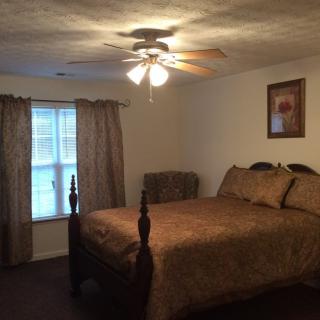
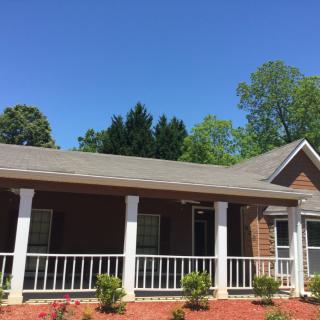
Royal Personal Care Home in Hampton, GA functions best for families seeking a small, intimate, home-like atmosphere where cleanliness and personal attention are prioritized. It suits residents who value a calm, neighborly setting and a staff team that is genuinely invested in each person’s well-being. The home-like environment and proactive, compassionate caregivers make it a practical choice for those transitioning into assisted living who want warmth, respect, and visible concern from staff. It is especially fitting for hospice or rehab transitions where families are urged not to disrupt a resident’s routine and where a high level of daily attentiveness is maintained in a compact, manageable setting.
However, there are clear reasons some families may want to explore alternatives. Memory-care needs that require more structured programming or greater safety safeguards may not align with the facility’s smaller footprint and fewer staff resources at times. The location’s logistics can be a hurdle for loved ones living farther away, or for families needing regular doctor appointments and easy access to transportation. Several reviews flag the potential for distance to complicate visit schedules, and for those who prioritize robust on-site programming, larger campuses with multiple care teams could be a better match. Additionally, mixed experiences with meals and occasional safety-related concerns push some families to consider other options with higher reliability in those areas.
On the positive side, the strongest assets are the consistently clean environment and the staff’s evident care and concern. Multiple reviews highlight residents being treated with respect, kindness, and genuine attention to well-being, often described as one of the cleanest and nicest facilities in the area. The move-in experience may have rough edges, but the overarching sentiment is that the care team is approachable, conscientious, and engaged with families. Hospice professionals and family members alike repeatedly note not moving a resident because of the quality of care observed, with a sense that the staff’s dedication is a meaningful credit to the home. These factors combine to create a reassuring atmosphere for families seeking reassurance that their loved one will be treated with dignity.
Where the gaps appear, they tend to be meaningful. The facility’s small size translates into limited on-site staffing coverage, which in turn can lead to perceptions of gaps in communication and responsiveness, especially during busy periods or when the sole owner-operator is the primary caregiver. Reports of a rushed move-in process, limited notice during transitions, and some dissatisfaction with meals suggest that not all basic expectations are consistently met. A troubling review about safety and a broken-toilet incident also underscores a risk, however infrequent, that a smaller operation can face operational vulnerabilities. These issues may be decisive for families prioritizing seamless daily routines, predictable meal service, and unequivocal safety standards.
Ultimately, the pros can offset the cons for residents who prize a close-knit, attentive, and clean living environment, and who can navigate the logistical realities with family involvement. For caregivers who want easy access to a familiar staff presence, a strong sense of community within a compact space, and the reassurance that staff are genuinely invested in comfort and dignity, Royal Personal Care Home delivers. Yet, for those needing expansive memory-support programs, frequent on-site activity options, or straightforward transport and highly predictable meal service, the cons are not easily dismissed. Prospective families should schedule careful visits, ask pointed questions about staff coverage, meal plans, safety protocols, and transportation arrangements, and weigh whether the intimate model matches the resident’s care needs and the family’s logistical realities.
 Board and Care Home
 Memory Care
 Activities off-site
 Air-conditioning
 Bath tubs
 Cable or satellite TV
 Devotional services off-site
 Fireplaces
 Full kitchen
 Handicap accessible
 Indoor common areas
 Outdoor common areas
 Private
 Private patio, deck, or balcony
 Respite or short term stays offered
 Wheelchair accessible showers
 Wi-Fi/high-speed internet available
 William B Hartsfield-Atlanta International (17 miles away)
 Ambulatory care
 Diabetic care
 High acuity care
 Incontinence care
 Medication management
 Anytime dining
 Art classes
 Bible study group
 Book club
 Bridge club
 Live well programs
 Visiting Rabbi
 Wine tasting






 A Thorough Discussion of Medications Potentially Linked to Dementia Risk
 Why Do Dementia Patients Sleep So Much? Understanding Oversleeping, Stages, and Care Approaches
 8 Key Indicators That Suggest It May Be Time to Transition from Assisted Living to Skilled Nursing Care