

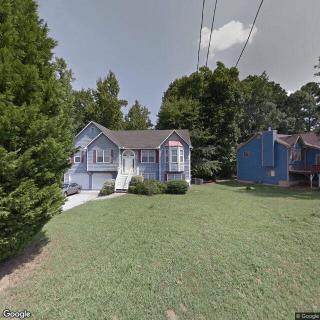
2475 Jonesboro Rd, Hampton, GA 30228
To contact a resident: (678) 759-0080
For more information about senior living options: (866) 208-4318
Good Faith Personal Care Home Costs & Pricing
Good Faith Personal Care Home offers competitive pricing for its residents, particularly when compared to both Spalding County and the broader state of Georgia. The monthly cost for a semi-private room at Good Faith is $1,500, which is significantly lower than the county's average of $2,358 and the state average of $2,529. For those seeking a one-bedroom accommodation, Good Faith again presents an attractive option at $2,400 - considerably less than the $2,975 typical in Spalding County and below the state's average of $3,412. Additionally, private rooms at Good Faith are priced equally at $2,400, which remains competitive against Spalding County's rate of $2,606 and Georgia's average of $2,864. Overall, Good Faith Personal Care Home stands out as an economically viable choice within its region while maintaining a focus on quality care for its residents.
| Floor plans | Good Faith Personal Care Home | Spalding County | Georgia |
|---|---|---|---|
| Semi-Private | $1,500 | $2,358 | $2,529 |
| 1 Bedroom | $2,400 | $2,975 | $3,412 |
| Private | $2,400 | $2,606 | $2,864 |
Memory care communities with a similar price nearby
-
from -$150 / mo
Le'glen Personal Care Home
$1,350 to $2,150 / month13.3 miles away -
About the same

Joy's Manor Pch
$1,500 to $4,000 / month20.3 miles away -
from -$150 / mo
Young @ Heart Place
$1,350 to $1,650 / month19.6 miles away -
from -$100 / mo
Southside Personal Care Home
$1,400 to $1,500 / month7.9 miles away -
About the same

We Are Family II
$1,500 to $2,000 / month21.9 miles away
Overall Review of Good Faith Personal Care Home
Pros
 This facility is now under new management and has a homely feel.
- It offers freshly served meals.
- It provides grand care to all residents.
- It invites visitors to stop in or call for more information.
Cons
 They claim the mom had a large gash on her foot and were not told for three days.
- They say it was so severe that it couldn’t be sewn up and could only be glued back together.
- They allege staff told them to lie about where the mom was to avoid paying commission.
- They assert the mom was found sitting alone while the aide was asleep in another room, with video evidence.
- They state they were asked to stay with the mom while staff ran errands, which they interpreted as neglect.
- They report giving staff a dirty look and leaving, with no answer when called, leaving the mom alone again.
- They claim the mom has scabies from this place.
- They mention the mom had to be taken to the ER and that hospice is now helping.
Review
Good Faith Personal Care Home in Hampton, GA is best suited for seniors who prize a genuinely homelike atmosphere and are comfortable with semi-private accommodations rather than private rooms. The new management has cultivated a warm, domestic feel, and meals are described as freshly prepared, delivered with care. For residents who want daily comfort, familiar routines, and uncomplicated living rather than formal medical programming, this community can be appealing. It presents as a small, homey option where staff are visible and residents appear to be treated with personal attention rather than institutional rigor.
Yet, this is a place where safety and oversight become decisive questions. Families should consider alternatives if private room access is non-negotiable, if ongoing medical supervision is essential, or if a higher level of monitoring and proactive care is non‑optional. The sentiment from residents’ families includes concerns about responsiveness, supervision, and the overall safety climate. In short, Good Faith presents a comforting vibe and decent meals, but it sits in a gray area for anyone prioritizing strong, consistent clinical support and unambiguous safety practices.
The strongest positives, the homelike ambiance, a sense of genuine care, and meals that feel thoughtfully prepared, do not fully neutralize the most serious red flags raised about care delivery. Instances described include a delayed response to a resident’s injury, reports of staff being unavailable or disengaged, and discomfort with how resident location and supervision were managed. Compounding these concerns are claims of privacy pressures and misaligned expectations about care responsibilities. While new leadership may promise steadier service, the gravity and specificity of such concerns mean the positives cannot be counted on as a reliable offset without verifiable improvements.
This tension between warmth and risk warrants a pragmatic, disciplined vetting process. Prospective families should insist on current, verifiable evidence of improved staffing, supervision protocols, and incident management. Ask for a detailed staff schedule, real-time response metrics, and a clear plan for how emergencies and injuries are addressed. Request copies of recent inspection and incident reports, and verify that a licensed nurse is available for assessments and medication management. If infection control measures and resident privacy are priorities, probe the facility’s exact policies and any recent outcomes, especially in light of health concerns highlighted by families.
For decision-making, the key is to test the caveats before choosing. Tour during peak activity to observe staff-to-resident interactions, check room configurations to confirm whether private rooms are realistically available, and speak candidly with residents about daily life, meal quality, and perceived safety. Inquire about activities, housekeeping, and the consistency of aide supervision. If a serious medical need or a preference for private space is non-negotiable, best to compare with nearby options that guarantee private rooms and demonstrable, on-demand medical oversight. The conclusion is clear: Good Faith can work for a very specific subset of seniors who value home-like living and are willing to accept semi-private arrangements, provided that rigorous, verifiable improvements in safety and staffing are in place. If not, families should pursue alternatives with stronger, proven safety records and private-room availability.
 Board and Care Home
 Memory Care
 Activities off-site
 Bath tubs
 Beautician on-site
 Indoor common areas
 Outdoor common areas
 Private
 Respite or short term stays offered
 William B Hartsfield-Atlanta International (16 miles away)
 Diabetic care
 High acuity care
 Incontinence care
 Medication management
 Kosher






 Why Do Dementia Patients Sleep So Much? Understanding Oversleeping, Stages, and Care Approaches
 8 Key Indicators That Suggest It May Be Time to Transition from Assisted Living to Skilled Nursing Care
 Nourishing the Mind: Essential Dietary Approaches for Dementia