
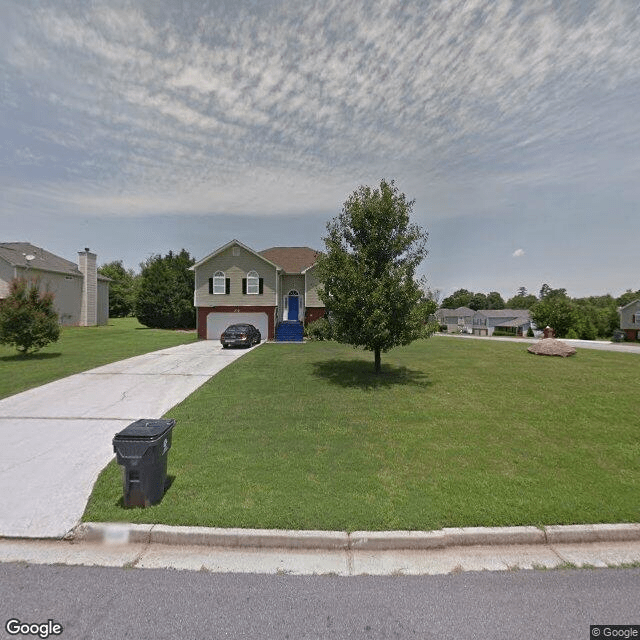
3746 William Trail, Ellenwood, GA 30294
To contact a resident: (678) 489-4060
For more information about senior living options: (866) 208-4318
Lampley Care Personal Care Home Costs & Pricing
Lampley Care Personal Care Home offers competitive pricing for its residents, demonstrating a significant advantage over both Rockdale County and the broader state of Georgia. For instance, the monthly cost for a semi-private room at Lampley is $1,500, which is notably lower than the county average of $1,926 and the state median of $2,529. Similarly, private rooms are available for $1,900 at Lampley, compared to $2,363 in Rockdale County and $2,864 statewide. Even one-bedroom accommodations at Lampley are priced at $1,900, offering a stark contrast to the county's average of $2,735 and Georgia's average of $3,412. These figures reflect Lampley's commitment to providing quality care while maintaining affordability for families exploring personal care options.
| Floor plans | Lampley Care Personal Care Home | Rockdale County | Georgia |
|---|---|---|---|
| Semi-Private | $1,500 | $1,926 | $2,529 |
| 1 Bedroom | $1,900 | $2,735 | $3,412 |
| Private | $1,900 | $2,363 | $2,864 |
Memory care communities with a similar price nearby
-
from -$150 / mo
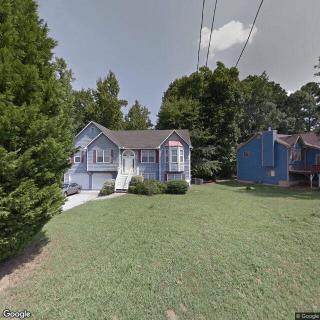
Le'glen Personal Care Home
$1,350 to $2,150 / month2.8 miles away -
About the same

Joy's Manor Pch
$1,500 to $4,000 / month10.0 miles away -
About the same

Amelia Gardens
$1,500 to $2,500 / month23.3 miles away -
from +$290 / mo
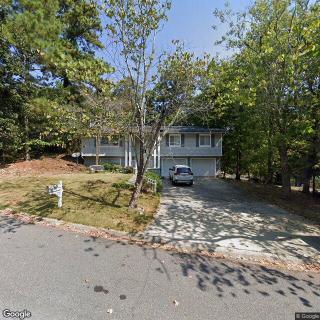
A Home Sweet Home
$1,790 to $2,350 / month18.9 miles away -
from -$150 / mo
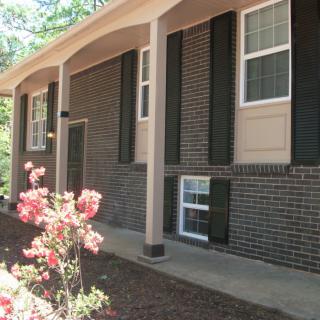
Young @ Heart Place
$1,350 to $1,650 / month9.8 miles away
Overall Review of Lampley Care Personal Care Home
Pros
 The place is loved by the reviewers.
- It is their top choice so far.
- She is very professional and meticulous with her paperwork.
Cons
 Mom is currently staying there, but she was told the place is closing and she must find a new place.
- The place is closing, leaving Mom to search for a new home.
Review
Lampley Care Personal Care Home in Ellenwood, GA is best suited for families seeking a small, intimate personal care setting where administrative rigor and clear documentation drive daily operations. The community appears to appeal to residents who value a hands-on approach to care coordination, with families reporting professional handling of paperwork and plans. In practical terms, this means predictable billing, well-organized care plans, and a point of contact that can be relied upon for updates. One reality that colors the decision, however, is that there are repeated reports from a family member that the operator has told them the home is closing, triggering urgent relocation considerations and a need for rapid contingency planning.
For those who may want to consider alternatives, this option is less suitable for residents who require long-term stability or robust continuity of care. If the plan depends on remaining open and operating without disruption, the potential closure introduces a significant risk that could upend daily routines and caregiver relationships. Families should also assess fit for residents who need more extensive medical oversight than a non-nursing personal care setting provides. The lack of available evidence about ongoing day-to-day care quality beyond administrative strengths means careful, direct inquiries are essential before committing.
On the upside, the strongest pro is the demonstrated professionalism and meticulous handling of paperwork. Families note that this care home is well-managed from an administrative perspective, with careful documentation that gives confidence in care plans, compliance, and financial arrangements. The sentiment that this place is a top choice for some speaks to a level of trust in the operator’s organizational competence and in how records are kept, an important factor when a loved one’s routines, medications, and service plans must stay aligned across caregivers and family members. In a small, personal setting, such administrative clarity can translate into smoother transitions and fewer miscommunications, an undeniable advantage when decisions hinge on accuracy and accountability.
The principal con, by contrast, is not about care quality in the moment but about the stability of the community itself. The repeated indication that the home is closing creates a destabilizing backdrop that can erode confidence in long-term placement. Even if the care staff provide attentive day-to-day support, the prospect of sudden relocation looms as a major risk, moving a resident with established routines, social ties, and personal belongings is never trivial. For families facing medical or cognitive challenges, the emotional and logistical strain of a forced or precipitate move can outweigh any administrative strengths the facility brings.
That tension between strong administrative practices and uncertain operational stability is where the decision calculus must land. The meticulous paperwork and professional front provide some offset if the closure remains hypothetical or is resolved with a clear, timely plan for transition support, relocation assistance, and guarantees about continuity of care. In other words, the positives become a practical advantage if and when a concrete path to a safe, well-managed move exists. But without a credible, well-communicated closure plan, the risk to daily life and to continuity of care is too great to overlook.
The practical course is clear: verify the current status with the administrator, obtain a written closure timeline (if any), and request specifics about transfer support, deposits, and how enrolled residents’ care plans will be honored during a transition. If closure is definite and a workable relocation plan is in place, the community can function as a reasonable interim choice while families assess longer-term options. If, however, the status remains fluid or the timing is uncertain, it is prudent to explore other small- to mid-sized facilities with proven operating histories and explicit continuity assurances. In the end, the decision should hinge on which option offers stable, uninterrupted care, and whether a trusted, well-documented environment can be maintained throughout a potential move.
 Board and Care Home
 Memory Care
 Activities off-site
 Bath tubs
 Private
 William B Hartsfield-Atlanta International (9 miles away)
 Ambulatory care
 Diabetic care
 High acuity care
 Incontinence care
 Medication management
 Meals provided



 8 Important Indicators That Memory Care May Be Necessary
 Delving into the Inner World of Dementia: Insights into Thoughts and Awareness
 Five Subtle Dementia Indicators to Observe: An In-Depth Guide to Understanding “Does My Mom Have Dementia?”