
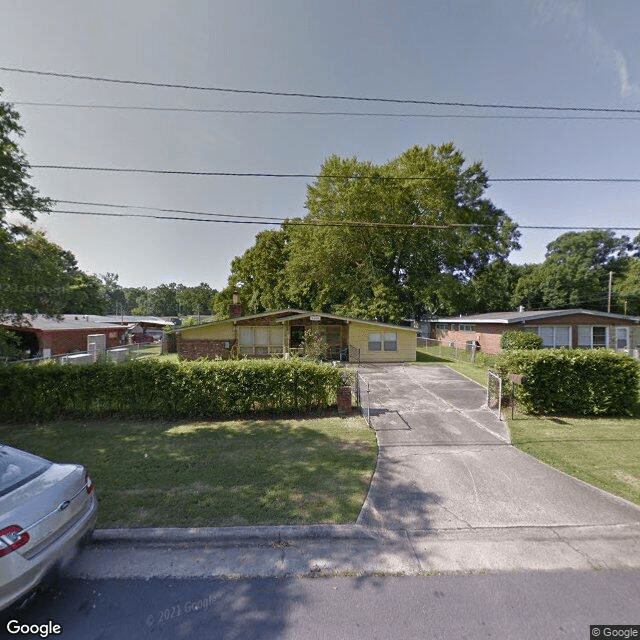
2440 Mesa Street, Columbus, GA 31903
To contact a resident: (706) 689-0230
For more information about senior living options: (866) 208-4318
South Columbus Personal Care Home Costs & Pricing
South Columbus Personal Care Home offers competitive pricing for its residents, especially when compared to both Muscogee County and the broader state of Georgia. For semi-private accommodations, South Columbus charges $1,300 per month, significantly lower than the county average of $2,650 and the state average of $2,529. In terms of private rooms, the home's monthly fee is set at $1,500, well below Muscogee County's rate of $4,007 and Georgia's average of $2,864. This pricing structure positions South Columbus as an appealing option for families seeking quality care without the financial strain often associated with assisted living facilities.
| Floor plans | South Columbus Personal Care Home | Muscogee County | Georgia |
|---|---|---|---|
| Semi-Private | $1,300 | $2,650 | $2,529 |
| Private | $1,500 | $4,007 | $2,864 |
Memory care communities with a similar price nearby
-
from -$50 / mo

Truly A Blessing II
$1,250 to $8,500 / month7.1 miles away -
from +$200 / mo

Marie's Personal Care Home
$1,500 to $3,000 / month5.7 miles away -
from +$200 / mo
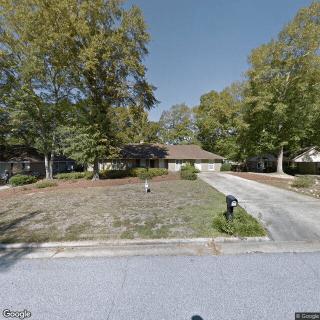
Castlewood Personal Care Home
$1,500 to $2,300 / month7.5 miles away -
from +$195 / mo
The Landings of Columbus
$1,495 to $3,400 / month9.1 miles away -
from -$50 / mo

Truly A Blessing
$1,250 to $2,000 / month7.2 miles away
Overall Review of South Columbus Personal Care Home
Pros
 The personal care home is well run.
- The personal care home is clean.
Cons
 The staff member was verbally and mentally abusive.
- The staff member took the resident's Dynavox, the only means of communication.
- The resident was afraid of Bernice.
Review
South Columbus Personal Care Home is best suited for families that want a straightforward, clean, orderly personal care setting and can commit to active oversight to safeguard residents. The environment appears predictable: neat, well-maintained common areas, routine staffing, and a sense of structure that reduces random disruption. For families that can invest time in ongoing advocacy, this facility can deliver a dependable daily rhythm, easy access to basic services, and a calm, undramatic living context. In short, it serves as a practical option for those who value cleanliness and consistent operation and are prepared to stay closely involved to ensure standards are upheld.
It is essential to acknowledge who may want to consider alternatives. Any family for whom safety and respectful, humane treatment are non-negotiables should look beyond this community. If medical complexity requires robust clinical support, memory-care programming, or high-touch staff engagement, other options are likely to offer stronger supervision and more proactive care. Additionally, families that cannot commit to regular, hands-on oversight or that prefer facilities with transparent incident tracking and stronger protections against potential mistreatment may find other communities better aligned with expectations.
On the upside, the posted feedback consistently identifies the facility as well run and clean. That combination matters in daily life: clean rooms and common areas support comfort and dignity, while a well-organized operation reduces confusion for residents and families during transitions, medication routines, and routine care. For residents who thrive in predictable patterns and appreciate a tidy, low-disruption setting, these operational strengths translate into reliable basics, meal service, housekeeping, and basic personal care delivered with apparent efficiency.
The clearest and most troubling counterpoint comes from the experiences described by at least one resident alleging abusive staff behavior. A particular employee was framed as verbally and mentally abusive, and crucial communication tools were allegedly taken, leaving the resident fearing for safety. This single, severe concern casts a long shadow over the other positives. When a resident’s only meaningful mode of communication is restricted, the risk to dignity, autonomy, and safety escalates dramatically. The tension between clean surfaces and a controlled routine on one side, and potential mistreatment on the other, makes the overall value proposition fragile for anyone who cannot closely monitor day-to-day interactions.
In weighing the pros against the cons, the clean, well-run environment loses considerable weight when serious staff conduct issues are present, even if those issues appear isolated in the limited narrative. Cleanliness and order matter, but not if they coexist with a culture that tolerates or fails to address abusive behavior and the direct suppression of communication for residents. For families with the capacity to supervise, insist on rigorous staff training, clear reporting protocols, and immediate, transparent responses to concerns. For others, this imbalance is a signal to explore other communities where resident rights and safety are clearly prioritized and verifiable.
Bottom-line guidance: South Columbus Personal Care Home can work for a small slice of families who can maintain vigilant oversight and demand strong safeguarding measures, but the risk profile is too high for anyone prioritizing safety, humane treatment, and robust communicative support. Prospective families should pursue a structured visit with specific inquiries: what training and supervision exist for frontline staff, how incidents are recorded and resolved, what protections are in place for residents’ communication devices and rights, and whether current residents and families feel heard and protected. If this facility cannot convincingly demonstrate solid, proactive protections against mistreatment, the prudent path is to continue the search for alternatives that offer demonstrable safety, respectful care, and an unambiguous commitment to resident autonomy.
 Board and Care Home
 Day Program
 Memory Care
 Bath tubs
 Devotional services on-site
 Indoor common areas
 Outdoor common areas
 Private
 Respite or short term stays offered
 Columbus Metropolitan (8 miles away)
 Ambulatory care
 Diabetic care
 Incontinence care
 Medication management
 Kosher





 Dementia Behaviors: In-Depth Understanding and Effective Coping Strategies
 5 Early Indicators of Dementia and What You Can Do
 8 Important Indicators That Memory Care May Be Necessary