
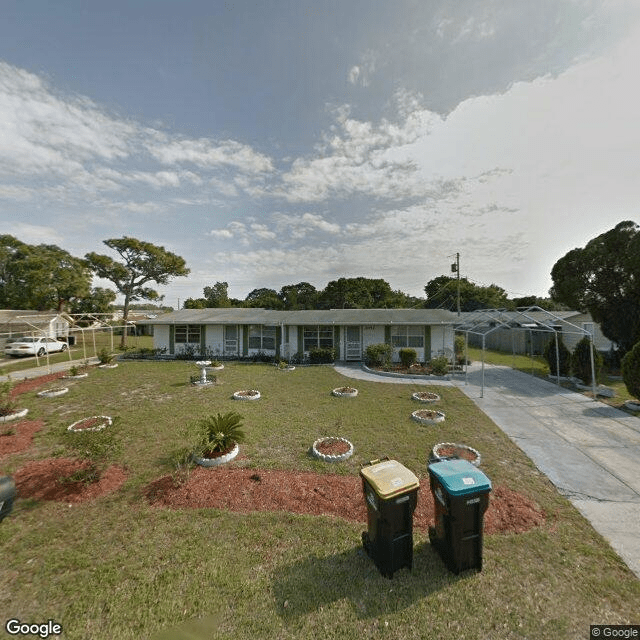
2052 Syracuse Court NE, Palm Bay, FL 32905
To contact a resident: (321) 951-2887
For more information about senior living options: (866) 208-4318
Bernice Laidlaw Adult Family Care Home Costs & Pricing
Bernice Laidlaw Adult Family Care Home offers a competitive pricing structure, with private rooms and one-bedroom accommodations both priced at $1,600 per month. This represents a significant savings when compared to the average costs in Brevard County, which stand at approximately $3,663 for private rooms and $3,909 for one-bedroom units. Similarly, the Florida state averages are also higher, with private room rates around $3,699 and one-bedroom options at about $3,864. The affordability of Bernice Laidlaw Adult Family Care Home not only highlights its commitment to accessible care but also positions it as a favorable choice for families seeking quality adult family care within their budget.
| Floor plans | Bernice Laidlaw Adult Family Care Home | Brevard County | Florida |
|---|---|---|---|
| Private | $1,600 | $3,672 | $3,699 |
| 1 Bedroom | $1,600 | $3,909 | $3,864 |
Memory care communities with a similar price nearby
-
from -$56 / mo

The Brookshire
$1,544 to $5,040 / month3.8 miles away
Overall Review of Bernice Laidlaw Adult Family Care Home
Pros
 Bernice finally remembered the appointment.
 - Bernice asked for the resident’s identity to clarify who the patient was.
- The reviewer notes that the appointment context was acknowledged during the visit.
- The review highlights an effort to confirm important details about the resident.
Cons
 There was a lot of yelling and commotion at the house on arrival.
- The room shown was unkept, with a broken closet door.
- The staff kept referring to the resident as a patient rather than as a resident.
- The staff implied there was nothing wrong with him, which felt dismissive.
- She refused to provide activities or outings, saying that would be the family's responsibility.
- The home used a keyed lock on both sides, raising safety and supervision concerns.
- A female resident begged to be taken home and was told to sit down and be quiet.
Review
This community is best suited for residents who insist on a very small, home-like setting and for families that are prepared to take primary responsibility for supervision, programming, and day-to-day care coordination. In practice, the environment appears to require a high degree of family involvement and a willingness to overlook gaps in professional oversight. It is not a fit for families seeking a professionally staffed, highly supervised living arrangement with consistent, resident-centered programming. Those who prioritize routine, formal care plans, or a staff-driven approach should look elsewhere.
From the experience described, significant red flags emerge that overwhelm any potential upside. The initial appointment process is chaotic, with unclear communication and a personnel demeanor that undermines trust before the first impression is formed. Once inside, the setting feels unprepared for serious dementia care: a room described as unkempt, broken fixtures, and décor that seems inappropriate for a male resident, signaling a lack of attention to basic caregiving standards. The staff language shifts residents into a patient frame, even when the need is dementia care, which is jarring and disorienting for families evaluating long-term placement. Such behavior signals a culture that is not oriented toward respectful, person-centered care.
Safety and supervision stand out as particularly concerning themes. The home’s door setup, requiring a key on both sides to enter and exit, raises immediate alarm about fire safety and emergency egress. The reviewer questions the capacity of a single caregiver to monitor residents 24/7, and the anecdote about an in-house resident begging to be taken home underscores a troubling disconnect between residents’ emotional needs and the care environment. The overall tone and management style, policing residents with stern admonitions and treating the space more like a house guest list than a supervised care setting, invite serious doubt about consistent, reliable monitoring and appropriate responses to cognitive impairment.
The absence of activities and structured outings is a meaningful drawback for many families seeking stability and engagement for a loved one with dementia or aging needs. The staff’s admission that programming falls to families is a model that works only when a family can provide ongoing, meaningful stimuli and social opportunities. For someone who cannot rely on external programming or who requires routine cognitive-stimulation, this arrangement likely leads to boredom, withdrawal, or increased confusion. In contrast, reputable assisted living or adult family care homes typically provide a baseline of daily activities, social opportunities, and a predictable schedule, elements that appear entirely missing here.
Given the stark realities described, alternatives deserve careful consideration. Prospective residents should seek professionally run options with verifiable licensure, clearly defined care plans, and documented safety protocols. Key questions to ask include staff-to-resident ratios, on-site supervision coverage, dementia training, and how emergencies are managed. Inquire about resident rights, language used by caregivers, and how the facility handles behavioral cues without resorting to shaming or improper labeling. Ask for a tour that showcases a clean, organized space, a demonstrated activity calendar, and conversations with multiple staff members about daily routines.
In conclusion, Bernice Laidlaw Adult Family Care Home is not recommended for families seeking reliable, safety-forward dementia care in a licensed, professionally staffed setting. It may only align with a very narrow niche: families prepared to shoulder most of the caregiving burden and tolerate a home atmosphere that lacks formal oversight and structured programming. For most seniors with dementia or complex care needs, pursuing alternatives, preferably licensed facilities with established safety measures, consistent staffing, and resident-centered activities, will yield a clearer path to quality, reliable care. If there is continued interest, engage in a rigorous assessment process, insist on concrete documentation, and compare against more robust options before making a commitment.
 Board and Care Home
 Day Program
 Memory Care
 Private
 Melbourne International (5 miles away)
 Ambulatory care
 Diabetic care
 High acuity care
 Incontinence care
 Medication management





 An In-Depth Look at Reminiscence Therapy in Dementia Care
 Dementia-Related Hallucinations: Causes, Experiences, and Practical Approaches
 Illuminating Insights About Alzheimer's Disease: Ten Crucial Realities