

7100 Northwest 1 Terrace, Miami, FL 33126
To contact a resident: (305) 262-2001
For more information about senior living options: (866) 208-4318
Maggie's Retirement Home #4 Costs & Pricing
Maggie's Retirement Home #4 offers competitive pricing that stands out favorably when compared to both Miami-Dade County and the broader state of Florida. For a semi-private room, residents can expect to pay $1,000 per month, significantly lower than the county average of $2,250 and the state average of $3,009. Similarly, those seeking a private room will find the monthly cost of $1,500 at Maggie's to be appealingly economical compared to Miami-Dade's rate of $3,304 and Florida's average of $3,699. This makes Maggie's Retirement Home #4 an attractive option for individuals seeking quality care at a more affordable price point in a region where costs can be substantially higher.
| Floor plans | Maggie's Retirement Home #4 | Miami-Dade County | Florida |
|---|---|---|---|
| Semi-Private | $1,000 | $2,250 | $3,009 |
| Private | $1,500 | $3,304 | $3,699 |
Memory care communities with a similar price nearby
-
About the same
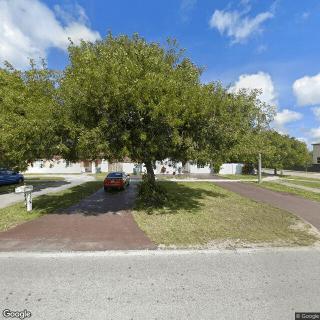
Santa Flora Assisted Living Facility
$1,000 to $2,000 / month23.9 miles away -
from -$100 / mo
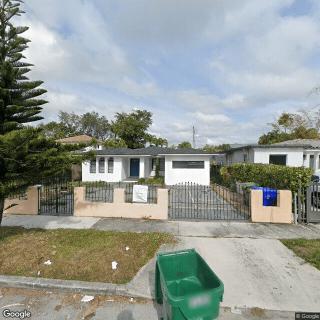
My Bells ALF
$900 to $2,700 / month5.3 miles away -
from -$100 / mo
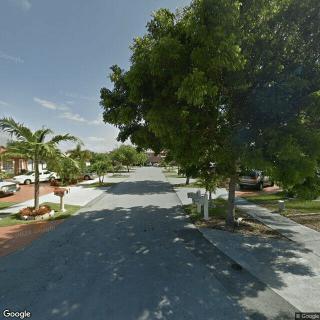
Garden Valley Retirement Home
$900 to $1,500 / month11.8 miles away -
from +$100 / mo

Molina's Adult Care
$1,100 to $1,600 / month2.9 miles away -
About the same
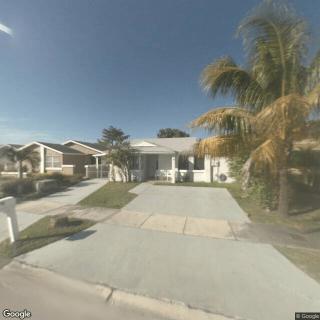
Tiffany Assisted Living Facility
$1,000 to $1,500 / month13.7 miles away
Overall Review of Maggie's Retirement Home #4
Pros
 Maggie’s Retirement Home provided exceptional care for the mom.
- She was kept clean, fresh, and comfortable, with no bed sores.
- The staff treated her like family, with warmth, love, and dignity.
- Traditional Cuban meals were cooked that tasted just like grandma's, warm and full of love.
- Every bath, meal, and moment was handled with care and dignity.
- The family felt at peace knowing she was in good hands.
- Office managers Doris and Norma were true professionals, attentive and knowledgeable.
- The home had several aides around the clock, so she was never alone.
- It felt like a typical Hispanic home—warm, welcoming, and full of life.
- Barbara, the owner, was the sweetest person, patient, and welcoming.
Cons
 The new management is not a nice place to be and does not care about the elderly.
Review
This community is best suited for families seeking a warm, home-like setting where a bed-bound loved one can receive steady, compassionate care and daily rhythms that feel culturally familiar. Maggie’s Retirement Home #4 in Westchester, Miami, stands out for seniors who rely on around-the-clock attention, meticulous daily care, and a setting that feels more like a family home than a hospital. Residents who need constant assistance with hygiene, mobility support, and personal dignity tend to benefit from the consistency many aides provide. The emphasis on traditional Cuban cooking and familiar routines helps preserve a sense of home, which can be especially comforting for long-term residents and anxious family members.
Still, not every path ends here. A skeptical note from a tour highlighted concerns about new management, suggesting that leadership changes might influence care priorities or the consistency of oversight. That caveat matters for families who require a highly predictable governance structure, transparent decision-making, and a clearly defined care plan. For seniors who need rigorous clinical oversight, frequent medical review, or a facility with a more standardized, institution-like cadence, other options with longer-established governance may feel more reassuring. This is a meaningful consideration for households where stability in administration translates to every-day care decisions.
On balance, the pros are compelling and substantial. Staff members are described as treating residents like family, delivering warmth with professional diligence. Around-the-clock aides mean residents rarely wait for fundamental needs, a factor that directly enhances safety and comfort. The owners and office managers are noted as attentive and knowledgeable, which translates into smoother communications with families and quicker responses to concerns. Aides who know the resident’s preferences, bath routines, meal choices, and personal dignity, create a reliable daily structure. Night coverage by a vigilant night-watch team adds a further layer of security, while the homey atmosphere and family-style meals reinforce emotional well-being and reduce relocation stress.
Nonetheless, a single negative commentary on management cannot be fully ignored. It signals a potential fragility in administration that could ripple into daily reliability if leadership priorities shift or if staffing decisions become inconsistent. This is not a universal verdict, but it is a critical lens for evaluating long-term continuity of care. Prospective residents should actively assess current leadership stability, communication routines with families, and how change is managed on the floor. A thorough conversation about governance, accountability, and the facility’s plan if staffing gaps occur will clarify whether the positives can endure under any managerial transition.
The strength of Maggie’s retirement setting often offsets the concerns for families who prize a residential, culturally resonant environment with high-touch caregiving. For residents who thrive in intimate, hands-on care and who value a kitchen that evokes home-cooked meals from a familiar culture, the combination of continuous aides, genuine staff warmth, and a close-knit, family-like atmosphere delivers a meaningful quality-of-life edge. The presence of Doris and Norma in management, Barbara’s approachable leadership, the reliable aides, and the night-shift team collectively foster trust and familiarity that can smooth transitions and sustain morale over time. The key risk remains ensuring that this warmth remains steady if and when management dynamics shift; otherwise, the overall experience tends to deliver what many families seek: dignified, affectionate, day-to-day care.
For families considering Maggie’s, the practical path is straightforward. Plan a second, in-person visit with an emphasis on meeting caregivers across shifts and observing interactions with residents. Request a concrete care plan that outlines bathing, meals, medications, safety checks, and responses to medical needs. Inquire about staffing ratios, nurse availability, and the facility’s approach to holidays and staff shortages. If the goal is a home-like setting where a loved one feels truly cared for, and where staff know preferences and routines, and where administration is accessible and responsive, Maggie’s Retirement Home #4 can be an excellent fit. If governance stability or a more formal clinical framework is non-negotiable, it pays to explore additional options and compare how each operation upholds daily care, oversight, and resident dignity over time.
 Board and Care Home
 Day Program
 Memory Care
 Indoor common areas
 Outdoor common areas
 Private
 Respite or short term stays offered
 Wheelchair accessible showers
 Miami International (2 miles away)
 Ambulatory care
 Diabetic care
 High acuity care
 Incontinence care
 Medication management
 Meals provided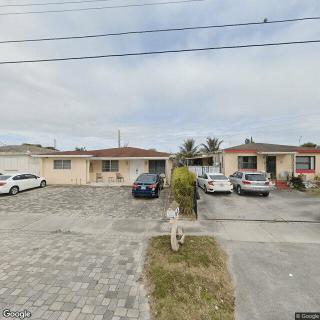




 Nourishing the Mind: Essential Dietary Approaches for Dementia
 Understanding Dementia Behaviors: Practical Insights and Strategies for Caregivers
 When Dementia Sparks Anger and Aggression: Understanding the Connection and Ways to Cope