
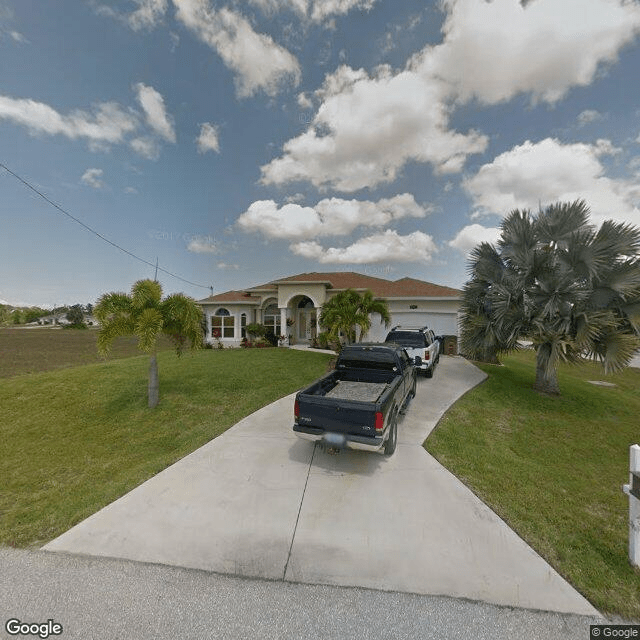
4303 NW 40th Street, Cape Coral, FL 33993
To contact a resident: (239) 338-7828
For more information about senior living options: (866) 208-4318
Luz Moore Quality Care Home Costs & Pricing
At Luz Moore Quality Care Home, the monthly costs for various room types offer a compelling value in comparison to both Lee County and broader Florida averages. For a private room, residents can expect to pay $3,500, significantly lower than Lee County's average of $4,293 and even below Florida's state average of $3,699. Similarly, the cost for a studio room is set at $3,500, which remains competitively priced against county and state averages of $3,874 and $3,823 respectively. The same pricing applies to their one-bedroom option at $3,500, again providing savings compared to Lee County's average of $4,049 and Florida's average of $3,864. These competitive rates highlight Luz Moore Quality Care Home's commitment to offering quality care while ensuring affordability for its residents.
| Floor plans | Luz Moore Quality Care Home | Lee County | Florida |
|---|---|---|---|
| Private | $3,500 | $4,293 | $3,699 |
| Studio | $3,500 | $3,874 | $3,823 |
| 1 Bedroom | $3,500 | $4,049 | $3,864 |
Memory care communities with a similar price nearby
-
from +$500 / mo

Chelsea Place Assisted Living Facility
$4,000 to $5,500 / month16.4 miles away -
from -$400 / mo
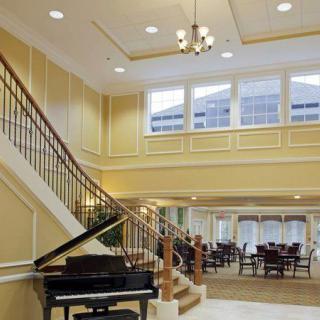
Canterfield of Fort Myers
$3,100 to $6,200 / month23.0 miles away -
from +$195 / mo
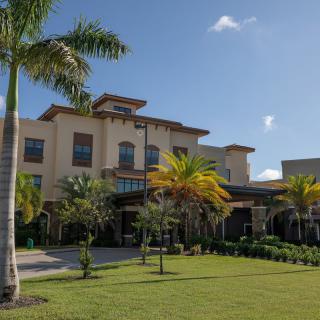
Seaside at Fort Myers
$3,695 to $5,195 / month16.8 miles away -
from +$595 / mo
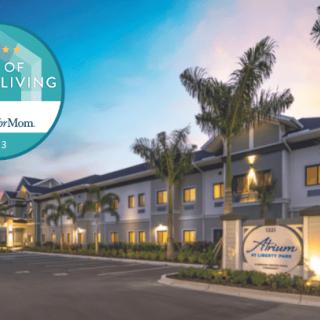
Atrium at Liberty Park
$4,095 to $5,995 / month6.8 miles away -
from +$450 / mo
Barrington Terrace of Fort Myers
$3,950 to $6,290 / month18.5 miles away
Overall Review of Luz Moore Quality Care Home
Pros
 Quality Life provides excellent services to clients and shows great attention to its workers.
- The company demonstrates a lot of respect and responsibility.
- Quality Life is among the best companies in Cape Coral.
- Quality Life offers the best home health services in the area.
- Quality Life provides excellent care to patients after hospital discharge.
- Juan C is regarded as one of the best nurses, and Dayana the therapist provides quality care.
- Clients would definitely choose Quality Life Home Health Agency again.
Review
Luz Moore Quality Care Home is best suited for seniors and recovering patients in Cape Coral who want professional, hands-on in-home health support delivered with steadiness and expertise. This setting shines when a person is navigating post-acute recovery or ongoing needs that require skilled nursing, therapy, and dependable caregiving without forcing a move to a campus-based facility. The emphasis on high-quality home health services makes it a compelling choice for families seeking to maintain a familiar home environment while securing hospital-level oversight and rehab support.
Those considering alternatives should note that this option may not fit every scenario. For families prioritizing around-the-clock supervision, a tightly staffed assisted living campus, or a memory care environment with structured programming and peer engagement, an on-site community with 24/7 care staff could be a better match. Similarly, individuals who crave robust social activity, planned outings, and on-premises amenities may prefer a traditional facility setting over home-based services. In short, this is a superior choice for skilled at-home care, but not a substitute for a community designed to provide constant live-in supervision and social immersion.
The core strengths are concrete and consistently delivered. The care philosophy centers on respect, responsibility, and attentive service to both clients and staff, creating a reliable caregiving culture. Families have observed real, measurable benefits when a senior re-entered daily functioning after discharge, with the care team delivering the support that helps a loved one regain independence. In particular, the testimonials highlight individual caregivers, notably a nurse and a therapist, who earn high praise for skill, compassion, and the tangible progress they foster. That level of staff quality translates into confidence for families during what can be a fragile recovery period.
Quality Life Home Health Agency, operating within this community, has earned recognition as among the best in the Cape Coral area. The consistent positive feedback reinforces a practical reality: when experienced clinicians show up prepared to tailor therapy and nursing care to a patient’s trajectory, the home can become a powerful extension of hospital-based treatment. The five-star rating across five reviews underscores reliability and results, suggesting that families can expect steady communication, careful monitoring, and a professional approach to wound care, medication management, and therapeutic interventions. In real terms, that means fewer surprises and clearer progress reports for caregivers coordinating a complex care plan.
Yet the absence of a full-time campus environment does introduce trade-offs. The main trade-off is often the degree of social interaction, structured activities, and on-site supervision that a traditional assisted living community provides. The upside, however, is equally real: the comfort of remaining at home can reduce anxiety, preserve familiar routines, and allow for highly personalized, outcome-driven care plans. The top-tier staff exhibiting reliability, continuity, and genuine concern tends to mitigate the potential social downsides, aligning care intensity with the family’s priorities and the patient’s preferences. For many, that alignment is precisely what makes the at-home option worth choosing, balancing medical needs with dignity and autonomy.
For families evaluating options, a practical path forward is essential. Start by clarifying care goals: is the priority rehab progression, ongoing nursing support, or simply bridging a hospital discharge with safe, daily supervision? Inquire about staff consistency, hospitalization prevention strategies, and how therapy plans are adjusted as recovery evolves. Confirm the scope of services, on-call availability, and the process for coordinating with hospital teams or primary care physicians. If the aim is a high-caliber, home-based care experience with proven clinicians and a track record of recovery success, Luz Moore Quality Care Home, through Quality Life Home Health Agency, offers a compelling, well-supported option. If, instead, the priority is a social, 24/7 community environment with built-in activities and memory-care programming, pursue alternatives designed around those needs. The right choice emerges from matching the care model to the patient’s degree of independence, safety requirements, and the family’s ability to participate in care planning.
 Board and Care Home
 Memory Care
 Activities on-site
 Devotional services off-site
 Indoor common areas
 Private
 Southwest Florida International (23 miles away)
 Ambulatory care
 Diabetic care
 Meals provided

 8 Important Indicators That Memory Care May Be Necessary
 Delving into the Inner World of Dementia: Insights into Thoughts and Awareness
 Five Subtle Dementia Indicators to Observe: An In-Depth Guide to Understanding “Does My Mom Have Dementia?”