
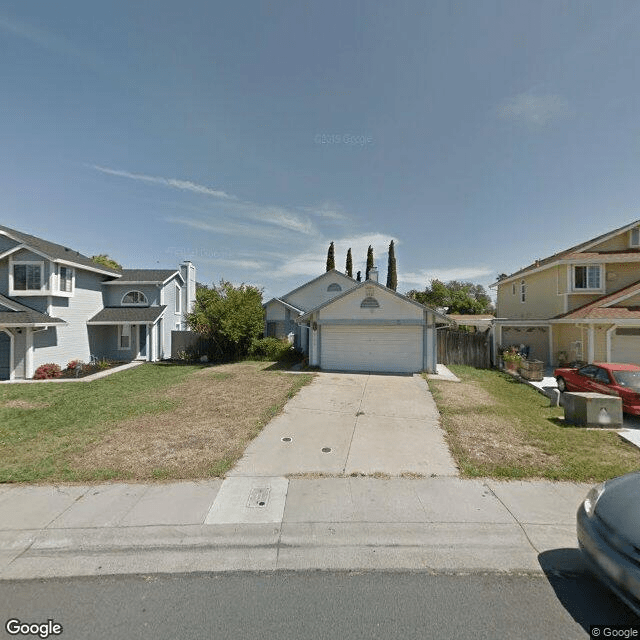
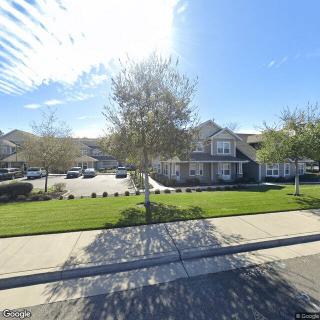
8157 La Almendra Way, Sacramento, CA 95823
To contact a resident: (916) 715-2351
For more information about senior living options: (866) 208-4318
Aryle Care Home Costs & Pricing
Aryle Care Home offers competitive pricing for its accommodations, with monthly rates that stand out favorably when compared to both Sacramento County and the broader California market. For a studio or one-bedroom unit, residents will find themselves paying $2,500, significantly lower than the county average of $3,865 for studios and $3,758 for one-bedrooms. Even in comparison to state averages of $4,145 and $4,340 respectively, Aryle Care Home provides excellent value. A private room at Aryle is priced at $3,500, which is slightly above Sacramento County's average of $3,686 but still below California's overall average of $3,939. These figures highlight Aryle Care Home as an affordable choice without compromising on quality in a region where assisted living costs can be notably high.
| Floor plans | Aryle Care Home | Sacramento County | California |
|---|---|---|---|
| Studio | $2,500 | $3,865 | $4,145 |
| 1 Bedroom | $2,500 | $3,758 | $4,340 |
| Private | $3,500 | $3,686 | $3,939 |
Memory care communities with a similar price nearby
-
About the same
Eastern Manor
$2,500 to $3,000 / month11.3 miles away -
About the same
A.R.C. Manor of Folsom
$2,500 to $3,500 / month20.7 miles away -
from +$300 / mo

American River Care Home
$2,800 to $3,000 / month11.5 miles away -
from +$300 / mo
Golden Girls
$2,800 to $3,000 / month5.8 miles away -
About the same
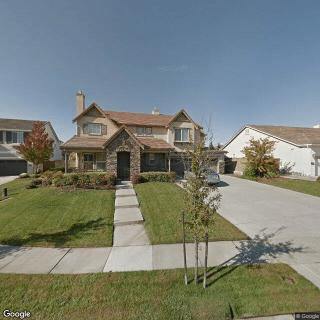
Doyle Ranch Care Home
$2,500 to $3,500 / month19.6 miles away
Overall Review of Aryle Care Home
Pros
 The test was great.
- She took extra time to care for my mother.
- She kept the whole family updated with text messages and pictures.
Cons
 She was having anxiety about being in a new place.
Review
Aryle Care Home in Sacramento, CA is best suited for families seeking a small, highly attentive setting where a loved one facing anxiety about a move can receive patient, relationship-driven care. The standout element from the available information is a caregiver who takes extra time with the resident, helping to ease the transition and build a sense of security. The reviewer also notes that staff kept the entire family updated through text messages and photos, a feature that matters deeply when trying to navigate a move from familiar surroundings. In short, this community appears most compelling for families who want a high-touch, communicative environment that actively supports both the resident and their relatives during a stressful period.
Those who may want to consider alternatives are those who require more than a primarily hands-on, personalized approach. One review cannot establish consistency across all residents or confirm the breadth of services, so families needing extensive medical oversight, memory-care specialization, robust structured programming, or a larger, more resource-rich campus should explore other options. Budget-conscious families should also seek more transparent cost information and a clearer sense of what is included in care plans, as a single positive testimonial does not guarantee long-term value or reliability. In short, this is not the first pick for households prioritizing breadth of services or a well-documented track record across diverse needs.
The primary pros lean heavily toward one-on-one attentiveness and strong family communication. A caregiver who dedicates extra time signals a culture of individualized attention, which can translate into calmer days for a resident who is adjusting to a new environment. The ability to receive regular text updates and pictures removes uncertainty for family members, reducing the stress that often accompanies transitions to care settings. This combination, personalized care coupled with proactive transparency, helps to neutralize the common fear of abandonment or neglect when moving into assisted living, making Aryle Care Home a practical choice for families embracing a gentle, relationship-based approach.
Yet the main con from the available data is simply the data itself. With only one 5-star review, there is insufficient evidence to gauge consistency, range of services, or long-term outcomes. That absence translates into a decision risk: the experience described may reflect particular staff personalities or a temporary circumstance rather than the standard across all residents and shifts. However, the specific positives described, extra time with the resident and reliable family updates, offer a tangible signal about the culture and priorities of the home. For families prioritizing reassurance and direct communication during a vulnerable transition, these strengths can meaningfully offset the lack of broader corroboration.
Practical next steps for families evaluating Aryle Care Home should focus on firsthand verification. Ask for a meet-and-greet with the primary caregiver and the team who would oversee ongoing care. Request a detailed care plan process, including how care plans are created, updated, and shared with families. Inquire about staff-to-resident ratios during day and night shifts, the cadence and channels of family updates, and the residency’s approach to anxiety, comfort, and social engagement. If possible, observe a routine day to see how staff interact with residents, how noise and activity levels feel, and whether the environment seems calm and respectful.
The decision, then, comes down to fit and risk tolerance. Aryle Care Home offers a compelling option for families who value personalized attention and transparent communication during a transitional period. It is a prudent choice for those who want a reassuring, family-inclusive update loop and who prioritize the resident’s comfort as the top criterion. For households seeking broader medical capabilities, specialized memory-care programming, or a larger community with more extensive on-site amenities, it would be prudent to compare alternatives to ensure the chosen path aligns with long-term care needs and financial realities. This community is worth a closer look for the right family, especially at the point where transition anxiety is the foremost concern and a steady, communicative caregiver can make the difference between a difficult move and a successful, peaceful adjustment.
 Board and Care Home
 Memory Care
 Activities on-site
 Air-conditioning
 Cable or satellite TV
 Devotional services off-site
 Full kitchen
 Ground floor units
 Handicap accessible
 Indoor common areas
 Outdoor common areas
 Private
 Private bathrooms
 Wi-Fi/high-speed internet available
 Sacramento International (18 miles away)
 Ambulatory care
 Diabetic care
 International cuisine
 Art classes
 BBQs or picnics
 Birthday parties
 Brain fitness
 Day trips and outings
 Gardening club
 Karaoke
 Stretching classes
 Trivia games


 Understanding Dementia Behaviors: Practical Insights and Strategies for Caregivers
 When Dementia Sparks Anger and Aggression: Understanding the Connection and Ways to Cope
 Dementia Behaviors: In-Depth Understanding and Effective Coping Strategies