
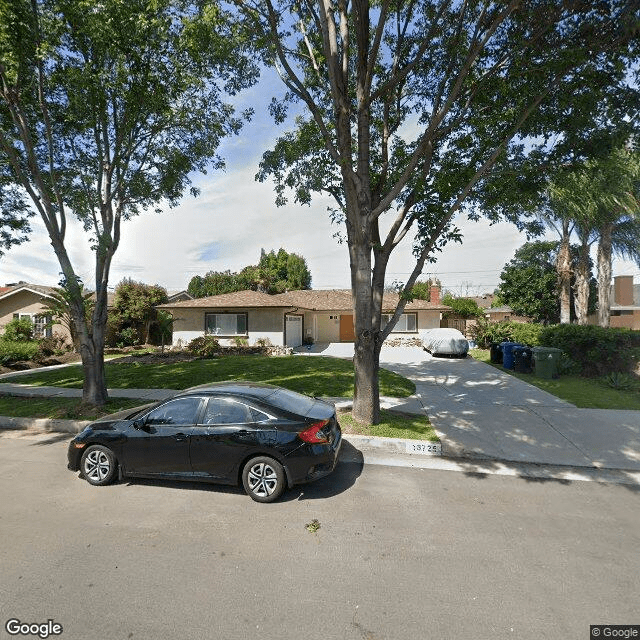
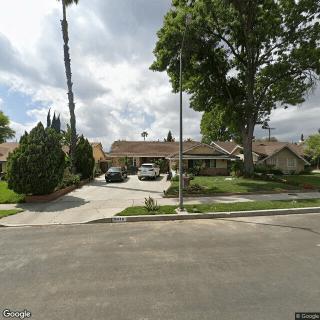
16725 Bahama Street, Northridge, CA 91343
To contact a resident: (818) 400-9586
For more information about senior living options: (866) 208-4318
Arriola's Home Care Costs & Pricing
At Arriola's Home Care, we pride ourselves on providing quality care at competitive rates. Our pricing is notably lower than both Los Angeles County and the broader California state averages. For instance, our semi-private rooms are available for just $1,800 per month, significantly less than the county average of $3,349 and the state average of $3,333. Similarly, our private rooms come in at $2,200 monthly, compared to $4,197 in Los Angeles County and $3,939 across California. Even for our 1-bedroom accommodations at $2,700, we remain a cost-effective choice against county and state figures of $4,603 and $4,340 respectively. This commitment to affordability ensures that we can deliver high-quality home care without compromising on service or comfort for our residents.
| Floor plans | Arriola's Home Care | Los Angeles County | California |
|---|---|---|---|
| Semi-Private | $1,800 | $3,349 | $3,333 |
| Private | $2,200 | $4,197 | $3,939 |
| 1 Bedroom | $2,700 | $4,603 | $4,340 |
Memory care communities with a similar price nearby
-
About the same
Green Valley Home Care
$1,800 to $2,000 / month15.4 miles away -
from -$200 / mo
Laigo-Zanders Home for the Elderly
$1,600 to $2,000 / month13.0 miles away -
About the same
Gracie's Residential Care
$1,800 to $2,500 / month17.0 miles away -
About the same
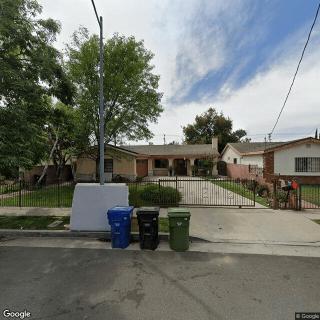
Masa Comfort Living Inc.
$1,800 to $3,200 / month5.1 miles away -
About the same
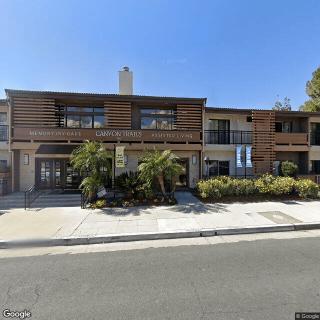
Oakdale Heights of Woodland Hills
$1,750 to $3,462 / month6.3 miles away
Overall Review of Arriola's Home Care
Pros
 The caregivers were kind and caring, putting the mother at ease.
- The family gained peace of mind knowing their mother was always well cared for.
- A and B Quality Home Care was responsive, providing needed information and support.
- Ana and Berlin delivered a smooth and positive experience.
- They matched a Spanish-speaking caregiver who fit well in the home.
- The end-of-life care was five-star, characterized by compassion, honesty, and integrity.
Cons
 She was adamant she wouldn't allow live-in care aides.
- One caregiver excused herself prior to her shift, noting her own lack of confidence with one piece of equipment.
Review
This Northridge option is best suited for families seeking robust in-home care that can scale from light assistance to around-the-clock, with the flexibility to support end-of-life care at home. The strongest fit emerges for seniors who want to remain in familiar surroundings while a professional team handles day-to-day caregiving, overnight needs, and shifting levels of support. Caregivers who bring warmth, reliability, and cultural or language alignment, such as Spanish-speaking staff, are a notable asset. In short, this approach works well for families prioritizing continuity, personal attention, and a seamless transition from daily help to hospice-level support without moving to a facility.
Alternatives matter for households with different priorities. If socialization and on-site programming are central, or if nursing oversight is essential, a traditional assisted living community or memory-care setting may be preferable. For those who prefer a single assigned caregiver rather than a rotating team, or who face budget constraints that favor facility-based pricing, exploring other in-home providers with a more rigid caregiver assignment model or different care tiers could make sense. The common thread is clarity: demand transparent staffing, predictable costs, and a well-defined care plan before committing.
The strongest pros in these experiences center on responsiveness, caregiver quality, and the ability to broaden care as needs evolve. Agencies highlighted here deliver consistently compassionate, capable caregivers who can transition from a one-day-a-week arrangement to 24/7 supervision and even hospice support. The ability to assemble staff quickly, often with specialized skills such as language matching, and the presence of an organized handoff across shifts help create a sense of safety that distant coordination cannot match. When a caregiver is instructed with precision and then re-briefed for the next shift, the resulting care continuity mitigates the risk of gaps that families fear with in-home arrangements.
Where the stories shine, they also reveal practical expectations families should hold. The ease of arranging end-of-life at home, with a nurse available for first shifts and a process that respects family input, is a major relief at a difficult time. The right agency not only supplies personnel but also offers information, coordination, and emotional support to navigate complex family dynamics. The standout feature is a demonstrated capability to scale care while maintaining integrity, honesty, and a compassionate approach, elements that transform a stressful transition into a manageable, well-supported experience.
To evaluate Arriola’s Home Care against these benchmarks, focus on several core questions. Can the provider ramp from minimal assistance to around-the-clock care and hospice as needed, without disruptive staffing gaps? Is there a dedicated case manager or lead caregiver who coordinates all shifts and communicates clearly with the family? Are language needs met through staff training and recruitment? How does the agency handle caregiver turnover, training, and continuity of care? What is the exact process for creating and updating care plans, including end-of-life instructions and equipment usage? Finally, obtain detailed cost information, confirm on-call nursing support, and request references to verify the consistency of the care experience.
Bottom line: for Northridge families prioritizing aging in place with a strong, adaptable caregiving team, the model reflected in these reviews offers a compelling framework. Arriola’s Home Care should be evaluated through the lens of scalability, caregiver quality, and coordinated care. If the provider can match the demonstrated ability to respond quickly, ensure language-appropriate staffing, and maintain rigorous, well-documented care plans, it represents a practical, well-grounded solution. If any of these elements fall short, exploring alternatives, especially those that emphasize consistent assignment, on-site supervision, or facility-based social engagement, will prevent settling for a model that fails to align with the family’s priorities.
 Board and Care Home
 Day Program
 Memory Care
 Dogs allowed
 Bath tubs
 Devotional services off-site
 Indoor common areas
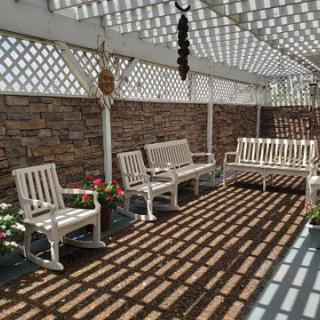
 Outdoor common areas
 Private
 Private bathrooms
 Respite or short term stays offered
 Wheelchair accessible showers
 Burbank-Glendale-Pasadena (8 miles away)
 Ambulatory care
 Diabetic care
 High acuity care
 Incontinence care
 Medication management
 Kosher

 Memory Care Pathways: A Holistic Guide to Dementia Support
 Comprehending Evening Confusion in Dementia: Causes, Manifestations, and Support
 Delirium and Dementia: Unraveling the Key Differences