
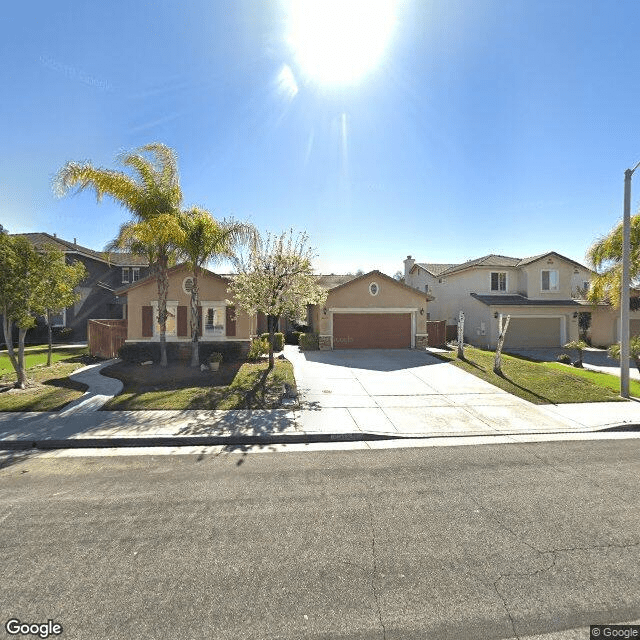
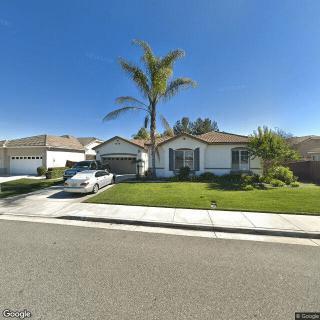
40147 Grenache Ct, Murrieta, CA 92563
To contact a resident: (570) 971-0448
For more information about senior living options: (866) 208-4318
First Choice Senior Living 2 Costs & Pricing
First Choice Senior Living 2 offers competitive pricing for its residents, with monthly costs that reflect the quality of care provided. For a semi-private room, the rate is set at $3,500, which is notably higher than the Riverside County average of $2,844 but remains slightly lower than California's state average of $3,333. In the case of private rooms, First Choice charges $4,000 per month - also above Riverside County's average of $3,474 and just under California's average of $3,939. Similarly, for a one-bedroom unit, the cost aligns with the private room rate at $4,000 but is positioned below California's higher state average of $4,340. These pricing structures suggest that while First Choice Senior Living 2 may be on the higher end when compared to local averages in Riverside County, it provides a balanced option within the broader context of California's senior living costs.
| Floor plans | First Choice Senior Living 2 | Riverside County | California |
|---|---|---|---|
| Semi-Private | $3,500 | $2,844 | $3,333 |
| Private | $4,000 | $3,474 | $3,939 |
| 1 Bedroom | $4,000 | $3,611 | $4,340 |
Memory care communities with a similar price nearby
-
About the same
Kun Bai Care
$3,500 to $4,500 / month10.3 miles away -
from -$250 / mo
Mountain View Manor
$3,250 / month20.5 miles away -
from +$500 / mo
Temple Court Senior Care
$4,000 to $4,500 / month0.2 miles away -
from -$205 / mo

Silvergate Retirement Residence - Fallbrook
$3,295 to $7,595 / month12.5 miles away -
from -$305 / mo

Vineyard Ranch at Temecula
$3,195 to $5,295 / month1.4 miles away
Overall Review of First Choice Senior Living 2
Pros
 Todd was fantastic—calm, patient, and incredibly supportive during a stressful time.
- He listened, answered every question, and followed through exactly as promised.
- Todd’s deep knowledge of local care options was invaluable.
- He was always responsive, organized, and professional.
- The service was free to families, and they never felt pressured or steered.
- Kelley is an invaluable resource—kind, compassionate, and devoted to her clients.
- Kelley helped place their grandmother and mother-in-law safely and promptly.
Cons
 The facility is described as a shady place with promises that were not kept.
 - The staff are not trained enough; they cannot use equipment like the lift and failed to provide proper care.
- The facility was not secure, allowing a resident to wander out and doors being tied shut.
- There are serious accusations of medication mishandling, including drugging and overdosing.
- The accommodation was misrepresented (limited bathrooms, restricted roaming, and private rooms not as promised).
- The caregivers were unfriendly and uninvolved, with residents bored, lonely, and barely attended to.
- The owner reportedly did not communicate after a loved one’s passing, leaving the family disappointed.
Review
First Choice Senior Living 2 in Murrieta is best suited for families that need fast, expert guidance to navigate a maze of small-board-and-care options and assisted-living alternatives. The core strength is the placement team, Kelley and Todd, whose steady, informed approach turns a stressful process into a manageable plan. They bring deep local knowledge, clear paths to suitable matches, and a commitment that feels almost case-by-case, not transactional. For families who want a free, professional advocate who will listen, present viable options across price ranges, and move with urgency when time is of the essence, this service proves consistently valuable.
Those who should also consider alternatives are families seeking a higher level of on-site medical oversight or facilities with more uniform, larger operations. Several reviews point to serious concerns about the day-to-day care quality at some board-and-care settings, staff training gaps, safety lapses, and uncomfortable scenarios around medication handling. In such cases, a strong placement advocate can help, but the underlying facility quality matters just as much as the match. If the priority is consistently licensed nursing care, robust activity programming, and strict safety protocols across a portfolio of communities, exploring options with larger, more regulated operators may be prudent.
The major upsides, speed, personalization, and independence from pushy sales, directly offset the chief drawbacks seen in some on-site facilities. Kelley and Todd are repeatedly described as patient, responsive, and highly knowledgeable, capable of assessing competing needs (memory care, rehab transitions, budget constraints) and quickly carving out a short list of viable homes. They maintain transparency about relationships with facilities and emphasize that the service is free to families while paid by the care homes. When a rapid placement is essential, such as after a fall or a rehab discharge, their ability to orchestrate timely tours and admissions is a compelling counterweight to questions about the authority and quality of individual residences.
From a decision-making perspective, the process and the assurances offered by First Choice matter as much as the outcomes. The team’s strength lies in bridging emotional and logistical gaps: they help families articulate priorities, verify licensing and compliance, and coordinate with hospitals, rehab centers, and Kaiser pathways. They candidly acknowledge the range of options, including memory care and various board-and-care environments, and they avoid pressuring families toward a single choice. The constructive pattern described in multiple reviews, prompt follow-ups, thorough questions, and ongoing availability, creates a sense of reliability that is particularly valuable during a high-stakes transition.
Yet the reviews also expose real caution flags about the on-site experiences in some facilities. Reports of inadequate staff training, safety concerns such as doors being improvised or secured in troubling ways, and troubling episodes around medication or meals cannot be dismissed. Some families describe limited common areas, scarce bathrooms, and solutions that feel more about containment than engagement. These are not universal truths about every residence within the network that First Choice represents, but they are meaningful signals to probe during tours. A prudent reader will demand current state compliance, staff-to-resident ratios, medication procedures, and firsthand observations of daily activities as part of any placement decision.
In the end, the decision comes down to balancing trusted placement advocacy with disciplined scrutiny of the actual living environments. For families who value rapid, empathetic, expert navigation and access to a broad spectrum of care settings, Kelley and Todd deliver a decisive advantage. They help families avoid common missteps, secure appropriate budgets, and secure placements that align with unique needs. For those prioritizing uniform on-site care quality, extensive professional nursing support, and consistently monitored safety standards, it remains wise to supplement the placement process with careful, independent vetting of in-house facilities and, if possible, broader community options beyond the board-and-care model. Start with a direct call to Kelley or Todd to map the needs, then proceed to comprehensive visits with a clear checklist for safety, care quality, and daily life.
 Board and Care Home
 Memory Care
 Activities on-site
 Air-conditioning
 Bath tubs
 Devotional services on-site
 Ground floor units
 Indoor common areas
 Outdoor common areas
 Private
 Private bathrooms
 Wheelchair accessible showers
 Ambulatory care
 Diabetic care
 High acuity care
 Medication management
 Gluten-free
 BBQs or picnics
 Birthday parties
 Live dance or theater performances
 Live musical performances


 When Dementia Sparks Anger and Aggression: Understanding the Connection and Ways to Cope
 Dementia Behaviors: In-Depth Understanding and Effective Coping Strategies
 5 Early Indicators of Dementia and What You Can Do