
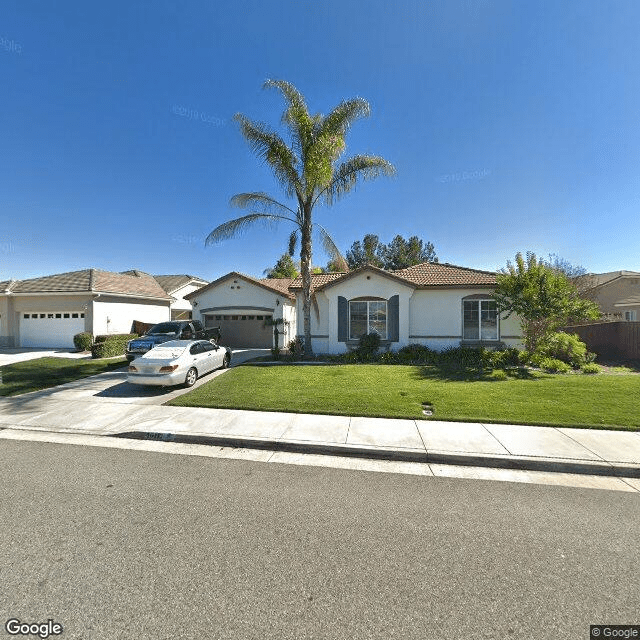
40112 Tennyson Road, Murrieta, CA 92563
For more information about senior living options: (866) 208-4318
Temple Park Living Costs & Pricing
Temple Park Living offers competitive pricing for its residents, positioning itself strategically within the landscape of Riverside County and the broader California market. For a semi-private room, Temple Park charges $3,000 per month, which is slightly above Riverside County's average of $2,844 but remains more affordable than California's statewide average of $3,333. When it comes to private rooms, Temple Park's rate of $4,000 aligns closely with Riverside County's average cost of $3,474 yet is just below the state average of $3,939. This pricing structure reflects Temple Park Living's commitment to providing quality care and accommodations that are both accessible and reasonably priced in comparison to local competitors and state averages.
| Floor plans | Temple Park Living | Riverside County | California |
|---|---|---|---|
| Semi-Private | $3,000 | $2,844 | $3,333 |
| Private | $4,000 | $3,474 | $3,939 |
Assisted Living communities with a similar price nearby
-
from -$200 / mo
Pebble Brook Senior Home Care
$2,800 to $4,000 / month6.4 miles away -
from -$500 / mo
Golden Retreat - Senior Residential Care
$2,500 to $3,000 / month23.0 miles away -
from -$100 / mo
Agate Manor
$2,900 to $3,800 / month6.4 miles away -
from +$250 / mo

Mountain View Manor
$3,250 / month20.3 miles away -
from +$295 / mo
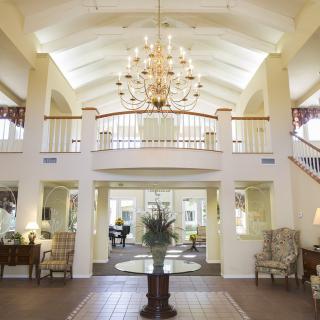
Silvergate Retirement Residence - Fallbrook
$3,295 to $7,595 / month12.5 miles away
Overall Review of Temple Park Living
Pros
 They were glad they chose Temple Heights to place their husband who had Alzheimer’s.
- Rene and all the caregivers are amazing, kind, and gentle with their husband.
- The owners were amazing and answered their questions and concerns very fast.
- They would highly recommend this place for a loved one.
Review
Temple Park Living in Murrieta, CA emerges as an excellent fit for families seeking a dementia-focused assisted living environment where compassionate, relationship-first care is nonnegotiable. This community shines when the priority is a gentle, individualized approach to memory care, delivered by a team that treats residents with patience and genuine respect. It is especially well-suited for loved ones with Alzheimer’s who benefit from steady, reassuring presence, predictable routines, and caregivers who prioritize calm, reassuring interactions over hustle. In short, Temple Park Living is best for families who value a warm, people-centered setting where staff know residents well and communication with families is a clear strength.
Explicitly, alternatives should be considered for those whose needs extend beyond the scope of a memory-care-focused routine. If a loved one requires intensive medical oversight, complex skilled nursing, or highly structured rehab services on a daily basis, look at facilities that emphasize higher medical acuity and wider clinical capabilities. If budget constraints are a defining factor, or if the search is for a larger campus with broader on-site amenities and services, other communities may better align with those practical limits. For families needing rapid transitions between levels of care or a non-dementia focus, it’s prudent to compare with options that foreground medical management, rehabilitation offerings, and scalable care plans.
The strongest positives from the available impression center on the character and consistency of the caregiving staff. Caregivers are described as amazing, kind, and gentle, attributes that matter immensely when navigating memory challenges. This is not merely about friendliness; it signals a respectful, person-centered approach to daily routines, activities, and redirection, which can markedly reduce agitation and improve quality of life for residents with Alzheimer’s. Complementing this, the owners are portrayed as responsive and accessible, providing timely answers to questions and concerns. That combination, empathetic hands-on care paired with proactive, approachable leadership, creates an environment where families feel heard, trusted, and confident in the care plan.
In practice, these professional strengths translate into tangible peace of mind for families during a difficult transition. The caregiving team’s gentleness supports safer, calmer days for residents who may struggle with fear or confusion, while swift owner engagement helps resolve planning questions, medication considerations, and potential schedule adjustments without protracted delays. The dynamic suggests a cohesive culture where care decisions are collaborative, families are kept in the loop, and changes in resident needs can be acknowledged and addressed quickly. When critical moments arise in dementia care, the described responsiveness can be the differentiator between steady progress and ongoing worry.
No explicit downsides are cited in the available input, which makes Temple Park Living look highly reliable for the described niche. Still, prospective families should validate several practical details during site visits to ensure alignment with personal expectations. Confirm the daily structure and memory-care programming to ensure it matches the resident’s interests and cognitive pace. Inquire about staffing ratios during different shifts, emergency medical access, and the mechanism for updating care plans. Assess the dining experience, enrichment opportunities, and how family involvement is integrated into ongoing care. A visit can reveal whether the warm ethos described in the testimonial translates into consistent daily reality across all residents.
Ultimately, Temple Park Living stands out for families prioritizing a compassionate, resident-centered dementia environment with accessible ownership. It appears especially well-suited for Alzheimer’s care where gentle, attentive staffing and open, responsive communication are the primary expectations. For families whose needs include more intensive medical management, rehabilitation, or cost structures that demand broader affordability, alternatives should be part of the discussion. A disciplined comparison, visits, trial stays, and talks with current residents and families, will reveal whether Temple Park Living truly matches the specific care trajectory and budget constraints of the loved one.
 6 resident community capacity
 Assisted Living
 Board and Care Home
 Activities off-site
 Bath tubs
 Cable or satellite TV
 Dining room
 Fully furnished
 Garden
 Housekeeping services
 Indoor common areas
 Move-in coordination
 Outdoor common areas
 Private
 Respite or short term stays offered
 Telephone
 Wheelchair accessible showers
 Wi-Fi/high-speed internet available
 24-hour supervision
 Ambulatory care
 Assistance with bathing
 Assistance with dressing
 Assistance with transfers
 Diabetes diet
 High acuity care
 Meal preparation and service
 Medication management
 Special dietary restrictions
 Transportation arrangement (medical)
 Transportation to doctors appointments

 Understanding the True Cost of Assisted Living in 2025: A Comprehensive Guide
 Understanding Medicaid Coverage for Assisted Living: A Comprehensive Guide
 How and When Medicaid May Cover Assisted Living Costs