
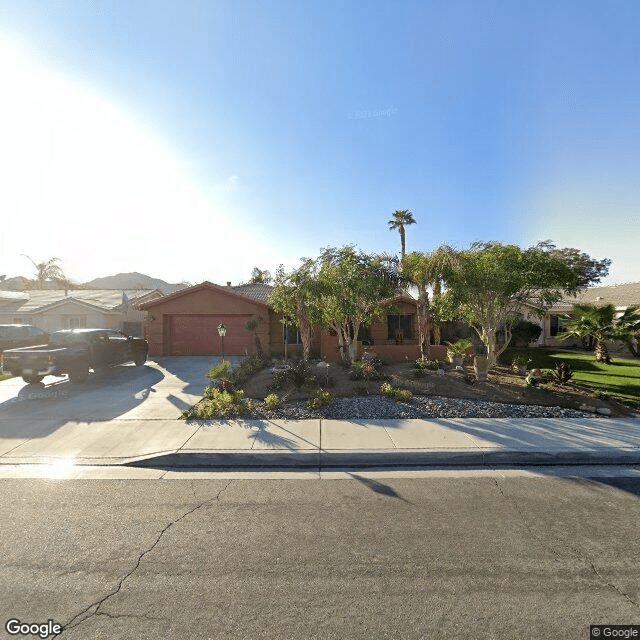
45515 Sunbrook Lane, La Quinta, CA 92253
To contact a resident: (760) 200-4029
For more information about senior living options: (866) 208-4318
Rachel's Cottage with Love Costs & Pricing
Rachel's Cottage with Love offers a competitive pricing structure for its accommodations compared to both Riverside County and the broader state of California. For semi-private rooms, the monthly cost is $2,700, which is notably lower than the county average of $2,844 and significantly more affordable than the state average of $3,333. Studio apartments are priced at $3,500, slightly below Riverside County's rate of $3,559 and considerably less than California's average of $4,145. However, the private room option at Rachel's Cottage stands at $4,500, which exceeds both the Riverside County cost of $3,474 and California's statewide average of $3,939. Overall, Rachel's Cottage with Love presents a compelling value for shared living arrangements while positioning its studio offerings as particularly appealing in terms of relative affordability.
| Floor plans | Rachel's Cottage with Love | Riverside County | California |
|---|---|---|---|
| Semi-Private | $2,700 | $2,844 | $3,333 |
| Studio | $3,500 | $3,559 | $4,145 |
| Private | $4,500 | $3,474 | $3,939 |
Memory care communities with a similar price nearby
-
from +$300 / mo
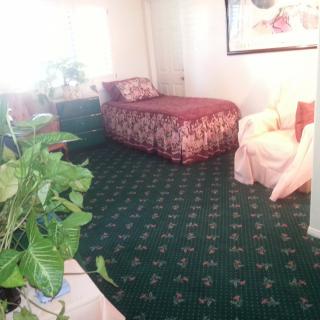
Carino's Quality Home Care
$3,000 to $3,500 / month16.2 miles away -
from -$200 / mo
Island's Best Home Care
$2,500 to $3,000 / month12.6 miles away -
from +$295 / mo

Stonewall Gardens
$2,995 to $5,450 / month17.5 miles away -
from +$400 / mo

Pacifica Senior Living Palm Springs
$3,100 to $4,200 / month15.5 miles away -
from +$100 / mo
La Quinta Residence Elderly 5
$2,800 to $4,700 / month4.4 miles away
Overall Review of Rachel's Cottage with Love
Pros
 The new nurse seems to know what she is doing.
- Rachel’s Cottage is very nice.
- The place is very nice and spacious.
- The people who run it are very nice.
- The facility offers memory care services.
Cons
 It is not what it once was.
- Almost all the great employees have left.
- The new nurse has no idea what she is doing.
- The care is awful.
Review
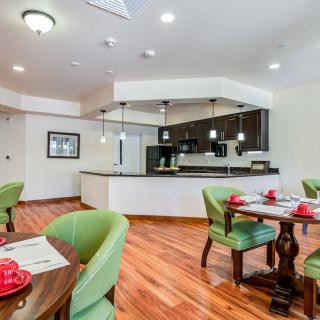
Rachel's Cottage with Love in La Quinta, CA is best suited for families seeking memory-care services in a home-like, comfortable setting. The facility presents as well-kept and spacious, with memory care listed as a core offering, and early impressions point to approachable leadership and caring staff. For residents who respond to a calm atmosphere and consistent personal attention, this community can feel like a good match. The combination of generous living space and a non-clinical mood helps reduce agitation and makes daily routines more navigable for someone with memory concerns.
Those who may want to consider alternatives are families prioritizing stable, proven staffing and reliable clinical oversight. The most troubling feedback points to significant turnover, with references to “almost all the great employees” leaving, which raises questions about continuity of care and training. In memory care, consistent staffing translates directly to safety and predictable routines; if a facility cannot demonstrate retention and ongoing staff development, it is wise to compare other options with stronger track records.
Pros-center: the environment and memory-care option are tangible strengths. The space is described as very nice and spacious, and prior interactions with the people who run it were positive. The presence of memory-care services on site matters for cognitive decline, and initial warmth from staff can ease transitions for new residents, supporting engagement in activities and a sense of belonging.
Cons-center: the negative feedback is consequential. The claim that most good employees have left signals potential gaps in experience and consistency. A new nurse who is still learning can affect medication management, response times, and care planning. When care is described as “awful” by a reviewer, the concern is real and not merely cosmetic; safety, daily rhythms, and the quality of life for residents may be compromised until staffing stabilizes.
How the positives fare against the drawbacks: the nice setting and memory-care focus provide a meaningful foundation, but only if staffing is stable and well-trained. If current teams stay intact and receive solid training, the environment can support steady routines and attentive care. If turnover persists, however, those environmental advantages erode quickly. Prospective families should request current staffing data, ask about RN presence and care-planning processes, and review recent incident or escalation logs. A credible plan to stabilize staffing is the deciding factor in whether the positives outweigh the risks.
Bottom-line guidance: approach with disciplined due diligence. Arrange an on-site assessment that prioritizes nurse coverage, caregiver-to-resident ratios, and the cadence of care-plan updates. Speak directly with administrators and frontline staff about retention strategies, training, and escalation procedures. Inspect the memory-care programming, cognitive-stimulation routines, safety features, and daily schedules, and verify consistency of meals and activities. If answers are concrete and reassuring, Rachel's Cottage with Love can be a solid choice for families who value a pleasant memory-care environment. If not, it is prudent to explore other communities with demonstrated staffing stability and proven memory-care outcomes.
 Board and Care Home
 Memory Care
 Activities on-site
 Bath tubs
 Private
 Private bathrooms
 Respite or short term stays offered
 Swimming pool / hot tub
 Wheelchair accessible showers
 Palm Springs International (15 miles away)
 Ambulatory care
 Diabetic care
 High acuity care
 Incontinence care
 Meals provided
 Christian services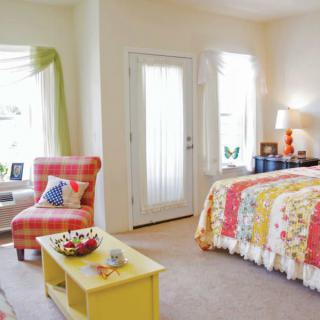





 Comprehending Evening Confusion in Dementia: Causes, Manifestations, and Support
 Delirium and Dementia: Unraveling the Key Differences
 Are Dementia and Alzheimer's Disease Lethal? A Comprehensive Exploration