
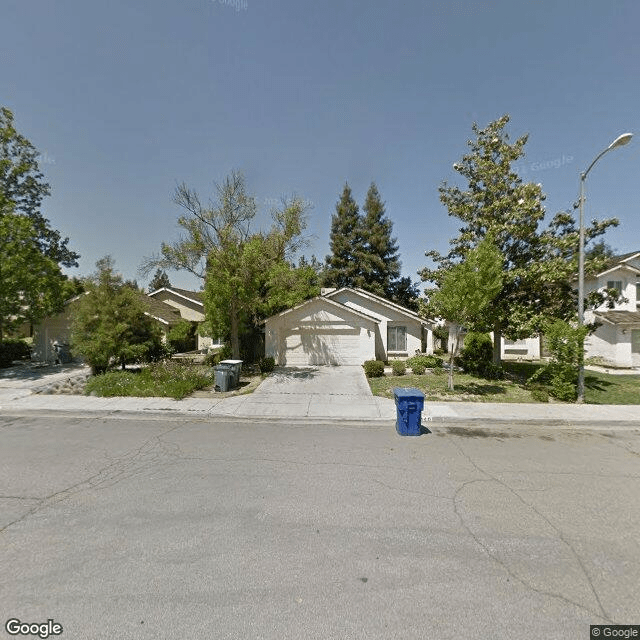
3440 W. Robinwood Ave., Fresno, CA 93711
To contact a resident: (559) 447-9064
For more information about senior living options: (866) 208-4318
Valentine Guest Home Costs & Pricing
Valentine Guest Home offers competitive pricing when compared to the broader market in Fresno County and across California. For a semi-private room, residents enjoy a significantly lower monthly cost of $1,600, which is well below the county average of $2,991 and state average of $3,333. Similarly, private rooms at Valentine are priced at $2,000, again providing a substantial savings compared to Fresno County's average of $3,589 and California's average of $3,939. Studio accommodations also reflect this trend, with Valentine's rate of $2,000 positioned favorably against the county and state averages of $3,349 and $4,145 respectively. These figures illustrate Valentine Guest Home's commitment to offering quality care at more accessible rates than many comparable facilities in the region.
| Floor plans | Valentine Guest Home | Fresno County | California |
|---|---|---|---|
| Semi-Private | $1,600 | $2,991 | $3,333 |
| Private | $2,000 | $3,589 | $3,939 |
| Studio | $2,000 | $3,349 | $4,145 |
Memory care communities with a similar price nearby
-
from -$100 / mo
Mary's Manor 1
$1,500 to $1,800 / month15.8 miles away -
from -$100 / mo
Prince & Princess Home for the Elderly
$1,500 to $2,000 / month6.7 miles away -
About the same
Towne & Country Board & Care
$1,600 to $2,500 / month17.0 miles away -
from +$100 / mo
Divine Mercy Guest Home
$1,700 to $2,200 / month13.6 miles away
Overall Review of Valentine Guest Home
Pros
 Fresno Guest Homes is professional without being stiff or cold, and they care and work with families to ease the caregiving process.
- The smaller, home-like setting at Fresno Guest Homes is a huge improvement for loved ones.
- The food, the house, and the staff at Fresno Guest Homes are great.
- The level of care at Fresno Guest Homes is unlike any other, with residents treated like family and families kept updated.
- Angela, the administration, and the staff are amazing, helpful, kind, and hardworking.
- The facility is clean and relaxing, contributing to a comfortable living environment.
- Fresno Guest Homes provides on-call doctors and nurses, ensuring all provisions are met.
- Caregivers and staff are friendly and loving, making residents feel valued.
- The transition to Fresno Guest Homes is smooth, with staff showing patience and support.
- The administrator goes the extra mile to keep families informed about updates.
- The houses are located in nice residential neighborhoods, offering a safe, home-like setting.
- Fresno Guest Homes comes highly recommended by families seeking compassionate, high-quality care.
Cons
 The reviewer stated that the previous facility did none of what it promised and kept increasing the monthly costs.
- There was a report of mistreatment, including threats by a caregiver, a resident being held against a wall during a confrontation, and the owners refusing to acknowledge it.
- It was noted that the male owner’s handling of the conflict was not respectful, not professional, and not appreciated.
- The reviewer said the staff on duty was unaware of any appointments and concluded that the facility wasn’t right for their mother.
- The reviewer claimed that mistreatment was allowed and defended by the owners.
Review
Valentine Guest Home (as described in Fresno-area feedback) is best suited for families seeking a true home-like living arrangement where care is personal, constant, and emotionally attentive. This community works best for residents who thrive in small, house-style settings with a tight-knit staff that can know histories, routines, and preferences deeply. It shines when families value direct access to caregivers and administrators, the ability to keep loved ones together in a shared, residential environment, and frequent, straightforward communication about daily care. For seniors who do well with daily meals around a table, familiar surroundings, and the reassurance that a house physician and on-site nurses are readily involved, this model offers a compelling fit.
Alternatives to consider include larger, more institutionaled assisted living options or facilities with a more formal corporate structure. Families seeking extensive memory-care programming, highly standardized systems, or a broader set of specialized clinical services may find the smaller, family-operated model less comprehensive. Some reviewers also note that when tensions arise between families and owners, the experience can feel uneven. In those situations, a facility with a more structured governance and consistent policy enforcement might be preferable.
The strongest positives center on 24/7, hands-on care delivered in a warm, home-like setting. Residents benefit from highly attentive caregivers who treat daily routines as personal tasks rather than generic duties, and from consistent, proactive communication from administrators who stay connected with families. The homes emphasize home-cooked meals and a convivial, community-oriented atmosphere, often described as one of the standout aspects by multiple families. The intimate scale, often a handful of residents rather than dozens, facilitates individualized attention, timely medication administration, and close coordination with doctors and visiting nurses. Families consistently report feeling that their loved ones are treated with genuine kindness and respect.
Yet, there are caveats. Several reviews acknowledge concerns around management style and occasional conflicts between staff and family members. Specific anecdotes describe episodes where interactions with owners felt abrasive or dismissive, and at least one account references a tense confrontation that left a family member unsettled. Such experiences underscore a real risk: in smaller, family-operated homes, the tone and approach of leadership can strongly color every interaction. Prospective residents should assess how conflict would be resolved, who speaks for the operation during difficult moments, and whether the administration demonstrates consistent accessibility and professional boundaries.
Despite these concerns, the favorable elements tend to offset most drawbacks when the operation is running smoothly. The intimate staff-to-resident ratios mean fewer gaps in supervision, faster response to needs, and a level of continuity that larger facilities often struggle to maintain. Families repeatedly highlight the sense of safety, the clean, well-maintained living spaces, and the ability of caregivers to manage practicalities, appointments, transportation, and day-to-day health needs, without lengthy bureaucratic detours. In practice, the decisive factor is how well the administration maintains open channels of communication, honors commitments, and demonstrates accountability across the entire care team.
For families weighing the decision, the practical path is clear: prioritize a visit that includes direct conversations with the administrators (not just the front desk), request to meet the primary caregivers who would be assigned to the loved one, and insist on a transparent outline of costs, care plans, and escalation procedures. Ask specifically about how care is coordinated with physicians, how emergencies are handled after hours, and what happens if a care tier needs to shift. If the aim is a nurturing, homey environment with highly personalized attention and a strong sense of community, Fresno Guest Homes offers a compelling case. If, however, stability of governance, a more formal care framework, or broader medical specialization is paramount, exploring a larger or more corporate option could be the prudent path.
 Board and Care Home
 Memory Care
 Activities off-site
 Bath tubs
 Devotional services off-site
 Indoor common areas
 Outdoor common areas
 Private
 Private bathrooms
 Respite or short term stays offered
 Swimming pool / hot tub
 Wheelchair accessible showers
 Fresno Yosemite International (8 miles away)
 Ambulatory care
 High acuity care
 Incontinence care
 Meals provided
 Delirium and Dementia: Unraveling the Key Differences
 Are Dementia and Alzheimer's Disease Lethal? A Comprehensive Exploration
 Exploring the Power of Reminiscence Therapy for Individuals With Dementia