

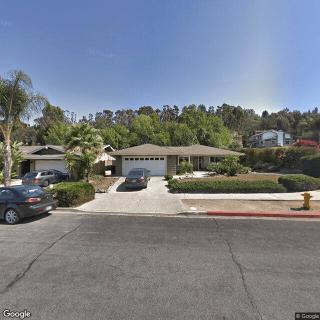
660 Van Houten Ave, El Cajon, CA 92020
To contact a resident: (619) 454-3166
For more information about senior living options: (866) 208-4318
Island Grove Guest Home II Costs & Pricing
Island Grove Guest Home II offers competitive pricing for its accommodation options when compared to the average costs in San Diego County and across California. For semi-private rooms, the monthly rate at Island Grove is $2,600, significantly lower than the county average of $3,518 and the state average of $3,333. Private rooms at Island Grove are priced at $3,200, which aligns with the county's higher rate of $3,939 as well as the state's equivalent price. Additionally, studio accommodations are offered at the same monthly cost of $3,200; this also provides substantial savings against San Diego's median cost of $4,217 and California's overall rate of $4,145. Lastly, for one-bedroom units priced at $3,200, guests can enjoy an attractive alternative to the county's typical charge of $4,315 and California's general fee of $4,340. Overall, Island Grove Guest Home II presents a valuable option for those seeking quality care without exceeding their budget.
| Floor plans | Island Grove Guest Home II | San Diego County | California |
|---|---|---|---|
| Semi-Private | $2,600 | $3,518 | $3,333 |
| Private | $3,200 | $3,939 | $3,939 |
| Studio | $3,200 | $4,217 | $4,145 |
| 1 Bedroom | $3,200 | $4,315 | $4,340 |
Memory care communities with a similar price nearby
-
from +$250 / mo

Alpine View Lodge
$2,850 to $3,550 / month10.5 miles away -
from +$200 / mo

Carecenter at Home for Elderly
$2,800 to $3,500 / month8.0 miles away -
from +$400 / mo

Lilac Chateau I
$3,000 to $4,500 / month4.5 miles away -
About the same

Casa De Las Campanas
$2,542 to $25,000 / month19.2 miles away -
from +$300 / mo

Pacifica Senior Living Escondido
$2,900 to $3,200 / month24.6 miles away
Overall Review of Island Grove Guest Home II
Pros
 The community is conveniently located, allowing quick visits.
- The residents, staff, and administration are fairly friendly and they treat the parents well.
- The rooms are consistently clean, with beds made and clothes washed.
- The facility offers engaging activities, including piano performances, bingo with prizes, and exercise classes.
Cons
 The facility has many issues going unaddressed by the staff, with no solutions offered.
- Some staff members are lackluster, and one does not speak English, hindering communication.
- The staff is often short-handed, reducing the level of care provided.
- When the mom needs help, staff respond dismissively, telling her to “Just go in your Depends.”
- Requests to see a doctor are ignored, and residents are kept in bed for long periods instead of being encouraged to move.
- The meals are small and not nutritious, contributing to significant weight loss.
- Overall, the reviewer would not recommend this community.
Review
This community is best suited for families who prioritize proximity and social engagement over intensive daily-care needs. For those who want to be able to drop in within minutes and observe routine interactions, Island Grove Guest Home II offers a friendly, familiar atmosphere and a schedule that includes piano, bingo with prizes, and structured exercise. The location matters: being close keeps loved ones connected and able to participate in care decisions, monitor daily routines, and flag issues quickly. It is a fit for residents who can tolerate some variability in staffing and who do not require around-the-clock medical oversight or complex mobility assistance.
Those considering alternatives should note early red flags for higher-acuity needs. If a loved one requires reliable, English-speaking staff, consistent help with bathroom trips, or urgent medical responsiveness, this community may fall short. Families should also be cautious if substantial daily assistance with meals, mobility, or incontinence management is essential, or if care plans demand proactive doctor communication and rapid response to health changes. In short, it is less suitable for residents who need robust clinical oversight and systematic, problem-solving care.
The strongest positives, clean rooms, regular laundry, and beds kept made, are meaningful for comfort and dignity, and they do provide a steady baseline of care in day-to-day life. The social program can offer meaningful engagement for residents who enjoy in-house activities and neighborhood-friendly visits. Yet these advantages do not neutralize the core concerns. When care gaps appear, staff shortages, language barriers, and uneven responsiveness, the result is a fragile balance where routine pleasantness cannot compensate for inadequate assistance during medical or daily living needs. In short, the positives are real but insufficient when serious care demands arise.
The most troubling gaps center on responsive care and safety. The reports describe instances where a blind resident receives insufficient support navigating to and from activities or appointments, with dismissive responses to urgent needs. Requests to see a doctor are sometimes ignored, and a reliance on bed-rest persists after meals, limiting mobility and increasing risk of infections or deterioration. Weight loss on the order of twenty pounds in a month signals potential under-nutrition or insufficient help with eating. These patterns suggest that staffing levels and training are not reliably aligned with resident safety and health maintenance.
On balance, the key benefits of proximity, a congenial environment, and dependable housekeeping are outweighed by ongoing care shortcomings. The facility struggles with meaningful, timely responses to health concerns, and that fracture in care undermines long-term outcomes. Families should approach Island Grove Guest Home II with clear expectations, an assertive advocate role, and a plan to actively monitor medical touchpoints, nutrition, and bathroom assistance. If these elements cannot be guaranteed, it is prudent to explore other options that offer stronger staff-to-resident ratios, more consistent medical oversight, and language-congruent communication.
Ultimately, a family facing chronic care needs or a high risk of health events should consider alternatives from the outset. A community with deeper clinical supports, more robust staffing, and proactive health management is a better fit for ensuring safety and nutrition, even if it means accepting less convenient proximity. If proximity remains non-negotiable, insist on a detailed, written care plan, regular progress reviews, and a demonstrable commitment to addressing the very concerns raised by current experiences. The decision hinges on whether close oversight and a willingness to push for robust care can offset the significant care gaps observed; if not, pursue a facility with stronger clinical capacity and staffing reliability.
 Board and Care Home
 Memory Care
 Activities on-site
 Devotional services off-site
 Indoor common areas
 Private
 San Diego International-Lindbergh (14 miles away)
 Diabetic care
 Medication management
 Meals provided







 Vibrant Senior Living: A Comprehensive Guide for Active Older Adults
 Assisted Living and Memory Care: Understanding Their Core Differences
 Choosing the Right Senior Care: A Detailed Exploration of Assisted Living and Nursing Homes