
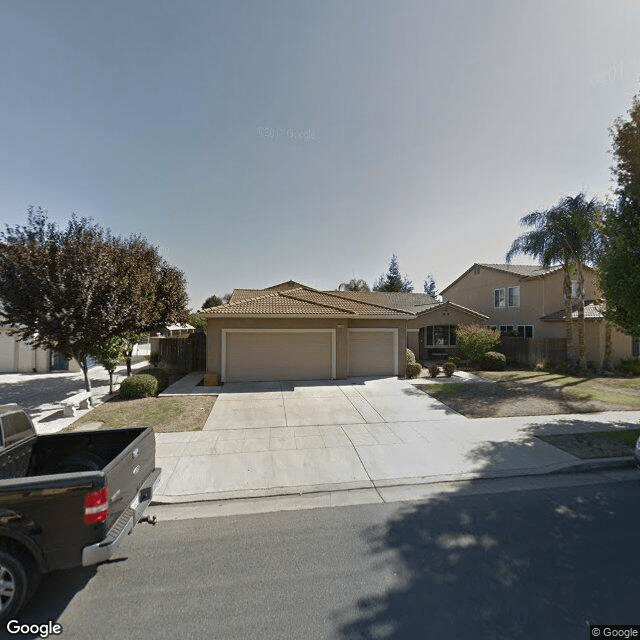
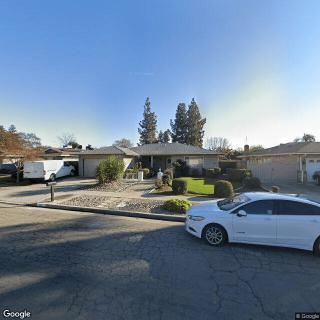
2766 Keats Ave., Clovis, CA 93611
To contact a resident: (559) 577-5145
For more information about senior living options: (866) 208-4318
Caring Heart Home of Clovis Costs & Pricing
Caring Heart Home of Clovis offers competitive pricing for its residents, positioning itself as an affordable option within the local landscape. The monthly cost for a private room is $3,000, which is significantly lower than both the Fresno County average of $3,589 and the state average of $3,939. For those seeking a semi-private arrangement, Caring Heart Home maintains the same price of $3,000, slightly above the county's rate but still favorable compared to California's wider costs at $3,333. Additionally, their studio apartments are priced at $3,500 - this compares favorably against Fresno County's average of $3,349 yet remains more economical than California's state figure of $4,145. Overall, Caring Heart Home not only provides comprehensive care options but also does so in a manner that respects budgetary considerations while maintaining quality standards.
| Floor plans | Caring Heart Home of Clovis | Fresno County | California |
|---|---|---|---|
| Private | $3,000 | $3,589 | $3,939 |
| Semi-Private | $3,000 | $2,991 | $3,333 |
| Studio | $3,500 | $3,349 | $4,145 |
Memory care communities with a similar price nearby
-
from -$200 / mo
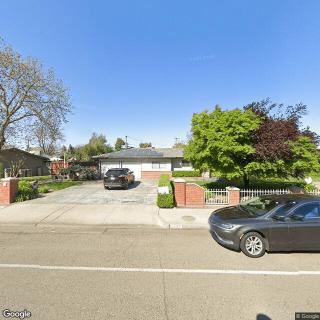
Chateau Jesadean
$2,800 / month7.7 miles away -
from -$400 / mo
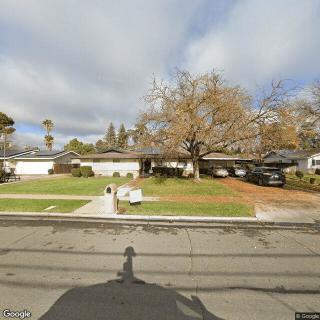
Northwest Villa
$2,600 / month7.9 miles away -
from +$200 / mo
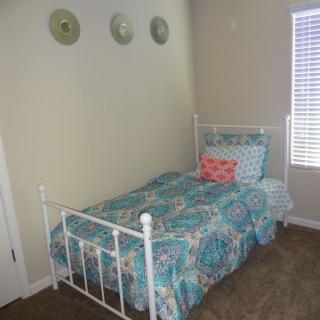
Blossom Creeks Assisted Living
$3,200 to $3,800 / month5.6 miles away -
from +$300 / mo

Nazareth House
$3,300 / month6.9 miles away -
from +$200 / mo
Clovis Guest Home
$3,200 / month2.0 miles away
Overall Review of Caring Heart Home of Clovis
Pros
 The staff are very caring and helpful; meals are very good; and the house is very clean.
- The staff have found a community that fits the mom's needs for care.
- The menu is nice.
- The community is nice, and families would recommend it to others.
- The mom is settling in to her new environment for care.
- The tour guide was exceptional and provided good information.
- The home was clean and in good shape.
- The food is fresh.
- The director was able to resolve issues when they were raised.
- Referrals provided quick responses.
Cons
 The community was smaller and not very clean or nice in appearance.
- It was cheaper but not up to par with the description.
- The facility does not offer activities to residents.
- They were not giving her liquids due to a wrong diagnosis.
- There was an issue with giving her the correct amount of medication.
- The staff were not qualified.
- They felt the care there was not hands-on enough for their loved one.
Review
Caring Heart Home of Clovis is most suitable for families seeking a small, home‑like assisted living option in Clovis where staff know residents by name, meals are solid, and day‑to‑day responsiveness is consistently reliable. The setting tends to attract seniors who don’t require intensive clinical care but value hands‑on attention, a clean environment, and staff who stay engaged with family members. With a demonstrable 1:3 staff‑to‑resident ratio and a focus on personable service, the community delivers a warmth larger campuses often struggle to match. The value is appealing for families watching budgets, and the overall atmosphere supports consistent routines and local connections that many families prize over institutional formality.
Those evaluating this community should still consider alternatives for residents with higher medical needs. The reviews reveal a spectrum: some families praise quick responses and the ability to tailor care, while others question whether a smaller home can sustain the level of clinical oversight required for more dependent loved ones. A serious caution arises from reports of dehydration and medication concerns, underscoring the risk of relying on a smaller setting for higher‑acuity care. For families seeking robust daily programming, structured activities, or comprehensive nursing support, larger facilities with dedicated clinical teams may deliver more predictability.
The strongest positives are concrete and recurring. Staff are described as genuinely caring and helpful, with a clean, well‑kept home environment that supports dignity and ease of daily living. Meal quality receives consistent praise, and residents frequently remark on fresh, pleasing menus. A tangible advantage is the opportunity to personalize living space, repainting rooms, adding a lounge chair, or installing a TV, demonstrating a responsive approach to comfort. The combination of attentive supervision, relative affordability, and proximity to family members contributes to a sense of reliable daily life that families call out as a significant value.
Yet, the downsides cannot be ignored. The smaller scale can limit access to a broad menu of activities and social programming, which matters for residents who thrive on engagement beyond meals and visits. Some reviewers describe variability in cleanliness or appearance relative to expectations, and concerns about medical oversight, especially around hydration and medication administration, color the overall assessment. For residents with mobility limitations or conditions like Parkinson’s, transportation logistics and access to sustaining activities may pose ongoing challenges, reducing the appeal for those who require more rigorous routine or mobility‑friendly programming.
In practice, the favorable aspects tend to offset most everyday concerns for a large portion of families. The intimate setting cultivates a level of attentiveness and accountability that can translate into quicker help when bells ring or needs arise, a genuine comfort in crisis or daily routine. A clean, pleasant environment paired with reliable meals reduces daily friction and supports a stable cadence of life. The cited staff availability and the option to customize space create tangible value that often makes the cost feel reasonable relative to peers in similar tiers. This is especially true for families prioritizing close proximity to home, visible staff engagement, and a warm, non‑clinical ambiance.
Bottom line: Caring Heart Home of Clovis serves well for families prioritizing a smaller, welcoming environment with dependable staff attention and solid meals at a reasonable price. It is less well suited for those requiring intensive clinical care, robust daily programming, or aggressive medical management. Prospective buyers should confirm the formal care plan, especially medication protocols and hydration practices, and ask about 24/7 nursing access. A targeted visit with the administrator or care director will clarify whether the resident’s needs align with the proven strengths, and whether the environment supports the desired level of daily engagement, mobility support, and family involvement.
 Board and Care Home
 Memory Care
 Private
 Fresno Yosemite International (4 miles away)
 Ambulatory care

 Dementia, Paranoia, and Caregiver Guidance: Understanding the Connection
 Engaging Memory Care Activities That Enhance Quality of Life
 When to Transition from Assisted Living to Memory Care: Key Indicators, Steps, and Finding the Right Community