
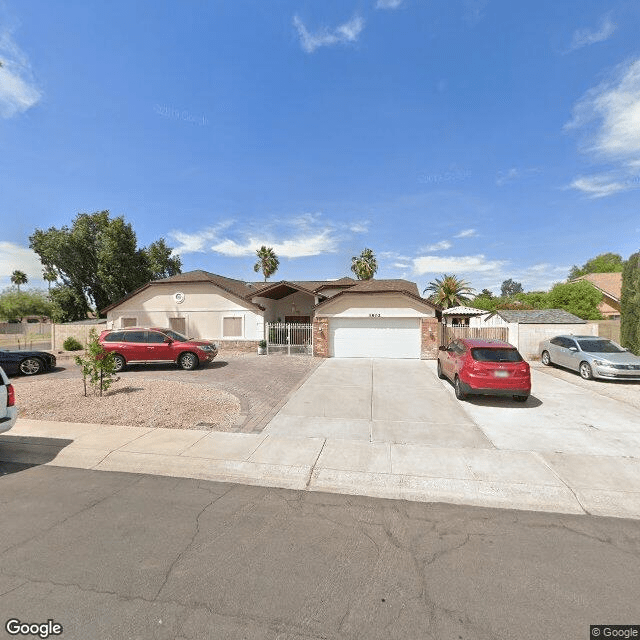
3802 E. Beck Lane, Phoenix, AZ 85032
To contact a resident: (602) 867-2732
For more information about senior living options: (866) 208-4318
Kelly's Adult Care Home Costs & Pricing
Kelly's Adult Care Home offers competitive pricing for its residents, with both private and semi-private room options available for $3,000 per month. This rate is notably lower than the average costs within Maricopa County, where private rooms typically run about $3,318 and semi-private accommodations average $2,801. Similarly, when compared to state averages in Arizona, Kelly's rates remain appealing, as the state figures stand at approximately $3,345 for private rooms and around $2,820 for semi-private spaces. Overall, Kelly's Adult Care Home provides an attractive value proposition for those seeking quality care without imposing excessive financial burdens.
| Floor plans | Kelly's Adult Care Home | Maricopa County | Arizona |
|---|---|---|---|
| Private | $3,000 | $3,318 | $3,345 |
| Semi-Private | $3,000 | $2,801 | $2,820 |
Memory care communities with a similar price nearby
-
from -$500 / mo

La Bella Vita ALH
$2,500 to $7,000 / month24.8 miles away -
About the same

Desert Garden Senior Living
$3,000 to $3,500 / month20.7 miles away -
from -$300 / mo

Caring Hearts Senior Care
$2,700 to $3,500 / month22.5 miles away -
About the same
Horizon Assisted Living
$3,000 / month13.4 miles away -
from -$500 / mo
Northlands Assisted Living Home
$2,500 / month17.3 miles away
Overall Review of Kelly's Adult Care Home
Pros
 The caregivers are kind, patient, and loving to their residents.
- Families have peace of mind knowing their loved ones are safe and well cared for.
- Kelly's Adult Care Home is highly recommended to others seeking care for their loved ones.
Cons
 The smell was horrible during the tour.
- The pool was empty with no water in it.
Review
This community in Phoenix is best suited for families seeking a small, home-like setting where caregivers form real, steady bonds with residents. Kelly’s Adult Care Home works best for seniors who need help with daily activities but do not require extensive on-site medical programming. It appeals to those who value consistent supervision, predictable routines, and the assurance that a familiar, intimate team knows their loved one well. For families chasing a highly medicalized environment, or a campus with extensive rehab services and premium amenities, alternatives will likely be a better fit.
Those weighing options should explicitly consider whether the setting’s intimate scale aligns with their expectations for social activity, therapeutic programming, and broader healthcare support. The appeal of a warm, personalized caregiving style may outweigh the desire for larger facility features, yet it is reasonable to anticipate more limited on-site offerings than in bigger communities. Potential residents may want to compare daily schedules, activity variety, and the capacity for specialized care to ensure continuity if needs evolve.
The strongest positives center on the caregiving culture. Staff are described as kind, patient, and loving, delivering a level of attentiveness that translates into tangible peace of mind for families. When safety and daily care routines are paramount, this approach creates reliability and warmth that families value deeply. The testimonials suggest a clear sense that loved ones are safe and well cared for, which in turn reinforces trust and emotional reassurance during a stressful transition. Those factors can significantly offset the absence of flashy amenities.
Nevertheless, several visible drawbacks temper the overall impression. A tour-comment about a strong odor points to cleanliness and environmental management as ongoing concerns that deserve scrutiny. An empty pool, while not a direct care issue, signals maintenance gaps or limited outdoor amenities, contributing to a perception of dated facilities. Combined with the community’s small size, these issues can hinder the level of polish some families expect and raise questions about how consistently upkeep and preventive maintenance are handled. The rating mix, many five-stars alongside a couple of one-stars, also underscores variability in experiences, reinforcing the need for due diligence.
For families making a decision, a structured, in-person evaluation is essential. Arrange a thorough tour with questions targeted at housekeeping routines, odor control, and the frequency of staff turnover. Observe how staff interact with residents, note the cleanliness of common areas, and ask to speak with multiple caregivers about policies for medications, emergencies, and daily support. Inquiries about outdoor spaces, accessibility, and planned activities will help determine whether the intimate setting can accommodate evolving needs without sacrificing safety. This approach ensures the warmth of care is matched by practical, observable quality.
The bottom line is clear: Kelly’s Adult Care Home is a compelling option for families who prize compassionate, individualized caregiving and a reassuring, home-centered atmosphere. It is a strong fit for those who want reliable safety and personal attention as the core of daily life, not for families prioritizing extensive clinical services or resort-like amenities. The decision hinges on whether the warmth and continuity of care compensate for environmental and facility-age trade-offs. A careful, candor-forward walk-through will reveal if the lived experience aligns with the expectations and care goals for a loved one.
 10 resident community capacity
 Assisted Living
 Board and Care Home
 Memory Care
 Respite Care
 Cats allowed
 Dogs allowed
 Cable or satellite TV
 Dining room
 Fully furnished
 Garden
 Housekeeping services
 Move-in coordination
 Outdoor space
 Private
 Telephone
 Wi-Fi/high-speed internet available
 Phoenix Sky Harbor International (13 miles away)
 24-hour supervision
 Activities of daily living assistance
 Assistance with bathing
 Assistance with dressing
 Assistance with transfers
 Diabetes diet
 Diabetic care
 High acuity care
 Incontinence care
 Meal preparation and service
 Medication management
 Special dietary restrictions
 Transportation arrangement (medical)
 Transportation to doctors appointments





 Nourishing the Mind: Essential Dietary Approaches for Dementia
 Understanding Dementia Behaviors: Practical Insights and Strategies for Caregivers
 When Dementia Sparks Anger and Aggression: Understanding the Connection and Ways to Cope