
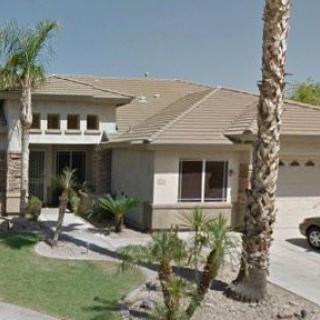
7198 West Camino De Oro, Peoria, AZ 85383
To contact a resident: (602) 439-7307
For more information about senior living options: (866) 208-4318
Camino De Oro Senior Living Costs & Pricing
Camino De Oro Senior Living offers a premium experience with its private and one-bedroom room types both priced at $5,000 per month. This cost significantly exceeds the average rates observed in Maricopa County and across Arizona, which are approximately $3,318 for a private room and $3,473 for a one-bedroom unit. While the pricing at Camino De Oro reflects its commitment to providing high-quality care and amenities tailored to seniors, potential residents should consider how the enhanced offerings align with their needs compared to more affordable options in the region.
| Floor plans | Camino De Oro Senior Living | Maricopa County | Arizona |
|---|---|---|---|
| Private | $5,000 | $3,318 | $3,345 |
| 1 Bedroom | $5,000 | $3,473 | $3,532 |
Memory care communities with a similar price nearby
-
About the same
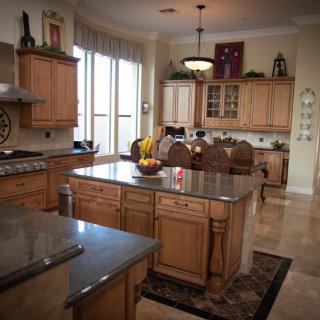
Mountain Cove Luxury Senior Care
$5,000 / month12.4 miles away -
from -$200 / mo
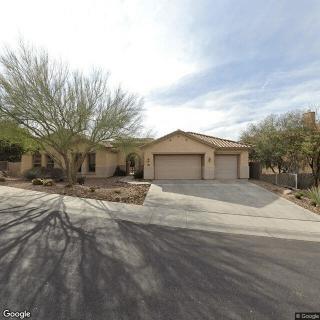
Anthem Az Seniors
$4,800 to $5,500 / month11.4 miles away -
from -$900 / mo

Sunshine Village
$4,100 to $4,500 / month11.9 miles away -
About the same

North Scottsdale Retreat
$5,000 / month18.1 miles away -
About the same

Clarendale Arcadia
$4,895 to $8,790 / month17.5 miles away
Overall Review of Camino De Oro Senior Living
Pros
 The staff and management went above and beyond to accommodate her every need.
- The communication was exceptional and exceeded expectations.
- It felt more like a home than a facility.
- They made holidays and birthdays so much fun.
- The house was always clean, her laundry always done, and she was bathed regularly.
- The staff was wonderful and her care was outstanding.
- He actually regained mobility for a short while after moving in, as Amore worked with him daily.
- He spent his last months being attended and cared for so lovingly.
- They will be in good hands in a loving environment.
Review
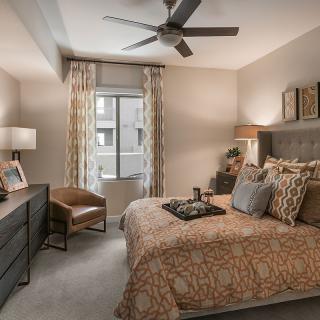
Camino De Oro Senior Living in Peoria is best suited for families seeking a warm, home-like setting where staff deliver highly attentive daily living support and meaningful social engagement. The strongest testimony centers on a mother who thrived for nearly a year, thanks to caregivers who went above and beyond and a management team that communicated exceptionally. The community feels less like a sterile institution and more like a comfortable home, with holidays and birthdays celebrated thoughtfully. Cleanliness is evident, laundry is reliably handled, and residents are bathed regularly. For seniors who need help with routines but still prize personal dignity, autonomy, and connection, Camino De Oro presents a compelling, practical home base.
Those weighing Camino De Oro should explicitly consider alternatives if one’s loved one requires more intensive medical oversight or formal memory-care programming. The reviews praise remarkable staff and compassionate care, yet they don’t detail on-site clinical resources, physician rounds, or specialized dementia programming. Families prioritizing a robust medical footprint, strong memory-care protocols, or a larger care-team to address complex conditions may find a setting with more comprehensive clinical services a better fit. Similarly, families seeking expansive activity calendars, broader rehab services, or a larger campus with numerous ancillary programs may prefer other options.
The core strengths, the staff’s responsiveness, transparent communication, and the home-like atmosphere, strongly offset the absence of explicit clinical detail in the reviews. When aides attend to daily tasks with consistency, bathing, laundry, and housekeeping, residents experience steady dignity and predictable routines that reduce anxiety for families. The emotional climate matters as much as the care plan, and Camino De Oro appears to deliver warmth and continuity in daily life, which often translates into better mood, engagement, and willingness to participate in activities. The ability to tailor holidays and everyday moments to individual preferences further reinforces a sense of belonging that is hard to obtain in larger, more clinical environments.
In the dementia case highlighted, care was described as outstanding, with a notable, though temporary, mobility improvement after moving in and daily engagement. That anecdote speaks volumes about the quality of interaction families can expect: caregivers who actively work with residents, encourage movement, and respect pacing and safety. It also underscores that while disease trajectories may be relentless, the lived experience for residents can still be meaningful and hopeful when care teams invest time in activity, social connection, and personalized routines. Such evidence, even from a small sample, signals a capacity for compassionate, person-centered care that many families value deeply.
Operationally, Camino De Oro appears to deliver on cleanliness, consistent personal care, and a welcoming atmosphere that supports peace of mind. Prospective residents should seek clarity on specific routines, dining experiences, and how memory-related needs are managed day-to-day. A practical visit should probe staff-to-resident ratios during various shifts, the availability of on-site specialists or consultants, and the process for sharing updates with families. Ask to see sample care plans, meet direct caregivers, and observe interactions during a typical activity or mealtime to gauge whether the environment aligns with expectations for daily support and social stimulation.
The bottom-line recommendation is clear: Camino De Oro is a strong fit for families prioritizing a close-knit, home-like setting with exceptional communication and steady personal care. The standout value lies in the daily warmth, reliability, and dignity afforded to residents, which can make a difficult transition feel more like a natural shift in living rather than a loss. For families needing intensive medical management, advanced dementia programming, or a large-scale community with extensive clinical resources, it is wise to compare alternatives. A structured tour, candid conversations with the leadership, and a trial-like engagement will reveal whether this intimate setting matches the care goals, budget, and desired pace of life for a loved one.
 Board and Care Home
 Memory Care
 Private
 Phoenix Sky Harbor International (22 miles away)
 Diabetic care
 Incontinence care

 Assisted Living and Memory Care: Understanding Their Core Differences
 Choosing the Right Senior Care: A Detailed Exploration of Assisted Living and Nursing Homes
 Safeguarding Your Memory Through the Golden Years: Eight Ways to Preserve Cognitive Health