
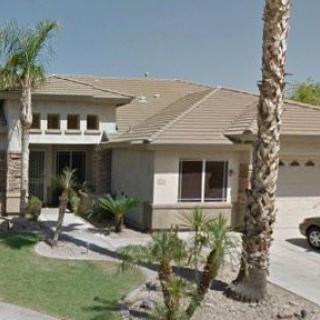
7198 West Camino De Oro, Peoria, AZ 85383
For more information about senior living options: (866) 208-4318
Horizon Assisted Living II Costs & Pricing
Horizon Assisted Living II offers a private room at a monthly cost of $5,000, which significantly surpasses both the average costs in Maricopa County and the broader state of Arizona. In contrast, the average monthly rate for a private room in Maricopa County is approximately $3,318, while state averages hover around $3,345. Similarly, the one-bedroom option at Horizon Assisted Living II carries the same price tag of $5,000 - a figure that exceeds both county and state averages of $3,473 and $3,532 respectively. This indicates that while Horizon Assisted Living II provides specialized services or amenities that warrant higher pricing, prospective residents should weigh these factors against local market rates when considering their options for assisted living accommodations.
| Floor plans | Horizon Assisted Living II | Maricopa County | Arizona |
|---|---|---|---|
| Private | $5,000 | $3,318 | $3,345 |
| 1 Bedroom | $5,000 | $3,473 | $3,532 |
Memory care communities with a similar price nearby
-
About the same
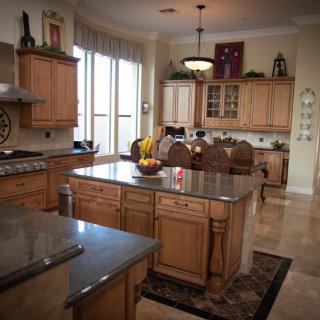
Mountain Cove Luxury Senior Care
$5,000 / month12.4 miles away -
from -$200 / mo
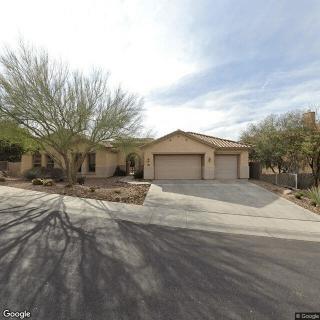
Anthem Az Seniors
$4,800 to $5,500 / month11.4 miles away -
from -$900 / mo

Sunshine Village
$4,100 to $4,500 / month11.8 miles away -
About the same

North Scottsdale Retreat
$5,000 / month18.1 miles away -
About the same

Clarendale Arcadia
$4,895 to $8,790 / month17.5 miles away
Overall Review of Horizon Assisted Living II
Pros
 The staff and management went above and beyond to accommodate her every need.
- The communication was exceptional and exceeded all expectations.
- It felt more like a home than a facility.
- They made holidays and birthdays so much fun.
- The house was clean, her laundry was done, and she was bathed regularly.
- The staff was wonderful and her care was outstanding.
- He actually regained mobility for a short while after he moved in because Amore worked with him daily.
- He spent his last months being attended and cared for so lovingly.
- They would be in good hands in a loving environment.
Review
Horizon Assisted Living II in Peoria is best suited for families seeking a warm, home-like setting where daily life is shaped by attentive caregivers, clear communication, and a sense that the resident’s day-to-day needs are quietly managed with care. The two families who shared experiences describe a community that feels less like a clinical institution and more like a well-run elder home where small comforts, tidy spaces, regular laundry, consistent bathing routines, and holiday celebrations, compose the backdrop for living well in later years. The praise centers on staff going above and beyond, and on communication that keeps families informed, reassured, and connected to how their loved ones are doing.
Explicitly note who may want to consider alternatives. For families whose priorities include highly specialized medical supervision around the clock or formal, structured memory-care programming, Horizon may not be the ideal fit. The reviews emphasize compassionate, personable care and mobility support rather than detailing a rigorous clinical model or a dedicated dementia unit. One account mentions Lewy body dementia and ongoing daily engagement that yielded temporary mobility gains, but the overall emphasis remains on individualized attention rather than on a hospital-like medical framework. For those seeking a facility with pronounced clinical oversight, a larger campus with explicit memory-care credentials or a more clinical atmosphere could be worth comparing.
The most persuasive pros center on the human elements that drive daily life. Staff and management are described as exceptionally responsive, with a level of attentiveness that reassures families during the toughest transitions. The environment feels welcoming and home-centered, which matters for residents who value dignity, routine, and a sense of belonging. Cleanliness and practical care, laundry completion, regular bathing, and consistent housekeeping, are highlighted as standard, not exceptions. The ability to celebrate holidays and birthdays within the community adds emotional nourishment that supports both residents and their families. Importantly, the care appears to be personalized, with daily interactions that aim to preserve mobility and engagement for as long as possible.
Where the reviews fall short on detail, the potential drawbacks are mainly about scope rather than failure. There is no explicit discussion of on-site nursing coverage, 24/7 medical oversight, or a formal memory-care program within Horizon’s model, which means families evaluating residents with intensive clinical needs should verify those capabilities directly. The sample size of two positive reviews leaves questions about consistency across a broader resident population. In practical terms, families will want to confirm staffing ratios, the availability of licensed nursing staff, and what dementia-specific strategies are in place before making a commitment.
Ultimately, the strengths here offset the gaps in several concrete, decision-driving ways. The provenability of strong communication and a home-like atmosphere can compensate for a lack of overt clinical branding by delivering reassurance through daily reliability, predictable routines, and meaningful social engagement. For residents who thrive on personal attention and family-focused events, Horizon offers a quality of life that can be difficult to match in more impersonal settings. The emphasis on cleanliness and routine minimizes common elder-care stressors, while the staff’s dedication to daily activities can translate into measurable improvements in mood and perceived well-being for those who value mobility and participation.
When approaching a decision, families should prioritize deliberate, first-hand assessment. A tour should include meetings with the caregiving team to gauge responsiveness, ask about the exact mix of staff (especially nursing presence) across shifts, and review a typical week of activities to determine whether the program aligns with the resident’s interests and pace. Inquiries about memory-support offerings, incident reporting, and how holidays and family traditions are incorporated into care plans will clarify whether Horizon’s model truly fits the resident’s needs. Cost transparency, what is included in the base rate, and any potential add-ons for enhanced services should be clarified to avoid surprises later.
In sum, Horizon Assisted Living II stands out for families prioritizing a warm, home-like environment where communication is exemplary and caregiving feels personalized and affectionate. It is a strong contender for residents who need daily assistance, enjoy social programming, and benefit from attentive, relational care, especially those with memory challenges who respond well to daily structure and mobility support. For cases demanding formal medical oversight, a larger, more clinically oriented memory-care option may be a better match. A careful visit, with questions focused on staffing, dementia programming, and cost inclusions, will reveal whether Horizon aligns with the resident’s priorities and the family’s expectations.
 10 resident community capacity
 Assisted Living
 Board and Care Home
 Memory Care
 Cable or satellite TV
 Dining room
 Fully furnished
 Garden
 Housekeeping services
 Move-in coordination
 Outdoor space
 Private
 Telephone
 Wi-Fi/high-speed internet available
 Phoenix Sky Harbor International (22 miles away)
 24-hour supervision
 Activities of daily living assistance
 Assistance with bathing
 Assistance with dressing
 Assistance with transfers
 Diabetes diet
 Diabetic care
 Incontinence care
 Meal preparation and service
 Medication management
 Special dietary restrictions
 Transportation arrangement (medical)
 Transportation to doctors appointments

 A Thorough Discussion of Medications Potentially Linked to Dementia Risk
 Why Do Dementia Patients Sleep So Much? Understanding Oversleeping, Stages, and Care Approaches
 8 Key Indicators That Suggest It May Be Time to Transition from Assisted Living to Skilled Nursing Care