For more information about senior living options: (866) 208-4318
3.7 from 60 reviews
5 stars
37
4 stars
4
3 stars
0
2 stars
0
1 stars
19
Golden Estates Rehab Center Costs & Pricing
Golden Estates Rehab Center offers competitive pricing for its services, particularly when compared to both Bexar County and the broader Texas market. For a one-bedroom unit, residents at Golden Estates pay $2,195 per month, which is significantly lower than the county average of $3,506 and the state average of $3,761. Similarly, the two-bedroom option at Golden Estates is priced at $2,695, again providing substantial savings compared to Bexar County's average of $3,962 and Texas's overall average of $4,215. These cost advantages not only enhance accessibility for potential residents but also reflect Golden Estates' commitment to providing quality care while maintaining affordability within the community.
Floor plans
Golden Estates Rehab Center
Bexar County
Texas
1 Bedroom
$2,195
$3,506
$3,761
2 Bedrooms
$2,695
$3,962
$4,215
Independent Living communities with a similar price nearby
Residents and visitors frequently mention the meals, especially the kitchen.
Several reviews single out the kitchen and specific meals, including a well-liked Thanksgiving meal and a “meal of the month” that visitors describe as excellent. One resident’s family member credits the food as a reason for weight gain and a happier look, and another says the kitchen staff reliably provide what is needed. A different review notes the facility “doesn’t have a good meals,” so food quality appears to be less consistent for everyone.
common5 reviews mention this
Activities and holidays are active
Residents describe a steady calendar of activities and holiday events.
Reviews describe lots going on during visits, including bingo and games, plus holiday food and music. Families also mention the community celebrating holidays “to the max,” and one resident highlights group activities like religious activities and outings. Meal-related visit praise also often comes alongside activity mentions, reinforcing that many people experience the day-to-day schedule as event-focused.
caveat5 reviews mention this
Medication follow-through varies
Medication timing and administration are a recurring point of concern.
Some families praise that medications are given on schedule and that the care team addresses concerns promptly. Other reviews raise reliability issues, describing trouble getting medicines delivered on time and medications reportedly not administered as promised. A separate account also describes receiving medication without consent, and multiple negative reviews tie medication and treatment delays to serious outcomes.
caveat10 reviews mention this
Safety and neglect complaints appear
Multiple reviews express serious concerns about patient safety and neglect.
A number of one-star reviews allege missed checks, inadequate response during worsening symptoms, and failures to follow through on care plans, including claims of delayed treatment. Other reviewers report problems reaching staff, communication breakdowns during admissions, or repeated escalations to oversight. Some negative reviews also describe equipment and monitoring concerns, while a few highlight how they had to intervene to get urgent medical help.
How we summarize
Counts show how many written reviews mention each theme; a review can touch several themes, and only frequently mentioned themes are displayed.
Features
Types of Care
Independent Living
Amenities
Activities off-site
Activities on-site
Beautician on-site
Devotional services on-site
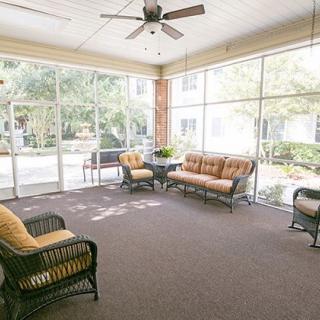
Indoor common areas
Outdoor common areas
Respite or short term stays offered
Wheelchair accessible showers
Transportation
San Antonio International (5 miles away)
Care Services
High acuity care
Incontinence care
Medication management
Dining
Kosher
Meals provided
Activities
Activities off-site
Activities on-site
Devotional activities on-site
Nearby Places of Interest
This part of San Antonio, Texas, offers a convenient and vibrant area for senior living. It is centrally located with easy access to a variety of restaurants, pharmacies, hospitals, places of worship, physicians' offices, cafes, parks, transportation options, and theaters. The proximity to healthcare facilities such as Texsan Heart Hospital and Methodist Hospital provides peace of mind for seniors looking for quality medical care. Additionally, the presence of popular dining options like Charley's Cheesesteaks and Chick-Fil-A cater to diverse tastes. The nearby Woodlawn Lake Park offers a tranquil setting for recreational activities. Overall, this area boasts a mix of amenities that make it an attractive choice for senior residents seeking a well-rounded community with various conveniences within reach.
Restaurants
Charley's Cheesesteaks (0.4 miles)
Chick-Fil-A (0.9 miles)
Hawx Burger Bar & Electro Lounge (1 miles)
Babe's Old Fashioned Hamburgers (1 miles)
Las Palapas (2.2 miles)
Chris Madrid's (2.2 miles)
Whataburger (2.3 miles)
Pharmacies
Walgreens (0.7 miles)
CVS Pharmacy (1.4 miles)
H-E-B Pharmacy (1.4 miles)
Walgreens (2.2 miles)
Walgreens (2.5 miles)
CVS Pharmacy (2.6 miles)
Walgreens (2.6 miles)
Hospitals
Texsan Heart Hospital (0.8 miles)
Methodist Hospital (2.7 miles)
University Hospital (3 miles)
University Hospital Sky Tower (3 miles)
St Luke's Baptist Hospital (3 miles)
Audie L Murphy Memorial Veterans Hospital (3.1 miles)
Audie L. Murphy Memorial VA Hospital (3.1 miles)
Places of Worship
Primera Iglesia Bautista Mexicana-San Antonio (1.3 miles)
St Ann's Catholic Church (2.7 miles)
Temple Beth-El (3.3 miles)
St George Episcopal School (3.4 miles)
Physicians
Yesnocovid (1.4 miles)
Advanced Pain Relief Institute (2 miles)
Dilley Allergy & Asthma Specialists (2 miles)
Summit Children's Clinic (2.8 miles)
Methodist Cardiology Clinic of San Antonio-Transitional Clinic (2.9 miles)
2040 Building (2.9 miles)
San Antonio Preventive & Diagnostic Medicine (3.1 miles)
Golden Estates Rehab Center offers competitive pricing for its services, particularly when compared to both Bexar County and the broader Texas market. For a one-bedroom unit, residents at Golden Estates pay $2,195 per month, which is significantly lower than the county average of $3,506 and the state average of $3,761. Similarly, the two-bedroom option at Golden Estates is priced at $2,695, again providing substantial savings compared to Bexar County's average of $3,962 and Texas's overall average of $4,215. These cost advantages not only enhance accessibility for potential residents but also reflect Golden Estates' commitment to providing quality care while maintaining affordability within the community.
The guide details ten essential responsibilities of senior caregivers, including personal care, mobility assistance, medication management, and emotional support, while emphasizing the importance of safety, nutrition, and maintaining a safe living environment to enhance seniors' quality of life and independence.
The article highlights nine memory-boosting activities for seniors that enhance cognitive health and social interaction, including puzzles, trivia quizzes, and storytelling, while emphasizing the importance of adapting these activities to individual preferences to maximize enjoyment and engagement. Consistent mental engagement is linked to improved cognitive function and emotional well-being in older adults.
Medicare provides limited coverage for skilled nursing home care, covering full benefits for the first 20 days and partial benefits up to 100 days under certain conditions, after which families must explore alternative funding options like Medicaid or long-term care insurance to manage potentially high costs. Proactive planning is essential to navigate the complexities of financing ongoing care once Medicare coverage ends.
Get PricingAsk A QuestionSchedule A TourContact Senior Advisor
By clicking submit, you agree to our Partner's Terms of Use. You
also consent to receive calls and texts, which may be autodialed, from our Partner. Your consent is not a condition to
using our Partner's service. Please visit our Partner's Privacy Policy for information about their privacy practices.




 Independent Living
 Activities off-site
 Beautician on-site
 Devotional services on-site
 Indoor common areas
 Outdoor common areas
 Respite or short term stays offered
 Wheelchair accessible showers
 San Antonio International (5 miles away)
 High acuity care
 Incontinence care
 Medication management
 Kosher
 Upscale amenities with 24-hour care, restaurant-style dining, wellness program, and on-site transportation.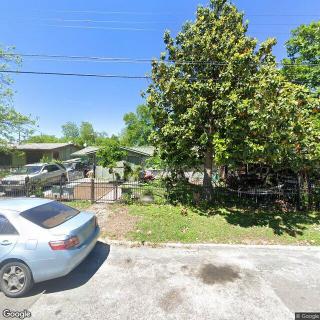


 Ten Vital Duties of a Senior Caregiver: A Comprehensive Guide
 9 Stimulating Memory Activities for Seniors: Puzzles, Cards, and Much More
 Managing Nursing Home Expenses After Medicare Coverage Ends