
5945 Reddman Rd, Charlotte, NC 28212
To contact a resident: (704) 536-1928
For more information about senior living options: (866) 208-4318
Brian Center Retirement Apartments Costs & Pricing
At Brian Center Retirement Apartments, the monthly costs for accommodations reflect a compelling value compared to both Mecklenburg County and the broader state of North Carolina. For a studio apartment, residents will find a monthly fee of $1,678, which is significantly lower than the average county rate of $3,941 and the state average of $4,020. Similarly, the one-bedroom apartments at Brian Center are priced at $2,133 - again well below both local ($3,434) and state ($4,055) averages. Two-bedroom options are available for $2,445, offering a notably competitive choice when juxtaposed with Mecklenburg's average of $3,712 and North Carolina's statewide figure of $4,245. These figures illustrate that Brian Center not only provides quality living spaces but also does so at a more accessible price point than many comparable facilities in the area.
| Floor plans | Brian Center Retirement Apartments | Mecklenburg County | North Carolina |
|---|---|---|---|
| Studio | $1,678 | $3,941 | $4,020 |
| 1 Bedroom | $2,133 | $3,434 | $4,055 |
| 2 Bedrooms | $2,445 | $3,712 | $4,245 |
Independent Living communities with a similar price nearby
-
About the same

Overture Cotswold 55+ Apartment Homes
$1,700 to $2,000 / month3.4 miles away -
from +$272 / mo
Chandler Place Independent Living
$1,950 to $2,950 / month22.9 miles away -
from +$122 / mo

Overture Providence
$1,800 to $2,395 / month10.5 miles away -
from -$278 / mo

Madison Saints Paradise South
$1,400 to $1,900 / month7.7 miles away -
from -$127 / mo
Aldersgate
$1,551 to $1,716 / month2.4 miles away
Overall Review of Brian Center Retirement Apartments
Pros
 The reviewers were impressed by how knowledgeable the management was about the business.
- The management's knowledge of the business impressed the reviewers.
Cons
 The check-in, onboarding, and check-out were convoluted.
- The property needs repainting and updating to be more inviting.
Review
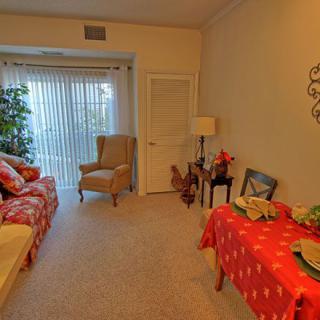
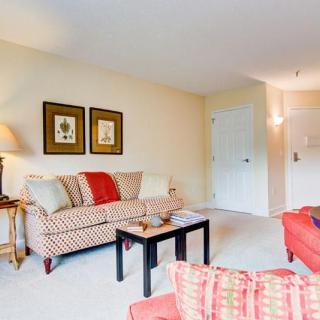
This community is best suited for seniors who want reliable, businesslike management and predictable daily operations more than a glossy, resort-style ambience. The strongest asset is a management team that appears knowledgeable about the business, capable of handling the administrative and logistical needs with confidence. Residents who value clarity in processes, consistent communication, and a sense that the operation runs smoothly behind the scenes will find this environment comfortable enough to settle into. The price of admission, in this case, is tolerating a dated aesthetic and a few workflow trips that can complicate first impressions.
If a modern, inviting interior and friction-free onboarding are non-negotiable, this community should be on the short list of alternatives. Prospective residents with a priority on aesthetics, streamlined check-ins, and a quick, stress-free move-in will likely be disappointed by the current state of décor and the described onboarding friction. The market offers options where interiors feel refreshed and processes feel simpler from day one, and those choices will feel more aligned with expectations of comfort and ease. For families that equate living spaces with a fresh atmosphere, exploration elsewhere is prudent.
The core advantage, management competence, acts as a meaningful counterbalance to the drawbacks. When staff understand the operation, they tend to deliver dependable service, consistent scheduling, and credible follow-through on requests. That capability can translate into fewer surprises in billing, service coordination, and problem resolution, which matters a great deal for residents who require predictable support. In short, governance quality provides a bedrock of reliability that outlasts the unavoidable pension of dated furnishings or cumbersome onboarding.
Where the perceived shortcomings bite, they bite hard enough to demand attention. The notion that the check-in, onboarding, and even check-out can feel convoluted cuts to the core resident experience. For new arrivals and their families, the initial weeks can be more stressful than necessary, potentially coloring the overall impression before any care or services are even tested. The call for updates is real but not fatal; repainting and refreshing common areas would do more than aesthetics, such upgrades would signal that the operation is actively maintaining and uplifting the resident environment, which in turn reinforces trust in the management’s competence.
From a decision-maker’s standpoint, attendees should pursue a practical, targeted due-diligence plan. Ask for a walkthrough of the move-in sequence and a sample check-out flow to reveal where friction tends to arise. Request a candid timeline for any planned cosmetic upgrades and a breakdown of how maintenance requests are prioritized and tracked. Inquire about the level of service included with monthly fees, the staff-to-resident ratio, and how management handles high-priority safety concerns. If the answers reassure about process efficiency and visible commitment to improvement, the environment becomes easier to justify; if not, alternatives with smoother onboarding and more current interiors deserve serious consideration.
Bottom line: this community delivers dependable, businesslike management and steady operational reliability, which can be a decisive advantage for families prioritizing stability over polish. The trade-off is a dated interior and onboarding that can feel clunky. For seniors who prize predictable service and a capable leadership team, the balance tips in favor of staying explored as a viable option. For those who equate comfort with modern, inviting surroundings and a frictionless transition into residence, walking away to compare other communities is a prudent, well-advised move. The right choice hinges on whether reliable governance or refreshed ambiance is the higher priority for the individual and their care needs.
 Independent Living
 Cats allowed
 Dogs allowed
 Activities off-site
 Beautician on-site
 Indoor common areas
 Outdoor common areas
 Wheelchair accessible showers
 Charlotte Douglas International (11 miles away)
 Meals provided





 Engaging Brain Games and Innovative Apps to Keep Senior Minds Active
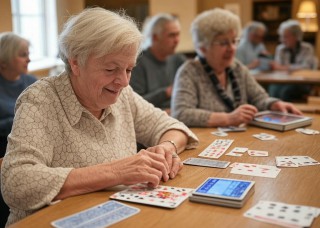 Effective Strategies for Keeping Seniors' Minds Active: A Deep Dive into Brain Games and Apps
 In-Depth Look at the VA Aid and Attendance Program