

3147 10th Ave, Port Huron, MI 48060
To contact a resident: (810) 985-9683
For more information about senior living options: (866) 208-4318

Sanctuary at Marydale Costs & Pricing
Sanctuary at Marydale offers competitive pricing for its living accommodations, particularly when compared to the broader market in St. Clair County and the state of Michigan. For instance, a studio apartment at Sanctuary is available for $705 per month, significantly lower than the county's average of $2,966 and the state average of $3,824. Similarly, their one-bedroom units, priced at $1,231 monthly, present an appealing alternative against St. Clair County's average of $2,460 and Michigan's average of $3,384. This noteworthy difference underscores Sanctuary at Marydale's commitment to providing accessible housing options while maintaining quality care and community for its residents.
| Floor plans | Sanctuary at Marydale | St. Clair County | Michigan |
|---|---|---|---|
| Studio | $705 | $2,966 | $3,824 |
| 1 Bedroom | $1,231 | $2,460 | $3,384 |
Overall Review of Sanctuary at Marydale
Pros
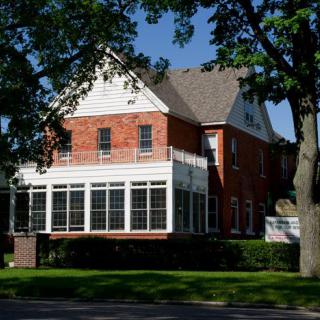
 The owner has transformed this space into something artistic.
- The space is uniquely gorgeous, with the owner's art and vision on display.
- The space is cool, and the owner is legit.
- It is beautiful.
- It is the best place to be in St. Clair County.
- The space has been beautifully redone.
- The new owners are good people with a great concept for an artistic space.
- It is a beautiful revival of a building and an amazing art space.
Review
Sanctuary at Marydale in Port Huron is best suited for older adults and families who prize a boutique, artistically renovated environment and a cohesive, founder-led community vibe. The space reads as a gallery brought to life, with art and a distinctive vision shaping daily life. It shines most for residents or guests who value beauty, conversation, and creative energy over conventional institutional routines. This setting can elevate ordinary days through inspiration, intimate social moments, and a sense of belonging that comes from being part of a living art project. It is not a generic care facility; it functions as a small, art-forward sanctuary.
Those needing ongoing daily living assistance, reliable medical oversight, or structured elder-care programs should consider alternatives. The reviews do not reveal licensed caregiving staff, meal service, memory-care options, or the safety features typical of traditional assisted living campuses. For families facing complex medical needs, fall risk management, medication administration, or 24/7 supervision, a more conventional facility with established care protocols will likely be more appropriate. Sanctuary appears designed to be about atmosphere and community first, not a complete care solution.
Still, the positives are compelling. The unanimous praise for the space as beautifully redone and uniquely artistic speaks to a rare ability to create mood and connection. The owner’s artistic vision and hands-on approach emerge as a core asset, lending credibility and warmth that can support social engagement and family visits without feeling clinical. In a setting where care needs are limited or well-managed elsewhere, the charm, intimacy, and high energy of the space offset the absence of formal care services. The risk is simple: misalignment between expectations for daily living support and what is actually offered. If care is essential, the allure may not compensate for gaps in supervision and routine assistance.
Decision-making hinges on care needs and lifestyle priorities. If a parent or loved one wants a visually rich, culturally engaging environment and already attends to basic daily tasks with assistance from family or a separate provider, Sanctuary can deliver meaningful days and high-quality social life. For those seeking a predictable care plan, with regular meals, housekeeping, and round-the-clock staff, traditional assisted living remains the safer bet. It may even be possible to use the space as a respite or guest-friendly anchor within a broader care plan, leveraging the artistic setting for encore visits or family gatherings. In any case, clarity about available services, hours, and terms is essential.
Prospective inquiries should center on practical details that affect daily life. Confirm whether any on-site care services exist, and if not, what partnerships or referrals are possible. Inquire about staffing hours, safety measures, and accessibility features for mobility devices. Clarify what meals are offered and whether they can accommodate dietary restrictions. Ask about private or semi-private spaces, guest policies for extended family visits, and any programming that leverages the artistic environment. Costs and contract terms, including cancellation and residency options, must be transparent. Finally, request a tour focused not only on aesthetics but on how staff would respond to common elder-care scenarios, should they arise.
Bottom line: Sanctuary at Marydale stands out as a striking, art-forward environment with strong leadership and a palpable sense of community. It is an excellent choice for families seeking beauty, inspiration, and an intimate setting for a loved one who does not require intensive daily care. For those whose priority is reliable medical oversight, continuous safety monitoring, and a defined care plan, more traditional assisted living options are recommended. If exploration becomes viable, use the visit to test how the space could fit into an overall plan, perhaps as a creative anchor within a broader array of services. The right fit will harmonize the strength of the ambiance with the essential care needs.
 Independent Living
 Cats allowed
 Dogs allowed
 Weight Training for Seniors: Building Strength and Vitality
 Understanding the Sandwich Generation: Stress and Responsibilities for Multigenerational Caregivers
 8 Essential Assistive Devices for Older Adults