
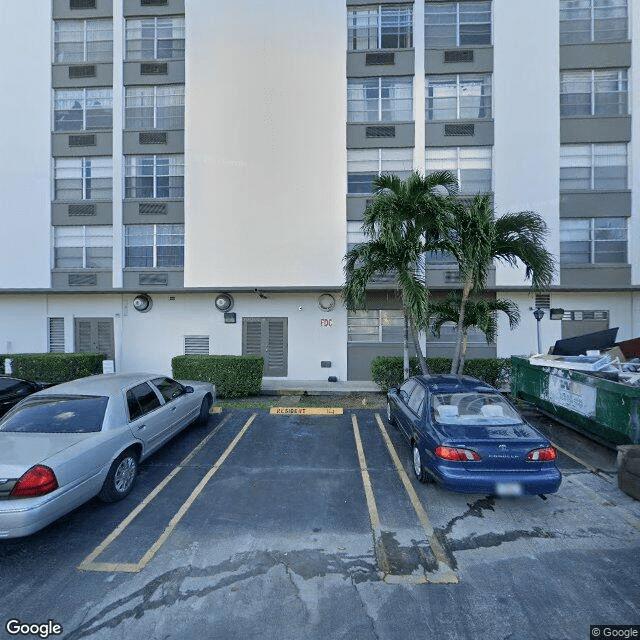
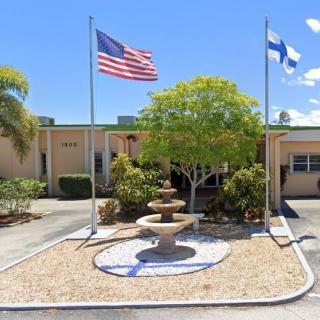
1500 Lucerne Ave, Lake Worth, FL 33460
To contact a resident: (561) 585-7591
For more information about senior living options: (866) 208-4318
Overall Review of Lake Worth Towers
Pros
 It is the largest building in Lake Worth and has been fully renovated.
- It is a low- to mid-income 55+ non-profit community, offering affordable housing.
- The rent is right for residents.
- It serves as a senior citizen HUD habitat, highlighting its focus on senior housing.
Cons
 It used to be a friendly place, but now it is just a place to hang one’s hat.
- There is no security.
- There has been personal property damage.
- The website has problems, preventing residents from logging in.
- There is no designated parking; residents must park wherever they can find a space.
- Before the sale to the government, it was a place to call home.
Review
Lake Worth Towers in Lake Worth, Florida, is best suited for budget-conscious seniors aged 55 and older who want an affordable, non-profit, HUD-backed housing option in a large, centralized building. The property offers a low-cost entry point in a town with limited alternatives, and the recent, 100% renovation makes the living spaces reasonably current without elevating the monthly burden. It’s a pragmatic home for those who value predictable rent, straightforward housing, and the social ecosystem that comes with a large residence, provided security and day-to-day operations are acceptable tradeoffs for the price.
That practicality defines who may want to consider alternatives. Anyone who cannot tolerate weak security, ongoing property damage, or gaps in operational reliability should look elsewhere. Prospective residents who require consistently working online access, easily navigable portals, and clearly designated parking will likely be disappointed here. Families or individuals who prize strong on-site management, robust resident services, and predictable, door-to-door safety should compare this option against communities that emphasize security, parking discipline, and reliable service delivery. In short, safety and reliability are non-negotiables for a segment of buyers that should broaden the search.
On the upside, affordability is real and the non-profit framework keeps entry costs within reach. The building’s size matters: more neighbors can translate to more social opportunities and a compact, walkable campus feel. The renovation is no small win, delivering updated units that reduce immediate out-of-pocket expenses and improve daily livability. Those positives matter because they directly mitigate the cost squeeze typical of retirement budgets. Yet the major drawbacks cannot be dismissed. The sense of security in the building appears weak, there are reports of personal-property damage, and parking is not designated, creating friction for residents carrying groceries or relying on visitor access. When safety and convenience erode, even well-renovated interiors struggle to feel like a true home.
From a decision-making perspective, the crucial questions revolve around safety, logistics, and reliability. Inquiries should target access controls, surveillance coverage, and on-site staffing hours to gauge actual security. Clarify how damage incidents are handled, who bears responsibility, and what remedies exist if property is damaged. Parking policy warrants careful review: are there any assigned spaces, how is guest parking managed, and how does the building’s size affect enforcement? The reliability of the online portal matters as well: is rent payment, maintenance requests, and leasing truly functional, and who provides timely support when technology falters? Request concrete data on maintenance response times and ongoing upkeep since renovation to understand daily operation.
Ownership trajectory and governance also demand scrutiny. The reviews hint at a shift that some interpret as a sale to government authorities, with descriptors labeling the property as a HUD habitat. Stability matters deeply for seniors, and any transition risk can ripple through resident programs, morale, and service continuity. Prospects should seek transparent explanations about ownership timelines, funding assurances, and protections during transitions. Without a solid sense of continuity, the lure of a newly renovated unit can be undercut by ongoing questions about who controls the building and how residents will be supported through change.
In the end, Lake Worth Towers offers a workable option for those prioritizing cost containment and basic community access over premium security or flawless operations. The combination of affordable rents, non-profit status, and a refreshed physical plant provides practical value for households stretching retirement income. However, for seniors who require demonstrable security, reliable parking, seamless online access, and steady, resident-focused management, alternatives deserve serious consideration first. If a budget-first, no-frills, community-centric living situation is acceptable, this property warrants a thorough visit; if not, the prudent course is to explore options with stronger safety nets and clearer management continuity.
 Independent Living
 Palm Beach International (5 miles away)

 Understanding the Sandwich Generation: Stress and Responsibilities for Multigenerational Caregivers
 8 Essential Assistive Devices for Older Adults
 Navigating the Financial Road to Nursing Home Care: In-Depth Guidance and Resources