The Family Lodge of Clinton offers competitive pricing for its accommodations, standing out particularly in comparison to both Middlesex County and the broader Connecticut market. For instance, a studio room at The Family Lodge is priced at $3,600 per month, significantly lower than the county average of $4,357 and the state average of $5,919. Similarly, their one-bedroom units are available at $5,500 per month, which again represents a more affordable option compared to Middlesex County's average of $8,981 while still being comparatively reasonable when juxtaposed with Connecticut's state rate of $6,383. This strategic pricing not only highlights The Family Lodge's value proposition but also positions it as an attractive choice for individuals seeking quality accommodations within a more budget-friendly framework.
Floor plans
The Family Lodge of Clinton
Middlesex County
Connecticut
Studio
$3,600
$4,357
$5,919
1 Bedroom
$5,500
$8,981
$6,383
Independent Living communities with a similar price nearby
Memory care comes through as a central focus for residents with dementia needs.
Several reviews highlight memory care specifically, describing staff support and comfort for families. Residents and families also mention a dementia-friendly setup, and one reviewer points to attentive care for advanced Alzheimer’s. One review even frames the community as the first choice if memory care were needed.
common26 reviews mention this
Staffs attentiveness drives confidence
Residents and families consistently describe staff as kind, caring, and responsive.
Across the reviews, staff communication, patience, and day-to-day attentiveness stand out, with multiple people calling out kindness and professionalism. Several reviewers also describe staff who learn residents’ names and involve families in care. A number of comments tie that support to peace of mind and feeling confident leaving a loved one in their care.
common6 reviews mention this
Facility cleanliness and upkeep
Residents and visitors repeatedly mention an impeccably clean, well-kept building.
Cleanliness shows up often, with reviewers describing the building as clean, immaculate, or inviting. A few comments connect that upkeep to how comfortable the community feels on a visit. Several also mention cleanliness alongside well-groomed residents and a generally polished environment.
common5 reviews mention this
Home-like atmosphere feels comforting
Many reviews describe a home-like setting rather than an institutional feel.
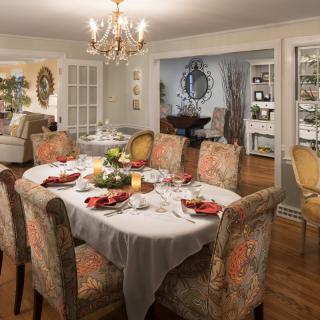
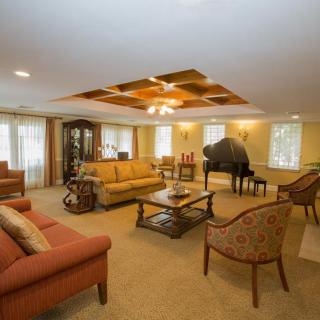
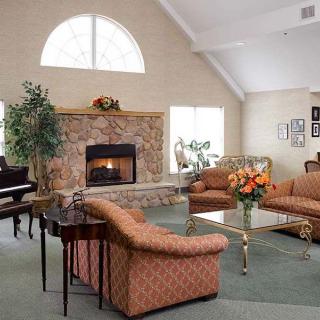
Multiple reviewers use homey or comfortable language when describing the environment, including comments about renovations and decorating that make the space feel more familiar. Some people also describe seeing happy residents in a way that reinforces that atmosphere. The overall picture is that residents are meant to feel supported and settled, not overwhelmed.
common4 reviews mention this
Location near the shoreline
Reviews describe the setting near downtown Clinton and the Connecticut shoreline as convenient.
Several reviews call out the community’s shoreline location, with one also noting it is near downtown Clinton. Others add that the area is convenient for shopping and major highways. A reviewer also mentions residents being brought out into the Clinton community often, aligning with the emphasis on the surrounding neighborhood.
common2 reviews mention this
Safety and security are noted
A couple of reviewers specifically mention safety and security as a reason for peace of mind.
One review points to security during a visit, pairing it with the sense that staff are attentive and the building is well maintained. Another reviewer says they feel peace of mind about safety after moving a family member in, including support for Alzheimer’s care needs.
How we summarize
Counts show how many written reviews mention each theme; a review can touch several themes, and only frequently mentioned themes are displayed.
Features
Types of Care
Independent Living
Pets
Cats allowed
Dogs allowed
Nearby Places of Interest
Pharmacies
CVS Pharmacy (0.3 miles)
Walgreens (0.8 miles)
CVS Pharmacy (4.1 miles)
Killingworth Family Pharmacy (5.5 miles)
CVS Pharmacy (7.6 miles)
CVS Pharmacy (8.6 miles)
Walgreens (8.7 miles)
Physicians
Dr Ellen Markstein - Dermatologist (0.4 miles)
County OBGYN (0.4 miles)
Shoreline Orthopedics and Sports Medicine A Division of COS (1.6 miles)
Middlesex Eye Physicians Optcl (1.9 miles)
Vein Center of Southern CT (1.9 miles)
Lakebrook Medical Center (2 miles)
Madison Radiology (2 miles)
Restaurants
Lobster Landing (0.7 miles)
Rocky's Aqua (0.9 miles)
McDonald's (1 miles)
Chow Food and Beverage Company (1.4 miles)
Beach Donut Shop (1.6 miles)
Westbrook Lobster Restaurant and Bar (1.7 miles)
Clam Castle (1.8 miles)
Hospitals
Middlesex Hospital Madison Outpatient Blood Drawing Facility (1.9 miles)
Yale New Haven Health Old Saybrook Medical Center (7.9 miles)
Parks
Hammonasset Beach State Park (2.1 miles)
Madison Surf Club (4.7 miles)
Chatfield Hollow State Park (7.2 miles)
Rollwood Park (8.1 miles)
Guilford Town Green (8.4 miles)
Nut Plains Park (8.5 miles)
Cafes
Turtle Cafe (3.7 miles)
Savour Cafe and Bakery (7.3 miles)
Mystic Market Kitchen and Eatery (7.6 miles)
Ashlawn Farm Coffee (7.6 miles)
Cilantro Specialty Foods (8.4 miles)
Transportation
Amtrak/Shore Line East - Old Saybrook Train Station (7.6 miles)
Shore Line East - Guilford Train Station (8 miles)
The Family Lodge of Clinton offers competitive pricing for its accommodations, standing out particularly in comparison to both Middlesex County and the broader Connecticut market. For instance, a studio room at The Family Lodge is priced at $3,600 per month, significantly lower than the county average of $4,357 and the state average of $5,919. Similarly, their one-bedroom units are available at $5,500 per month, which again represents a more affordable option compared to Middlesex County's average of $8,981 while still being comparatively reasonable when juxtaposed with Connecticut's state rate of $6,383. This strategic pricing not only highlights The Family Lodge's value proposition but also positions it as an attractive choice for individuals seeking quality accommodations within a more budget-friendly framework.
Anticipatory grief is an emotional response to the impending loss of a loved one, characterized by complex emotions such as sadness and anger, and involves navigating stages similar to those identified by Kübler-Ross. Coping strategies are vital for managing this process, emphasizing compassionate communication, self-care, and support groups while recognizing the cultural influences on grieving.
Adult day care programs offer essential support and activities for older adults, yet many hesitate to participate due to concerns about independence and stigma. To alleviate these apprehensions, families should facilitate open discussions, explore financial resources, suggest trial visits, and collaborate with healthcare providers to highlight the benefits of such services for both the participants and their caregivers.
Living wills and advance directives are crucial legal documents that outline an individual's healthcare preferences when they cannot make decisions themselves, enhancing patient autonomy and alleviating family stress during medical crises. The article emphasizes the need for these documents to be personalized, legally valid, and regularly updated, while also encouraging communication about end-of-life wishes among family members and healthcare providers.
Get PricingAsk A QuestionSchedule A TourContact Senior Advisor
By clicking submit, you agree to our Partner's Terms of Use. You
also consent to receive calls and texts, which may be autodialed, from our Partner. Your consent is not a condition to
using our Partner's service. Please visit our Partner's Privacy Policy for information about their privacy practices.




 Independent Living
 Cats allowed
 Dogs allowed
 24/7 supervision with ADL support and diabetes-friendly meals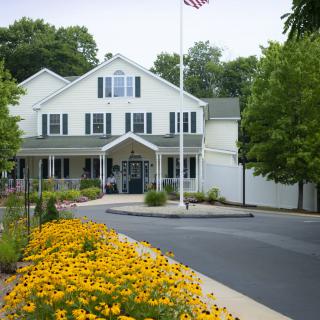


 Recognizing the Journey: Understanding and Navigating Anticipatory Grief
 Encouraging Participation in Adult Day Care: A Guide to Supporting a Hesitant Parent
 Comprehensive Exploration of Living Wills and Other Advance Directives