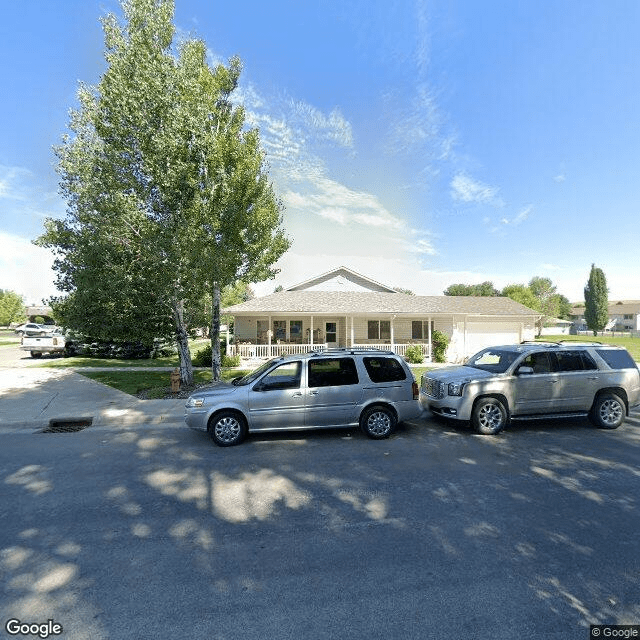
561 Avoca Ave, Sheridan, WY 82801
To contact a resident: (307) 672-1881
For more information about senior living options: (866) 208-4318
Willow Creek of Sheridan Costs & Pricing
Willow Creek of Sheridan offers competitive pricing for its accommodations compared to both Sheridan County and the broader state of Wyoming. For a studio apartment, residents will find the monthly cost at Willow Creek is $3,275, which is notably lower than the county average of $3,578 and slightly above the state average of $3,322. Similarly, for a one-bedroom unit, the rate at Willow Creek stands at $3,400, offering an attractive alternative to the higher county price of $4,398 while remaining below Wyoming's average of $3,890. This positioning underscores Willow Creek's commitment to providing quality living options that are financially accessible within their regional context.
| Floor plans | Willow Creek of Sheridan | Sheridan County | Wyoming |
|---|---|---|---|
| Studio | $3,275 | $3,578 | $3,322 |
| 1 Bedroom | $3,400 | $4,398 | $3,890 |
Overall Review of Willow Creek of Sheridan
Pros
 The experience at Willow Creek of Sheridan is great.
- The staff were amazing and provided good care.
- It feels like home-style living with nice-sized rooms.
- The dining area is good and the meals are satisfying.
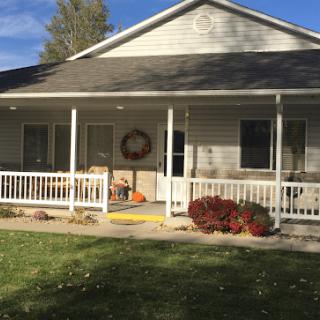
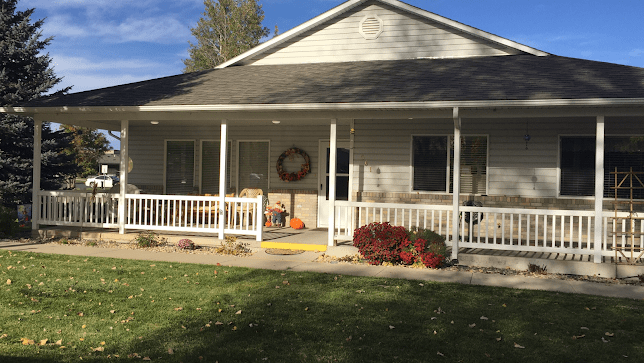
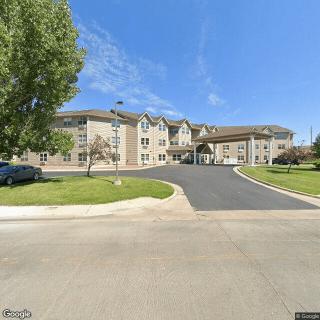
- There is a nice covered porch for residents to sit on.
- The facility has a patio and a porch, enhancing outdoor comfort.
- Maintenance and upkeep are good.
- Beehive of Sheridan offers a warm, home atmosphere.
- The rooms and living areas at Beehive are nice and create a comfortable, homey environment.
Cons
 They could not care for him any longer.
- He needed more than what they were able to provide.
Review
Willow Creek of Sheridan is best suited for seniors who prize a true home-like feel and close, attentive staff over a large, institutional atmosphere. The community works best for residents who need help with daily activities rather than high-acuity medical care, and for families seeking a small, intimate setting where neighbors feel like a extended family. In practical terms, it fits someone in the early-to-mid stages of assisted living who wants comfortable, décor-friendly rooms, friendly routines, and a daily life anchored by warmth and personal connection rather than a fortress of clinical services.
From resident and family reports, the defining strengths lie in the human side of care. The staff is consistently described as kind, patient, and genuinely engaged, turning routine days into a steady rhythm of support. The living spaces are presented as homey and dignified, rooms are adequately sized and can be personalized to feel like a real home, with comfortable common areas, a welcoming dining room, and well-maintained outdoor porches and patios that invite casual social time. Food and dining are noted as positive aspects, contributing to a sense of normalcy and comfort that a traditional home provides.
Yet the most salient limitation centers on care acuity. In at least one account, the loved one could no longer be cared for at Willow Creek because the level of medical and daily supervision required exceeded what the community could reliably deliver. This is not a critique of the staff’s kindness or effort; rather, it signals a boundary on the scope of services. For families with a relative who will soon need around-the-clock nursing, memory-care specialized supervision, or more intensive clinical oversight, Willow Creek may not be the right long-term fit, and a move to a facility with a broader continuum of care could become a necessity down the line.
That said, the favorable aspects, strong staff engagement, a genuine home atmosphere, comfortable private space, and a cheerful, social living environment, do offset the primary conundrum in meaningful ways for many residents. The small footprint fosters easier, more personal interactions, and the sense of being “at home” can translate into reduced anxiety and better daily mood for seniors who flourish with routine, predictable programming, and direct access to compassionate caregivers. For families prioritizing emotional well-being, dignity, and a low-stress daily life, these advantages carry substantial weight against the lack of expansive on-site medical capacity.
With those realities in mind, alternatives deserve careful consideration for anyone facing a potential need for higher-level care. Families should assess whether future needs may include enhanced memory support, continuous nursing supervision, or rapid escalation to skilled care. If so, exploring communities with dedicated memory-care units or on-site skilled-nursing floors, plus clear transition pathways, will be essential. Likewise, those who value a larger campus with more extensive activity programming, a broader care continuum, or specialized clinical oversight may find a better fit elsewhere.
The practical path forward is clear: verify the anticipated trajectory of care for a loved one, tour Willow Creek with specific questions about staffing ratios, care planning, and escalation triggers, and request a candid discussion about how a transition would occur if needs rise. If the goal is a warm, home-centered daily life with attentive staff, Willow Creek delivers strongly. If the goal is robust, around-the-clock medical oversight or advanced dementia care within the same community, families should look for a facility that promises and plans for that continuum.
 Assisted Living
 Memory Care
 Activities on-site
 Devotional services off-site
 Indoor common areas
 Respite or short term stays offered
 Ambulatory care
 High acuity care
 Incontinence care
 Medication management
 Meals provided




 Understanding the Distinctions: Assisted Living and Memory Care Explained
 How to Communicate with a Loved One Living with Dementia: 10 Supportive Strategies
 Comprehensive Guide to VA Nursing Homes: A Crucial Long-Term Care Resource for Veterans