
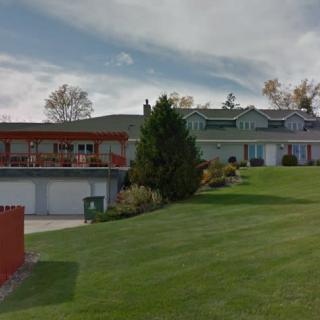
1450 Pleasant Street, Ripon, WI 54971
For more information about senior living options: (866) 208-4318
Overall Review of Pleasant Park Place
Pros
 Pleasant Park Place is a fun-filled family environment.
- The staff works together to go above and beyond to make a loving and warm home for residents.
- The place is described as a very fine facility with a family feel.
- The staff is very informative and provides helpful assistance with Veterans' benefits.
- It has a small-town feel with a home-like atmosphere.
Cons
 Pleasant Park Place was small.
- The apartments were just a room with a separate bathroom.
- The rooms were a little bigger than a nursing home type situation, but they were still small.
Review
Pleasant Park Place is best suited for seniors and families who want a small, family-style assisted living experience with a warm, home-like atmosphere and a staff that treats residents like kin. The community is clearly organized around personal connections, with a two-sided layout that accommodates both standard assisted living and Alzheimer’s care in a distinctly intimate setting. Residents live in a framework where staff familiarity translates into quick, responsive care, and newcomers often feel embraced within a short period, the move-in experience is described as smooth, with rapid adjustment to daily interactions and routines.
For families weighing options, it’s important to consider who may want alternatives. The very configuration that creates closeness can feel restrictive for those seeking a larger campus with expansive programming, broader social opportunities, or more expansive living spaces. The living units are described as “a room with a separate bathroom,” and even though one reviewer notes the space is slightly larger than a typical nursing home, the footprint remains compact. The Alzheimer’s side is present but limited to a specific portion of the building, which may matter for families that want wider or more varied memory-care environments or more robust on-site amenities and activity options.
The strongest positives here are tangible and tightly linked to the small, family-forward culture. A “fun filled family environment” is not just marketing language; it reflects a daily practice where staff and residents interact like extended family, going above and beyond to create a warm home. The staff is described as informative and proactive, one reviewer even notes assistance with Veterans’ benefits forms, demonstrating a level of engagement that helps families feel supported in practical, concrete ways. The walk-in rolling shower is a meaningful accessibility feature that supports safe, independent mobility, and the overall impression is a setting where care and communication are prioritized over impersonal efficiency.
Those advantages, however, must be weighed against the realities of a compact model. The small scale can limit privacy, as living spaces remain modest and personal space is at a premium. With roughly 20 residents split between assisted living and Alzheimer’s care, the community operates with a tight, easily navigable footprint, which is excellent for safety and relational warmth but can constrain the range of activities and spontaneous social opportunities. For some families, the desire for broader social programming, larger community rooms, or more extensive on-site amenities may point toward alternatives that offer a bigger footprint and more diversified calendars.
Yet the pros do not vanish under the weight of the cons. The intimate environment supports strong staff-resident bonds, enabling more attentive daily care and clearer lines of communication for families. The two-sided design means memory care is accommodated in a dedicated space, with staff who understand the needs of residents on that side, while the all-around “home-like” atmosphere keeps daily routines predictable and comfortable. Quick adjustments in the first weeks and a sense of a small-town, close-knit community can be decisive for families seeking stability, predictable schedules, and ongoing caregiver familiarity, elements that often translate into less stress during transitions.
Ultimately, Pleasant Park Place serves as a compelling fit for families prioritizing warmth, visibility, and a hands-on, personalized approach to care. It is a strong contender for residents who value a close-knit community where staff know residents’ names, preferences, and medical nuances, and where help with practicalities, such as veteran benefits paperwork, comes readily. For those requiring expansive programming, large social networks, or more expansive accommodations, however, alternatives with bigger campuses or more varied amenities may be preferable. Prospective families should visit with a practical checklist: observe interactions between staff and residents, review the activity calendar, inquire about memory-care specifics and care plans, ask about dining options and private space, and confirm pricing inclusions so the choice aligns with both care needs and lifestyle expectations.
 24 resident community capacity
 Assisted Living
 Memory Care
 Beauty salon
 Cable or satellite TV
 Dining room
 Fully furnished
 Garden
 Housekeeping services
 Kitchenette
 Move-in coordination
 Outdoor space
 Telephone
 Wi-Fi/high-speed internet available
 24-hour call system
 Activities of daily living assistance
 Assistance with bathing
 Assistance with dressing
 Assistance with transfers
 Diabetes diet
 Hospice waiver
 Meal preparation and service
 Medication management
 Mental wellness program
 Special dietary restrictions
 Transportation arrangement (medical)
 Transportation to doctors appointments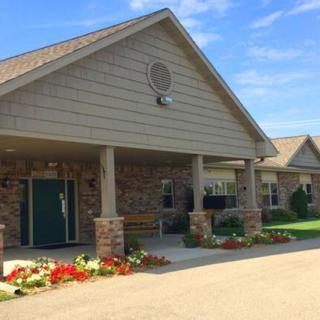


 Estimating the Expenses of At-Home Dementia Care: A Detailed Exploration
 Comprehensive Insights on the Late Stages of Dementia: What to Expect and How to Provide Care
 Medications Associated with Dementia Risk: A Comprehensive Overview