

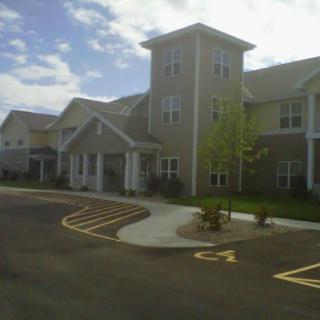
229 Van Dyke Street, Oconto, WI 54153
For more information about senior living options: (866) 208-4318
Overall Review of Sun Valley Homes II Nine Acres
Pros
 The recent rehire is ensuring much better quality food for the resident population.
- Meal quality for residents has improved due to the new staff.
- There is evident improvement in the nutritional quality of meals for residents.
Cons
 The facility is described as one of the most poorly managed facilities the reviewer has visited.
- Arguments between staff erupt regularly.
- The charge nurse is verbally abusive to staff, residents, and visitors.
- The administrative staff is almost entirely absent from the facility.
- Med passing practices are incredibly lax, leading to residents receiving other residents' doctor-prescribed meds, which is egregious and highly dangerous.
- When such med errors occur, they are not logged as med errors nor reported to the state, even with changes in condition.
- Such errors could result in the death of a resident, and the state needs to intervene immediately to ensure corrective action and retraining.
- Meal plans have been very poor in nutritional balance and quality.
- The facility receives a one-star rating, which may be on the generous side.
Review
Sun Valley Homes II Nine Acres in Oconto is best suited for families willing to take an unusually hands-on, watchdog role in oversight and prepared to push for rapid, tangible improvements. The facility presents a landscape of ongoing leadership and staff instability, with frequent internal discord reported among caregivers and little visible administrative presence. This combination makes it a practical stopgap for families who want to explore options quickly while demanding immediate, concrete changes rather than settling into a stable, risk-averse environment. It is not a fit for families seeking a tranquil, consistently managed setting with predictable routines and proven safeguarding of daily care.
Those who need dependable medication management and a consistently professional caregiving culture should consider alternatives. The reviews describe lax med passing, with residents sometimes receiving other residents’ doctor-prescribed medications, a practice that directly jeopardizes safety. The absence of robust logging and a failure to report adverse changes to the state when medication errors occur raises serious red flags for ongoing safety and regulatory compliance. Even with any improvements in other areas, the core requirement for reliable medication administration makes this community a choice to scrutinize carefully rather than embrace as a long-term home.
There is a narrow positive signal that cannot be ignored: a recent kitchen rehire has begun to raise the quality of meals. Food service quality can meaningfully affect daily well-being and overall satisfaction, and this change suggests that management is capable of prioritizing resident nourishment when challenged. However, a single domain improvement does not compensate for the deeper, systemic concerns that overshadow daily life here. Nutrition is important, but it does not erase the risk of med errors, staffing conflicts, and leadership gaps that drive far greater consequences than a less-than-ideal menu.
The most salient cons, outbursts and arguments among staff, a charge nurse who is described as verbally abusive, and an administrative team that appears largely absent, strike at the heart of resident safety and continuity of care. When leadership is visible and empowered, care delivery becomes more consistent; when it is not, the daily experience fragments into unpredictable interactions and inconsistent policies. The lax approach to medication safety, coupled with a lack of formal incident logging and state reporting, creates an environment where mistakes can escalate without timely, corrective action. These dynamics undermine trust and raise the stakes for families trying to ensure a secure living environment.
For families weighing options, a disciplined due-diligence workflow is essential. Request a detailed medication management policy and insist on seeing the facility’s error-reduction plan and any recent state or regulatory findings. Demand to speak with the administrator or a trusted site leader about daily rounds, staffing ratios by shift, and the process for addressing staff conflicts. Review the most recent quality assurance data, any external oversight reports, and a clear plan for ongoing staff training and supervision. Visitation should include unannounced observations of mealtime and med-pass routines, and rescue plans for potential med errors or caregiver shortages should be part of the conversation.
Bottom line: Sun Valley Homes II Nine Acres is a high-variance option that requires decisive, proactive oversight from families. If the goal is a residence with stable leadership, rigorous medication safety, and a calm, professional atmosphere, alternatives are strongly advised. For those willing to demand accountability, insist on measurable safety improvements, and monitor progress relentlessly, the facility may still be worth a temporary trial as part of a broader search. Yet the burden of proof remains heavy: without substantial and sustained changes in medication practices, staffing culture, and administrative presence, this community will struggle to meet the essential standards that many families expect for long-term care.
 20 resident community capacity
 Assisted Living
 Board and Care Home
 Memory Care
 Activities on-site
 Beauty salon
 Cable or satellite TV
 Devotional services off-site
 Dining room
 Fully furnished
 Garden
 Housekeeping services
 Indoor common areas
 Kitchenette
 Move-in coordination
 Outdoor space
 Telephone
 Wi-Fi/high-speed internet available
 24-hour call system
 Ambulatory care
 Assistance with bathing
 Assistance with dressing
 Assistance with transfers
 Diabetes diet
 Diabetic care
 Hospice waiver
 Meal preparation and service
 Medication management
 Mental wellness program
 Special dietary restrictions
 Transportation arrangement (medical)
 Transportation to doctors appointments





 Why Do Dementia Patients Sleep So Much? Understanding Oversleeping, Stages, and Care Approaches
 8 Key Indicators That Suggest It May Be Time to Transition from Assisted Living to Skilled Nursing Care
 Nourishing the Mind: Essential Dietary Approaches for Dementia