
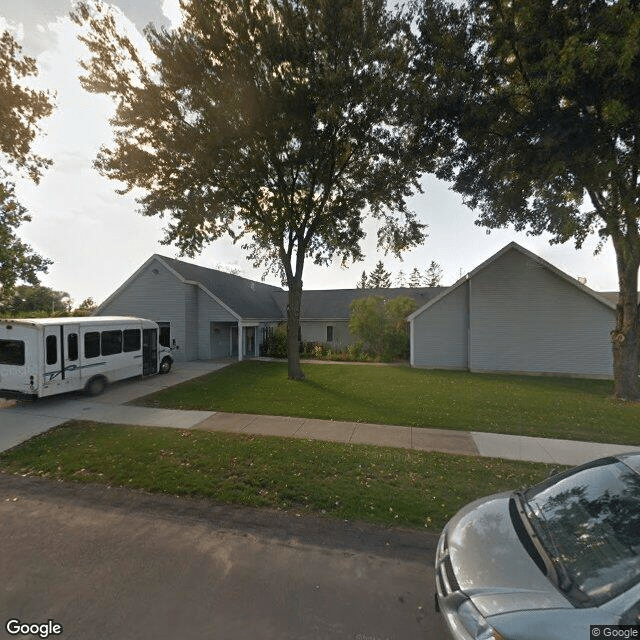
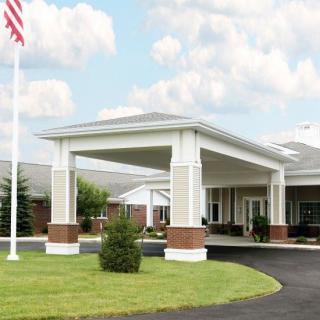
643 Greenfield Street, Neenah, WI 54956
For more information about senior living options: (866) 208-4318
Overall Review of Clarity Care Greenfield House
Pros
 He loved his home and house-mates.
- His care-takers did a wonderful job.
- Their hearts are big and they work hard to advocate for their consumers.
Cons
 The staff are currently very short-staffed.
Review
Clarity Care Greenfield House in Neenah is best suited for seniors who want a true home-like assisted living experience where relationships and continuity matter most. The care setting comes across as intimate and neighborly, with residents forming lasting bonds with house-mates and with caregivers who stay closely connected to daily life. This is especially true for someone who thrives on a steady routine, meaningful social contact, and the comfort of a small, close-knit community. The emphasis on personalized attention and caregiver advocacy suggests a environment where staff know individual preferences, history, and quirks, pieces that make a difficult transition feel like stepping into a familiar living space rather than a sense of being warehoused. For families prioritizing warmth, steady presence, and a sense of belonging, Greenfield House stands out as a strong choice.
There are clear reasons to consider alternatives, however. Families with residents who require high-acuity medical oversight or highly structured, memory-care-specific programming may find that a larger community with more extensive on-site nursing support better fits those needs. The current staffing reality is described as short-staffed, which can translate into slower responses during peak times or after hours. For families seeking broad amenity sets, robust activity calendars, extensive transportation options, or specialists readily available on-site, alternative communities with bigger teams and diversified services could be a better match. In short, when medical complexity or a demanding daily schedule is the primary driver, it is prudent to compare options with stronger staffing ratios and more formalized clinical support.
The strongest pros, the home-like atmosphere, the ability for residents to form enduring relationships, and caregiver advocacy, tend to offset the primary drawbacks to a meaningful degree. A caregiver corps that “works and advocates for their consumers” signals a care model built on dignity, responsiveness, and person-centered attention. The anecdote of a relative who lived there 28 years reinforces a culture of stability and trust, suggesting that residents are not churned through a revolving door but rather become part of a small community with predictable expectations. The social fabric, the sense of belonging among house-mates, acts as a powerful buffer against loneliness and disorientation, common concerns in assisted living. Yet the con remains tangible: staffing gaps can impede timely help, and a more limited program slate may not satisfy everyone’s desire for variety or for 24/7 clinical redundancy.
When evaluating, prospective families should verify practical details that influence day-to-day life. During visits, inquire about current caregiver-to-resident ratios on different shifts, how coverage is maintained when staff are out, and what the escalation process looks like if a resident needs urgent attention. Ask who supervises daily operations on the floor and how med management is handled, including routines for reviews and updates to care plans. It’s wise to explore how consistently residents see the same caregivers, and whether the home-like model translates into predictable daily rhythms, activities, and opportunities for social engagement. Observing how staff interact with residents in real time can reveal whether advocacy and attentiveness extend beyond a canned routine into genuine relational support.
Overall, the team at Greenfield House demonstrates compelling strengths in the form of compassionate care, continuity, and a deeply personal approach to daily living. The small-community dynamic fosters trust-based relationships, making it easier for families to feel confident that a resident’s history and preferences are honored. The long-tenured nature of care relationships signals reliability and a culture of putting residents first, which can translate into steadier moods, better cooperation with routines, and clearer communication overall. For residents who value a sense of family-like belonging and a staff team that will fight for their needs, Greenfield House offers a meaningful, practical home where quality of life often takes precedence over a glossy, impersonal program.
In the final analysis, Clarity Care Greenfield House is a compelling option for families prioritizing warmth, continuity, and a deeply relational model of care. It excels when the foremost need is a stable, home-oriented environment with advocates who actively monitor and respond to resident needs, and when social connectedness within a small community is a priority. The main caveat is the current staffing reality, short-staffing can impede speed and breadth of service. If that trade-off aligns with the resident’s preferences and the family’s tolerance for occasional staffing gaps, a visit is highly worthwhile, with targeted questions about staffing, care planning, and escalation procedures. For residents requiring higher-level medical oversight, memory-care specialization, or a broader array of on-site programs and amenities, exploring other communities that scale those capabilities is a prudent next step.
 8 resident community capacity
 Assisted Living
 Activities on-site
 Cable or satellite TV
 Devotional services off-site
 Dining room
 Fully furnished
 Garden
 Housekeeping services
 Indoor common areas
 Move-in coordination
 Outdoor space
 Telephone
 Wi-Fi/high-speed internet available
 Outagamie County Regional (6 miles away)
 24-hour supervision
 Ambulatory care
 Assistance with bathing
 Assistance with dressing
 Assistance with transfers
 Diabetes diet
 Diabetic care
 Meal preparation and service
 Medication management
 Special dietary restrictions
 Transportation arrangement (medical)
 Transportation to doctors appointments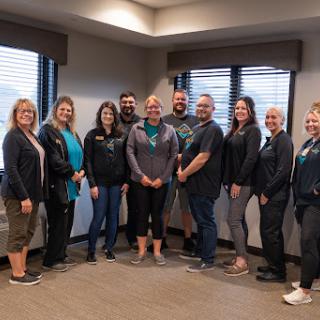


 Exploring the Path to Senior Living: A Comprehensive Look at Independent Living and Assisted Living
 Is Assisted Living Deductible on Your Taxes? Understanding the Complexities of Assisted Living Expenses and Deductions
 Assisted Living Support for Veterans: A Complete and Detailed Overview