
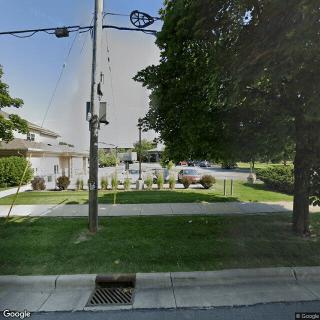
6216 Strathmore La, Madison, WI 53711
For more information about senior living options: (866) 208-4318
Overall Review of Strathmore Home
Pros
 The staff at Charter Senior Living of Madison respond to questions and concerns in a timely fashion.
- There is open two-way communication that keeps both sides informed, a significant improvement from Cedarhurst.
- The residents are well cared for at Charter Senior Living of Madison.
- The staff are caring and responsive, and collaborate with therapy providers to help residents maximize independence and mobility.
- Meadowmere’s staff go above and beyond to keep residents safe and loved.
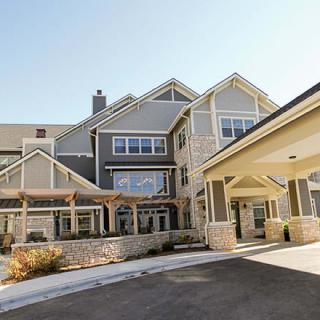
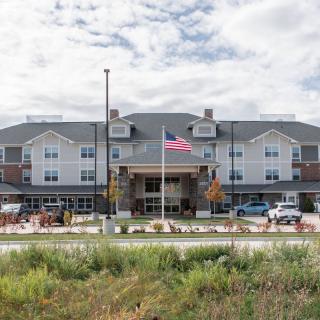
- The facility is clean, well maintained, and the building is beautiful.
- Families feel confident in Meadowmere, noting that the staff provide attentive care and support.
Cons
 They say the facility has drastically declined since Cedarhurst purchased Meadowmere, with a drastic change in nearly every category.
 - They report that ride services were dropped due to a non-operational bus and no budget for a driver.
- They describe meals going downhill, including what’s served not matching the menu and incidents of undercooked chicken or a plastic piece in mashed potatoes.
- They note frequent turnover of nurses and dieticians, raising concerns about emergency care.
- They remark that front desk staff were often glued to their phones and failed to acknowledge visitors.
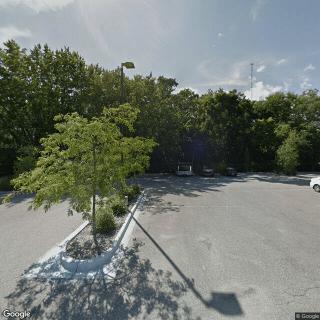
- They recount several instances of pitch-black parking lots after dark, posing safety concerns.
- They claim maintenance promises were not kept, with staff saying, “It’s not my job.”
- They feel residents pay a lot of money to live there and that the facility takes advantage of the elderly population.
Review
Strathmore Home in Madison is best suited for families that value care teams who communicate openly and act as true partners in daily life. The strongest signals from Madison’s assisted-living market point to facilities where staff respond promptly to questions, families are kept in the loop about changes, and therapy professionals coordinate closely with on-site teams to advance a resident’s independence and mobility. In practical terms, this means a community where front-line staff are accessible, managers provide clear updates, and therapy providers work hand-in-hand with the facility to set and pursue measurable goals. For families prioritizing collaborative, goal-driven care, Strathmore should be evaluated as a setting that prioritizes transparency and coordinated support.
Those most likely to want alternatives are families that need rock-solid, long-term stability in every facet of operations. The reviews point to real fragility when a facility experiences staffing churn, inconsistent dining, and gaps in transportation or maintenance, patterns that have appeared in comparable Madison communities after ownership changes. If predictability in meal options, reliable ride services to appointments, consistently available front-desk assistance, and a fully lit, safe parking environment are deal-breakers, then exploring other options with a documented track record in these areas is prudent. Strathmore would be a stronger fit for those who can tolerate occasional bumps if there is transparent problem-solving and a clear commitment to sustaining services.
The strongest pros, responsive staff, two-way family communication, and a therapy-first approach, offer meaningful counterbalances to potential drawbacks. When staff actively check in, coordinate with outside therapists, and keep families informed about progress and challenges, families gain confidence that care is both attentive and purposeful. The presence of an integrated therapy program, particularly with an emphasis on preserving independence and mobility, helps residents maintain function longer and reduces the likelihood of avoidable declines. In a market where care quality hinges on the quality of daily interactions and proactive rehabilitation, these advantages can outweigh occasional operational hiccups, provided leadership maintains focus and accountability.
Nevertheless, the cautionary tales from neighboring facilities cannot be ignored. The reviews recount sharp declines after ownership changes: rides disappearing, meals inconsistent or undercooked, high staff turnover, and even safety concerns in the parking lot or maintenance responses. While these issues did not originate in Strathmore, they underscore critical risk factors, leadership stability, staff retention, reliable transportation, and prompt maintenance, that families should scrutinize during tours. The absence of one or more of these elements can erode trust quickly, even if therapies and communication remain strong. Any prospective resident should verify that Strathmore has a stable leadership team, a sustainable staffing plan, dependable meal service, and a transportation option that actually functions.
To separate Strathmore from the kind of instability noted in other communities, families should approach the tour with concrete questions. Ask about current staffing ratios across shifts, how often frontline teams change, and what happens when a nurse or aide is temporarily unavailable. Probe transportation: what ride services exist, how often they run, and whether the community guarantees timely pickups for medical appointments. Review the dining program: how menus are developed, how residents influence options, and how dietary restrictions are accommodated. Finally, assess maintenance and safety: response times, the process for lighting and security in common areas and parking, and how emergency plans are practiced and updated. Request recent state inspection findings and an explicit plan for continuity if any external contracts shift.
In the end, Strathmore Home should be recommended for families who prize collaborative care, clear communication, and a therapy-focused approach that actively works to maintain residents’ independence. It stands best as a practical choice for those who can accept occasional operational teething pains in exchange for strong caregiving relationships and visible therapeutic progress. For families where transportation reliability, consistent dining experiences, and unwavering staff stability are non-negotiable, it is essential to compare Strathmore against peers with documented stability and predictable service levels. A decisive next step is to schedule a guided tour, request a trial interaction with the therapy team, and seek recent feedback from current residents and families about daily life and issue resolution.
 3 resident community capacity
 Assisted Living
 Cable or satellite TV
 Dining room
 Fully furnished
 Garden
 Housekeeping services
 Move-in coordination
 Outdoor space
 Telephone
 Wi-Fi/high-speed internet available
 Dane County Regional (10 miles away)
 24-hour supervision
 Activities of daily living assistance
 Assistance with bathing
 Assistance with dressing
 Assistance with transfers
 Diabetes diet
 Meal preparation and service
 Medication management
 Special dietary restrictions
 Transportation arrangement (medical)
 Transportation to doctors appointments

 Medicare Coverage for Assisted Living: An In-Depth Exploration
 Choosing the Right Senior Care: A Detailed Exploration of Assisted Living and Nursing Homes
 Understanding the True Cost of Assisted Living in 2025: A Comprehensive Guide