
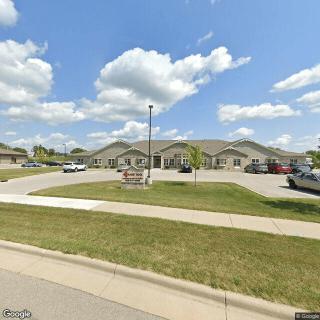
810 East Racine Street, Jefferson, WI 53549
For more information about senior living options: (866) 208-4318
Overall Review of St Coletta Of Wi Seton - AFH
Pros
 The organization cared for Rosemary Kennedy, earning a 10/10 for the care provided.
- The organization cared for the writer’s great-uncle for over 50 years, and the family is grateful for its dedication and love.
- The staff and programs meet individual needs.
- Georgi Ann lived at St Coletta’s on two occasions, and the family valued the care she received there.
- St Coletta’s is a one-of-a-kind institution, staffed by exceptional professionals who serve very special people.
- Susan Reglin attended the school from 1969 to 1973, and recalls it as a very good school.
Cons
 Horrible driver(s) that endanger the lives of their passengers and others on the road.
- A St Coletta employee was driving while using a cell phone, endangering the lives of others.
- The driver cut off other motorists and slammed on the brakes, risking a serious crash.
Review
St Coletta of Wisconsin Seton - AFH is best suited for families seeking a deeply personalized, long-term residential environment for adults with special needs where staff commitment and continuity are the defining strengths. The community reads as a one-of-a-kind institution, sustained by professionals who truly serve very special people. Testimonials describe decades of resident stability, great-uncle residents who stayed for 50-plus years, and moments of care that feel like a lifetime commitment. The pervasive sense is that the staff’s devotion translates into daily life that honors individual histories, preferences, and ways of engaging with the world. For families that value a familial, mission-driven setting over a clinical, impersonal vibe, this is a natural fit.
Those who may want to consider alternatives are clear from the most forceful cautions in the feedback. Transportation safety stands out as a non-negotiable concern for some families, with calls for scrutiny of driver training, phone use policies, and incident reporting. If reliable, consistently safe transport is essential, whether for appointments, activities, or social engagement, this is a critical area to investigate more deeply. Additionally, for families seeking a more secular, medical-model environment or one with more visible, broad-based medical oversight, exploring other options in the region may be prudent. The faith-informed, community-forward ethos here is a strong magnet for many, but it may not align with every family’s values or risk tolerance around transportation.
The main pros, exceptional staff, highly adaptable programs, and a culture of individualized attention, need to be weighed directly against the transport-related concerns. Across the praise, the staff earns clear admiration: amazing professionals who design programs to meet distinct needs and a setting described as a rare, dedicated service to very special people. Long-tenured residents and families repeatedly signal a sustained, trusted approach to care that goes beyond routine tasks to cultivate belonging and dignity. Those advantages create meaningful quality of life: purposeful activity, relational continuity, and a sense that care is built around the person rather than around a generic checklist. Yet the transportation safety issue can erode confidence if not transparently addressed.
In practical terms, the decision hinges on whether the benefits of dedicated, personalized care outweigh the risk and variability implied by transport concerns. The most compelling argument for moving forward is the team’s demonstrated capacity to tailor engagement to what matters to each resident, creative programs, meaningful routines, and a stable living environment that emphasizes dignity and respect. For families able to arrange or supervise transportation separately, the day-to-day living experience can feel like a carefully curated extension of home, with staff who know the person deeply and respond with real responsiveness. Conversely, for those whose daily life relies on the program’s transport for consistent access to services and activities, the reported safety lapses become a real red flag that cannot be dismissed.
Visitors should enter with a focused, practical checklist. Ask about driver training standards, disciplinary or corrective actions for policy violations, hands-free or no-phone-use requirements, and the process for reporting near-misses or incidents. Request a current, detailed transportation policy and a recent safety record. In parallel, probe the care framework: how programs are adapted to evolving needs, how staffing ratios are maintained, and how family involvement is structured. Seek conversations with frontline caregivers to observe interactions, and request references from families who have residents with similar needs. Clarify the role of the faith-based culture and how it shapes daily life, activity planning, and resident autonomy in a setting that has clearly earned both adulation and concern.
Bottom line: St Coletta of Wisconsin Seton - AFH delivers a compelling blend of steadfast dedication and individualized programming that can yield a profoundly positive, almost familial living experience for adults with special needs. That strength is most impactful for families who can embrace a care model built on deep relationships, continuity, and purposeful activity, and who can independently manage or verify transportation safety. For those whose non-negotiables center on flawless mobility, transparent safety metrics, and a secular, medicalized framework, alternatives should be explored with equal vigor. In the right match, the community’s history, staff devotion, and programs create a meaningful home where residents can thrive, even as transportation questions rightfully demand clear, high-standard answers before any decision is final.
 3 resident community capacity
 Assisted Living
 Cable or satellite TV
 Dining room
 Fully furnished
 Garden
 Housekeeping services
 Move-in coordination
 Outdoor space
 Telephone
 Wi-Fi/high-speed internet available
 24-hour supervision
 Activities of daily living assistance
 Assistance with bathing
 Assistance with dressing
 Assistance with transfers
 Diabetes diet
 Meal preparation and service
 Medication management
 Special dietary restrictions
 Transportation arrangement (medical)
 Transportation to doctors appointments


 Exploring the Path to Senior Living: A Comprehensive Look at Independent Living and Assisted Living
 Is Assisted Living Deductible on Your Taxes? Understanding the Complexities of Assisted Living Expenses and Deductions
 Assisted Living Support for Veterans: A Complete and Detailed Overview