
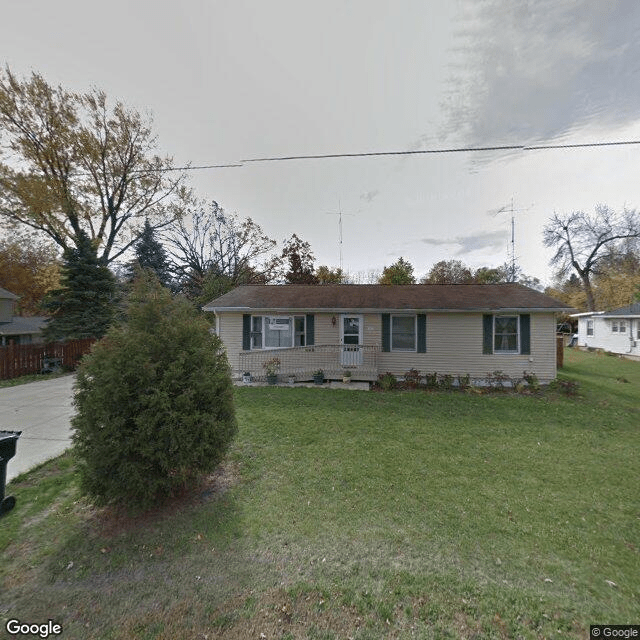
W 1313 Bernice Rd, Genoa City, WI 53128
To contact a resident: (262) 492-9918
For more information about senior living options: (866) 208-4318
We're Just Like Family Costs & Pricing
We're Just Like Family offers competitive monthly costs for its accommodations, positioning itself as an affordable option compared to both Walworth County and the broader Wisconsin market. For a semi-private room, the cost is $2,500, which is significantly lower than the county average of $3,289 and the state average of $3,977. Similarly, for a private room at $3,500, it remains more economical than both the county's rate of $3,886 and the state's average of $4,339. This pricing highlights We're Just Like Family's commitment to providing quality care without compromising on affordability.
| Floor plans | We're Just Like Family | Walworth County | Wisconsin |
|---|---|---|---|
| Semi-Private | $2,500 | $3,289 | $3,977 |
| Private | $3,500 | $3,886 | $4,339 |
Senior living communities with a similar price nearby
-
from +$120 / mo

Gall Family Care Home
$2,620 to $2,988 / month14.6 miles away -
from -$350 / mo
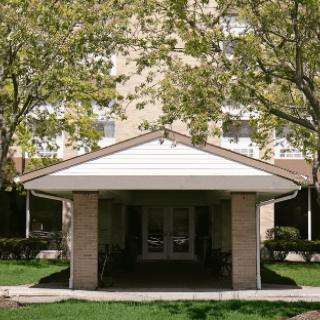
Riverside Residence
$2,150 to $3,200 / month14.5 miles away -
from -$460 / mo
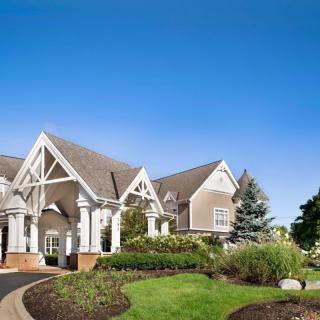
Sunrise of Crystal Lake
$2,040 to $4,740 / month20.4 miles away -
from +$100 / mo
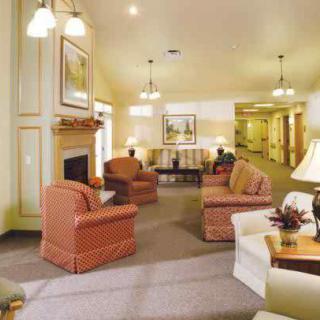
Randall Residence of McHenry
$2,600 to $3,900 / month15.8 miles away -
from +$350 / mo
Waterford Place Assisted Living & Memory Care
$2,850 to $3,780 / month18.9 miles away
Overall Review of We're Just Like Family
Pros
 The private home is focused on growth, aiming to increase capacity from two to four residents.
- She is actively pursuing dementia care certification to expand her ability to care for more residents.
- She communicates openings proactively, sharing contact information when spaces become available.
- The overall approach demonstrates a commitment to expanding high-quality care options for residents.
Cons
 The private home currently has no openings.
- The private home currently has no openings.
Review
We’re Just Like Family in Genoa City, WI, is best suited for families seeking a tiny, home-like environment where care feels truly intimate. This private residence currently accommodates two residents, with a clear path to expand to four as the caregiver completes dementia-care certification. The setting emphasizes comfort, predictable routines, and a personal touch over hospital-like services. The testimony from the two four-star reviews points to dependable, friendly care within a tightly managed space. For families who value direct caregiver relationships, minimal distance between resident and caregiver, and the reassurance of a neighborly atmosphere, this option stands out as a rare, highly personalized alternative to larger facilities.
Who may want to consider alternatives? Those needing immediate placement or a more structured, ecosystem-style environment should look elsewhere. A private home with two beds and a plan to grow is inherently limited by capacity and scheduling flexibility. If the priority is guaranteed openings, busy activity calendars, or a staffed facility with more than one caregiver on site at all times, a larger assisted-living property or memory-care unit is likely a better fit. Additionally, if dementia care is urgent and certified programs are not yet in place, families may prefer options with current dementia-specialized staffing and established protocols. In short, this option rewards patience and a preference for home-like care over breadth of services.
Key pros: the benefit of a truly intimate setting cannot be overstated. With only two residents, attention to daily needs, medication support, meal pacing, safety checks, and social interaction, tends to be faster and more personalized. The caregiver’s forward momentum toward dementia-care certification promises a future where two more residents could join without sacrificing quality. Direct, timely communication about openings is a practical advantage in a market that moves quickly. The home environment also reduces the impersonality sometimes found in larger communities, allowing routines to be tailored around individual preferences, sleep schedules, and familiar comforts that support memory care in a meaningful way.
Main cons loom in the form of scarcity and timing: there are currently no openings, and the home’s capacity is capped at two residents until the certification process completes and the space is expanded. That translates into uncertainty for families needing to plan around an imminent move or transition. The caregiving load hinges on a single operator, which can create vulnerability if health or life events disrupt care. There is limited visibility into the depth of programming, activities, transportation, or emergency protocols beyond general home-like features. For families seeking the reassurance of a structured, on-site staff team and predictable day-to-day schedules, this is a meaningful drawback.
How the positives offset the drawbacks: the small-scale setting is exactly the kind of environment where a dementia-leaning plan can thrive when fully staffed. Once the two-bed expansion is complete, the home could offer a rare blend of personalized attention and memory-care focus in a less clinical vibe. The anticipated certification signals a commitment to formalizing dementia practices, not merely relying on a caregiver’s goodwill, which should reassure families about future quality and consistency. The direct-contact model means families can negotiate care details more freely and adjust quickly as needs evolve. In scenarios where warmth and responsiveness trump breadth of services, this setup often delivers better everyday experiences for residents.
Bottom line: this community is worth serious consideration for families who can wait for availability and value a homey, neighborly feel paired with a path to dementia-certified care. It makes strong sense for someone who wants highly individualized attention, with a plan to scale up to four residents as certification is completed. Those who require immediate placement, a larger staff footprint, or guaranteed, year-round programming should pursue alternatives now. For families intrigued by the concept, request a written timeline for expansion, confirm the projected start date for new resident capacity, and ask for specifics on meals, daily routines, safety measures, emergency contacts, and how respite stays would be handled. If alignment is found, this option can become a trusted, enduring home.
 Board and Care Home
 Dogs allowed
 Activities off-site
 Bath tubs
 Beautician on-site
 Devotional services off-site
 Indoor common areas
 Outdoor common areas
 Private
 Respite or short term stays offered
 Wheelchair accessible showers
 Ambulatory care
 Diabetic care
 High acuity care
 Incontinence care
 Medication management
 Meals provided


 In-Home Care Costs in 2025: A Detailed State-by-State Exploration
 Understanding Home Health Care: A Comprehensive Guide
 Home Health Care Demystified: A Comprehensive Guide for Families and Caregivers