
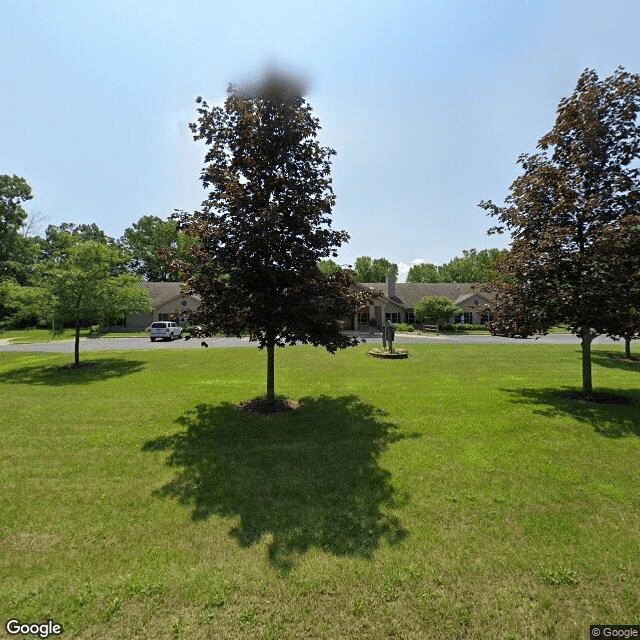
1446 Lynn Avenue, Fond Du Lac, WI 54937
To contact a resident: (920) 922-8770
For more information about senior living options: (866) 208-4318
Overall Review of Woodlands Of Fond Du Lac
Pros
 These facilities have it all.
- They provide twenty-four hour nursing staff on site year-round.
- LPN and RN nurses are available Monday through Friday.
- Residents feel safe living at The Woodlands Senior Park.
Review
Woodlands Of Fond Du Lac in Fond Du Lac, Wisconsin, is best suited for seniors who require reliable medical oversight delivered in a home-like setting. The two positive reviews converge on a decisive point: twenty-four-hour nursing staff on site year-round, with weekday LPN and RN coverage, create real safety for residents and peace of mind for families. This is not a purely social senior living environment; it is built around consistent clinical presence and the ability to respond quickly to health needs. For residents with chronic conditions, mobility challenges, or medication-management requirements, the arrangement offers the structure and immediacy that family members seek when medical support cannot be delegated to chance.
Those who should consider alternatives include families prioritizing independence, robust social programming, or lower ongoing costs. If the primary aim is a more active, restaurant-quality lifestyle or a setting with a broader array of nonmedical activities and enrichment opportunities, this community may not fully satisfy those expectations based on the limited firsthand feedback available. Similarly, if a memory-care specific environment, advanced rehabilitative services, or a smaller, more intimate atmosphere is desired, it would be prudent to explore options with more explicit offerings in those domains. The current reviews point to safety and medical oversight rather than a detailed portrait of daily life, which means other communities could better align with nonclinical priorities.
The strongest pro, the medical backbone, offsets several potential drawbacks. On-site nursing around the clock reduces the need for family members to coordinate care personally and minimizes the risk of delayed responses to health concerns. Weekday LPN and RN coverage adds another tier of professional oversight for medication management, care planning, and routine monitoring. This combination supports a transition toward independence while preserving a safety net, an arrangement particularly valuable for seniors who are not ready for complete independent living but still wish to maintain their autonomy within a supported framework. In essence, the key advantages deliver tangible, practical value for families juggling health needs, long-term care planning, and the desire for a stable, predictable routine.
Nevertheless, the limited scope of the available feedback leaves important questions unanswered. Details about meal quality, social programs, transportation, housekeeping, and wellness activities are sparse. Cost, contract terms, and what happens if health status declines are not addressed in the reviews. There is also no explicit information about specialized memory-care options, rehab services, or the variety of living arrangements (studio vs. one-bedroom, private vs. shared rooms). Finally, the reliability and warmth of day-to-day interactions, critical for a truly satisfying stay, cannot be gauged from two positive notes alone. Prospective families should verify these elements directly when touring and interviewing staff.
To make a well-founded decision, approach Woodlands Of Fond Du Lac with a precise checklist. Begin by clarifying weekend and after-hours nursing coverage, the role of on-call staff, and how quickly a resident can receive hands-on care after a medical need arises. Inquire about care coordination, pharmacy partnerships, and the process for updating care plans as health status evolves. Demand specifics on dining options, menu rotation, accommodations, housekeeping frequencies, and transportation services. Assess the breadth of activity programming, social opportunities, and whether residents can participate in planning their schedules. Finally, compare total cost and what is included so there are no hidden expenses, and consider visiting multiple nearby communities to benchmark value and fit.
Bottom line: Woodlands Of Fond Du Lac represents a compelling option for families who prioritize safety and medical oversight in a care-forward setting. It is best suited for residents with ongoing health needs who appreciate the reassurance of 24/7 on-site nursing and weekday professional oversight. For those whose top priorities are social engagement, autonomy, or specialized memory-care offerings, or who require a clearer picture of costs and daily life, alternatives warrant serious consideration. A thoughtful tour, direct conversations with care staff, and a clear understanding of pricing and service breadth will determine whether this community is the right pairing of care intensity and homelike living.
 32 resident community capacity
 Assisted Living
 Memory Care
 Activities on-site
 Beauty salon
 Cable or satellite TV
 Devotional services off-site
 Dining room
 Fully furnished
 Garden
 Housekeeping services
 Indoor common areas
 Kitchenette
 Move-in coordination
 Outdoor space
 Restaurant-style dining
 Small library
 Telephone
 Wi-Fi/high-speed internet available
 24-hour call system
 Ambulatory care
 Assistance with bathing
 Assistance with dressing
 Assistance with transfers
 Diabetes diet
 Diabetic care
 Medication management
 Mental wellness program
 Special dietary restrictions


 5 Early Indicators of Dementia and What You Can Do
 8 Important Indicators That Memory Care May Be Necessary
 Delving into the Inner World of Dementia: Insights into Thoughts and Awareness