
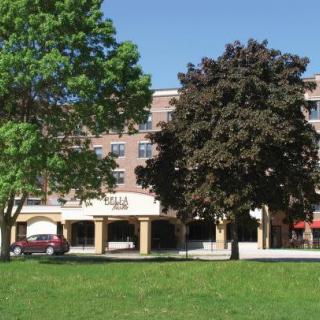
1715 Chapman Avenue, Fond Du Lac, WI 54937
For more information about senior living options: (866) 208-4318
Overall Review of Chapman Home
Pros
 Signature Homes did a spectacular remodel; the house looks amazing and the homeowners are very happy with it.
- Building a new home with Signature Homes led to a great experience; the team was professional from design to final finishes.
- Glenn is very responsive and knowledgeable.
- Kim, the interior designer, helped choose finishes within budget and style and was very helpful.
- Tina Broderick provided a helpful, knowledgeable design partnership with excellent taste and personalized assistance.
- Signature Homes is an excellent high-end builder; they are thoughtful through the process and walk clients through each step.
- The Signature team has caring, professional people and they would be the top choice for building a home.
Cons
 Signature Homes left several items unfinished on the one-year punch list and has not fixed them two years later.
- The reviewer felt the promise of long-term care after construction was not kept.
- The company’s responses were infrequent, with the reviewer only hearing back when reviews were written.
- The reviewer believed the money spent did not yield better quality.
- The reviewer regrets not shopping around before choosing Signature Homes.
- The reviewer did not feel treated like family, despite the owner’s claims.
Review
Chapman Home is best suited for families seeking an upscale, design-conscious senior living environment where care coordination is treated like a project with clear milestones. The model reflected in the reviewed experiences centers on a team that can translate vision into a lived space, with strong designers, interior guidance, and a responsive point of contact. For residents who value aesthetics, thoughtful layout, and personalized attention to how spaces function for daily living, Chapman Home offers a compelling fit. The emphasis on collaboration with interior designers and project managers signals a setting that treats living areas, private suites, common rooms, and activity spaces, as adaptable, purpose-driven environments rather than static spaces.
Those evaluating Chapman Home should also consider who may want alternatives. If reliability and unwavering follow-through are non-negotiable, this community may demand deeper scrutiny of governance and service guarantees. The reviews reveal a tension between excellence when communication is steady and problems when promises go unfulfilled. Potential residents or families who require consistent completion of promised work, prompt resolution of maintenance requests, and a culture that consistently delivers on “family” promises would be wise to compare Chapman Home against operators with a longer track record of flawless execution and transparent punch lists.
The strongest pros evident in the reviewed experiences are a professional, client-focused team and a design-first approach that helps residents feel at home quickly. Numerous reviewers praised the level of responsiveness from project leads and designers, with specific mention of staff who helped shape floor plans, material choices, and finishes within budget. In a senior living context, this translates into care teams and activity coordinators who listen closely, tailor programming, and adjust living spaces to changing needs. The ability to secure thoughtful, personalized assistance from staff such as interior designers or care coordinators can significantly enhance daily life and overall satisfaction.
Coupled with design responsiveness are robust channels for communication and scheduling. The reviews repeatedly highlight the importance of staying on schedule, coordinating with landscape or construction partners, and maintaining clear, ongoing dialogue with clients. For Chapman Home, this signals a model where families can expect regular updates, proactive problem-solving, and a partnership mindset during transitions, key when moving a loved one into assisted living or when arranging modifications that support mobility, vision, or comfort. When these elements work well, the living experience feels seamless and intentional rather than reactive.
However, the main drawbacks in the reviewed cases, unfinished items, delayed punch lists, and a perception that “family” promises did not fully materialize, must be weighed heavily. In a senior setting, incomplete maintenance or lagging follow-through can erode trust and degrade quality of life. If Chapman Home does not guard against these gaps, the risk to resident comfort and family confidence grows. The antidote lies in codified service-level agreements, a transparent task-tracking system, and explicit accountability for timelines and outcomes. Absent those safeguards, the positives risk being undercut by recurring friction points.
Overall, Chapman Home can be a strong choice for families seeking an elevated, carefully coordinated living environment where spaces feel crafted to support daily routines and social engagement. The decisive factors lie in the reliability of execution and the consistency of care delivery. Prospective residents should interrogate the facility about how design ideas are implemented in practice, how maintenance requests are logged and resolved, and what guarantees exist for on-time delivery and post-move adjustments. Compare these assurances with communities that emphasize standardized programming and fixed service parameters to determine which balance of customization and predictability best fits the loved one’s needs.
 4 resident community capacity
 Assisted Living
 Board and Care Home
 Memory Care
 Cable or satellite TV
 Dining room
 Fully furnished
 Garden
 Housekeeping services
 Move-in coordination
 Outdoor space
 Telephone
 Wi-Fi/high-speed internet available
 24-hour supervision
 Activities of daily living assistance
 Assistance with bathing
 Assistance with dressing
 Assistance with transfers
 Diabetes diet
 Hospice waiver
 Meal preparation and service
 Medication management
 Mental wellness program
 Special dietary restrictions
 Transportation arrangement (medical)
 Transportation to doctors appointments


 Delirium and Dementia: Unraveling the Key Differences
 Are Dementia and Alzheimer's Disease Lethal? A Comprehensive Exploration
 Exploring the Power of Reminiscence Therapy for Individuals With Dementia