
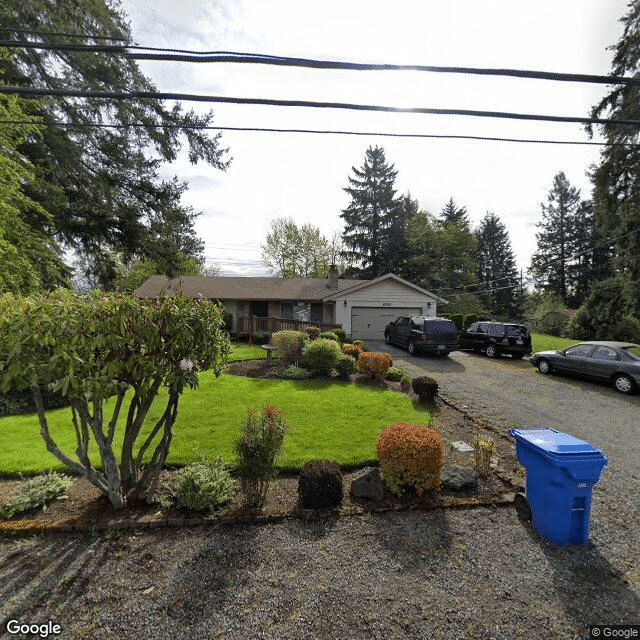
6721 44th Ave E., Tacoma, WA 98443
To contact a resident: (253) 538-7292
For more information about senior living options: (866) 208-4318
BETA AFH Costs & Pricing
At BETA AFH, the monthly costs for accommodations reflect a premium in comparison to both Pierce County and the broader Washington State averages. For a semi-private room, residents can expect to pay $5,000 per month, which is notably higher than the county's average of $4,264 and the state's average of $4,267. Similarly, the cost for a private room at BETA AFH is set at $5,800, surpassing both local and state figures of $4,623 and $4,772 respectively. These pricing differences may be indicative of enhanced services or amenities offered at BETA AFH that cater to individuals seeking quality care in a supportive environment.
| Floor plans | BETA AFH | Pierce County | Washington |
|---|---|---|---|
| Semi-Private | $5,000 | $4,264 | $4,272 |
| Private | $5,800 | $4,623 | $4,774 |
Senior living communities with a similar price nearby
-
from +$500 / mo

Twin Lake Adult Family Home
$5,500 to $6,500 / month7.5 miles away -
About the same
Peace and Pleasant Care Adult Family Home II
$5,000 to $6,000 / month14.6 miles away -
from -$695 / mo

Penrose Harbor at Heron's Key
$4,305 to $7,332 / month14.3 miles away -
from -$500 / mo

A Serenity AFH
$4,500 to $6,000 / month11.0 miles away -
from +$500 / mo

3 Tree Vista Adult Family Home, LLC
$5,500 / month18.3 miles away
Overall Review of BETA AFH
Pros
 Residents are treated with professional, safe, and centered care, delivering comfort and luxury.
- The facility offers great services and a loving home.
- The staff at Bletam are very nice and consistently attentive to residents’ needs, always smiling.
- The facility is clean, well maintained, and thoughtfully designed to meet residents’ needs, with caregivers who take time to get to know residents and foster a sense of community.
- The team is incredibly professional, compassionate, and attentive, providing top-notch care and fostering trust and support.
- This family home has been a blessing, with staff who go out of their way to care for residents.
- Geoffrey and Damaris provide excellent, respectful care for residents and their families.
- The environment is calm, with awesome caregivers and delicious home-cooked meals.
- People would highly recommend Bletam AFH.
Cons
 The community was not kind or compassionate toward the resident.
- The main caregiver had the biggest issue with the resident.
- There was only one caregiver and the owner, which was problematic.
- The owner asked if the resident was back so soon, which felt rude to the family.
- Items were missing from the resident's room, and the community denied ever having the missing items.
- Caregivers were on their phones during visits with the resident.
- The owner refused to call 911 to avoid bringing COVID into the community.
- The community charged for days when the resident was in the hospital and not in the community.
Review
This community is best suited for families seeking a genuinely home-like environment in which staff form real, ongoing connections with residents and tailor care through thoughtful, personalized plans. In Tacoma, BETA AFH operates as a small, intimate setting where residents benefit from consistent caregivers who know their routines, preferences, and needs. The atmosphere emphasizes safety, warmth, and a sense of belonging, with home-cooked meals, calm social rhythms, and a caregiver team that emphasizes relationship-building as much as clinical tasks. For seniors who prize familiar surroundings, predictable daily life, and a partner in care rather than a distant institution, this is a strong match.
At the same time, there are clear reasons some families should consider alternatives. Those who require rigid, formal governance and airtight incident reporting may want to look at larger operators with documented, third-party oversight. If absolute transparency about every procedural misstep, item loss, or billing dispute is a top priority, this community’s small-scale, autonomous management style can feel risky. Families prioritizing continuous medical coverage on-site, or expecting a broad spectrum of on-demand clinical services, may find themselves needing a different environment with higher staffing ratios, more defined policies, and clearer accountability structures.
The strongest positives center on people and touchpoints: caregivers described as professional, compassionate, and consistently attentive to residents’ needs; staff who arrive with a smile and a genuine curiosity about each person’s life. The facility’s cleanliness, thoughtful design, and well-maintained spaces reinforce a sense of safety and dignity. Personalization shines through in care plans that acknowledge individual histories, preferences, and routines, helping residents feel respected and truly known. Several reviews highlight a warm community feel, where relationships between residents and caregivers foster trust, reduce agitation, and support meaningful engagement throughout the day. The quality of meals and the resident manager’s steady presence also contribute to a daily experience that many families value highly.
Yet, not every review aligns with the strongest positives. A handful of families describe experiences that raise concerns about consistency and oversight: a caregiver shortage that left one caregiver to manage too many residents, perceived rudeness from the owner, and disputes over missing items that never surfaced; accounts of staff on their phones during visits; and hints of administrative friction, such as disputes over forms or hospital-day charges. Another tension point is a perception that the owner resisted certain emergency actions or tried to minimize risks by avoiding calls to emergency services. Taken together, these episodes point to a governance and communication thread that can undermine trust if left unaddressed. They are not universal, but they are material for decision-makers who prioritize reliability and transparent operations.
Still, the pros do not vanish in light of the cons. Where staff know residents well, respond quickly, and consistently implement personalized care plans, daily life remains dignified and responsive even when administrative hiccups occur. The homey culture and intimate setting often translate into lower stress for residents who crave familiarity and steady, caring hands. When staff actively seek feedback and demonstrate a willingness to adjust, the environment can recover quickly from missteps, restoring confidence in the care relationship. In this sense, the core strengths, relationship-focused care, a safe, tidy living space, and a warm, supportive community, tave a meaningful offset against occasional governance gaps, provided families stay actively involved and request clear, written policies on how issues are resolved.
For families evaluating BETA AFH, practical next steps crystallize into a disciplined, proactive approach. Request a direct meeting with the resident manager and the primary care team to review a sample care plan, daily schedules, and the exact caregiver-to-resident ratios across shifts. Ask for a transparent, written policy on incident reporting, item accountability, and what happens when a resident requires hospital care or temporary transfer. Confirm how billing handles hospital days and what remedies exist for disputed charges. Insist on seeing a recent incident log and a plan for how any care or housekeeping lapse would be corrected. Finally, observe a visit with the current care team to gauge whether staff interactions feel consistently respectful, patient, and genuinely attuned to the resident’s personality and history.
Bottom line: BETA AFH represents a compelling option for families who want a high-touch, home-like living experience in Tacoma and are comfortable with a smaller operation where caregivers can build deep, daily rapport. The strongest advantage is the ability to offer personalized attention, safety through intimate oversight, and clear emotional nourishment through meaningful relationships. The main caveat lies in governance and consistency concerns that appear in a subset of reviews; those choosing this option should enter with a plan for ongoing oversight, explicit expectations, and a mechanism for rapid issue resolution. For families who can leverage proactive engagement and insist on transparent procedures, BETA AFH can deliver a richly satisfying, dignified living experience that feels less like a facility and more like a well-loved home. For those who prioritize formal governance, ironclad policies, and unambiguous, fully staffed clinical capacity, it may be prudent to explore alternatives that place governance and scalability at the forefront.
 Board and Care Home
 Activities off-site
 Bath tubs
 Beautician on-site
 Devotional services off-site
 Indoor common areas
 Outdoor common areas
 Private
 Private bathrooms
 Respite or short term stays offered
 Wheelchair accessible showers
 Seattle-Tacoma International (18 miles away)
 Diabetic care
 High acuity care
 Incontinence care
 Medication management
 Meals provided



 Understanding the Full Cost of 24/7 In-Home Care: A Detailed Overview
 Exploring the World of Home Health Nurses: Qualifications, Roles, and Hiring Tips
 Navigating Medicare Coverage for In-Home Care Services