
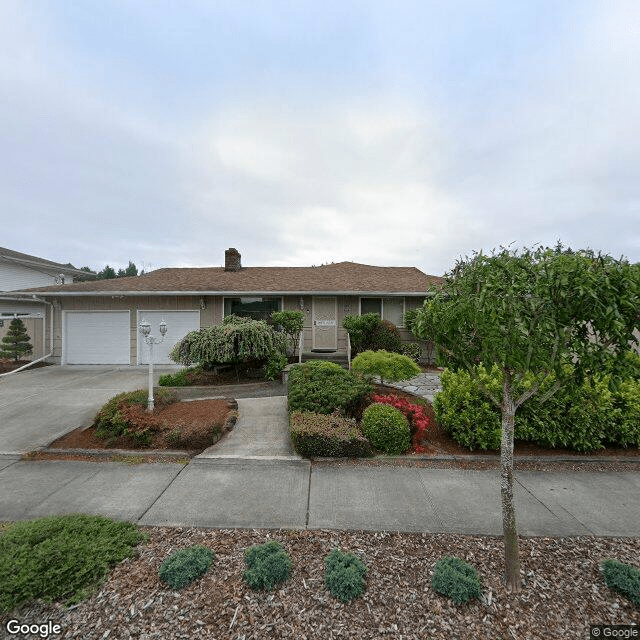
6020 South Wapato Lake Drive, Tacoma, WA 98408
To contact a resident: (253) 353-5390
For more information about senior living options: (866) 208-4318
Affordable Home Care Costs & Pricing
Affordable Home Care offers competitive rates for its services compared to the broader market in Pierce County and the state of Washington. For a semi-private room, clients can expect to pay $3,500 per month, which is notably lower than the county's average of $4,264 and the state's average of $4,267. Similarly, for a private room, Affordable Home Care's rate of $4,800 remains within reach when juxtaposed with the local and state averages of $4,623 and $4,772 respectively. These cost differences highlight Affordable Home Care's commitment to providing quality care at more accessible pricing while maintaining high standards for residents' comfort and well-being.
| Floor plans | Affordable Home Care | Pierce County | Washington |
|---|---|---|---|
| Semi-Private | $3,500 | $4,264 | $4,272 |
| Private | $4,800 | $4,623 | $4,774 |
Senior living communities with a similar price nearby
-
from +$500 / mo

Meadow Crest Senior Home
$4,000 to $6,000 / month24.8 miles away -
from -$500 / mo

Hummingbird Homecare
$3,000 / month11.0 miles away -
from +$500 / mo

Riverton Home Care
$4,000 to $5,000 / month20.5 miles away -
from +$500 / mo

Canterwoods Estate AFH
$4,000 to $5,500 / month22.0 miles away -
from -$500 / mo

Home Care in Kent Inc.
$3,000 to $3,500 / month17.4 miles away
Overall Review of Affordable Home Care
Pros
 Carla is a wonderful caregiver.
- She is masterful at getting her client out of his chair to go to doctor’s appointments, shopping, or outings.
- She is kind and makes each trip fun.
- They have a lot of shared interests, horses, dogs, food and shopping.
- The staff have been excellent and work hard to staff caregivers who are a good match for the situation.
- They are great at finding someone else when the fit isn’t right.
- The staff have been phenomenal.
- The owner is very nice and her home is lovely.
Cons
 The organization is very unprofessional from top to bottom.
- The CEO is incompetent, and that incompetence trickles down from there.
- The company lacks effective communication.
- They removed the best aide without notification, leaving staff scrambling to find a fill-in.
- The aides are very young and lack life experience.
- Another agency's service was not a good experience at all.
Review
This community in Tacoma is best suited for families seeking an in-home care arrangement driven by a highly capable, personable caregiver who can actively coordinate medical appointments, errands, and social outings. The standout example from the reviews centers on Carla, a caregiver whose warmth, reliability, and practical help keep a client moving to doctor visits and activities while building a friendly, shared-interest dynamic. For families that value immediate hands-on support and a strong caregiver–client relationship, Affordable Home Care presents a compelling option where the quality of the person delivering care can be the deciding factor.
At the same time, there are clear reasons to consider alternatives. Several reviews flag a pattern of organizational underperformance at the top levels, with mentions of an ineffective CEO and broad communication gaps that ripple down to the aides. The risk isn’t the care itself in the moment, but the reliability of administrative backup, the ability to fill shifts smoothly, notify families of staffing changes, and maintain continuity when a preferred caregiver is unavailable. For families who prioritize a consistently polished management experience and predictable administrative processes, this may be a non-starter.
On balance, the strong caregiver-proximity advantages do offset some of the noted drawbacks, but only if the care plan emphasizes continuity with a trusted individual. The best-case scenarios described show competent, flexible staffing that can assemble a schedule within a day, frequent updates, and a responsive approach to concerns. When such a caregiving team is in place, ideally with a dedicated lead caregiver and clear backup coverage, the overall experience feels cohesive and dependable. The challenge arises when administrative instability interrupts that continuity or erodes timely communication.
Practical due diligence can mitigate many risks. Prospective families should demand specifics on caregiver matching, continuity guarantees, and backup coverage. Ask for a defined escalation path if concerns arise, and request a written plan detailing how replacements or fill-ins are assigned, especially on weekends or holidays. Inquire about how often families can expect a primary caregiver to rotate, what constitutes a “no-notice” shift replacement, and how progress notes or care plans are communicated. Meeting the owner or a senior coordinator’s approach to problem-solving can also illuminate how stable the operation tends to be.
Cost considerations are meaningful here. The “affordable” label carries weight, but it must be weighed against the potential for staffing churn and communication gaps. If budget is a driving factor, this agency can deliver cost-effective in-home care provided the family aligns expectations with a robust continuity strategy. Families comparing options should look beyond hourly rates to the quality and reliability of caregiver matching, the speed of staffing responses, and the clarity of the agency’s communication cadence. In a market where dependable oversight matters, those factors often determine value as much as price.
Bottom line: Affordable Home Care in Tacoma can be an excellent fit for families who prioritize a standout caregiver relationship and are prepared to actively manage continuity and communication. It is a strong choice when a trusted caregiver like Carla can anchor the care plan and when the organization can promise reliable backups and clear updates. However, those needing rock-solid corporate governance, ultra-predictable scheduling, and a proven, hands-off admin experience should consider alternatives with a demonstrated track record of stable leadership and consistent communication. A candid trial period with a defined continuity plan and escalation path is highly advisable to ensure the arrangement meets the family’s standards before committing long term.
 Board and Care Home
 Activities off-site
 Beautician on-site
 Devotional services off-site
 Indoor common areas
 Outdoor common areas
 Private
 Private bathrooms
 Wheelchair accessible showers
 Seattle-Tacoma International (18 miles away)
 Diabetic care
 High acuity care
 Incontinence care
 Medication management
 Kosher





 8 Essential Assistive Devices for Older Adults
 Navigating the Financial Road to Nursing Home Care: In-Depth Guidance and Resources
 Supportive Employee Benefits That Help Caregivers Attain Better Work-Life Harmony