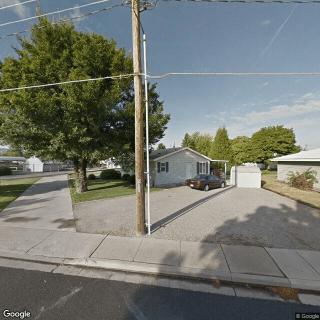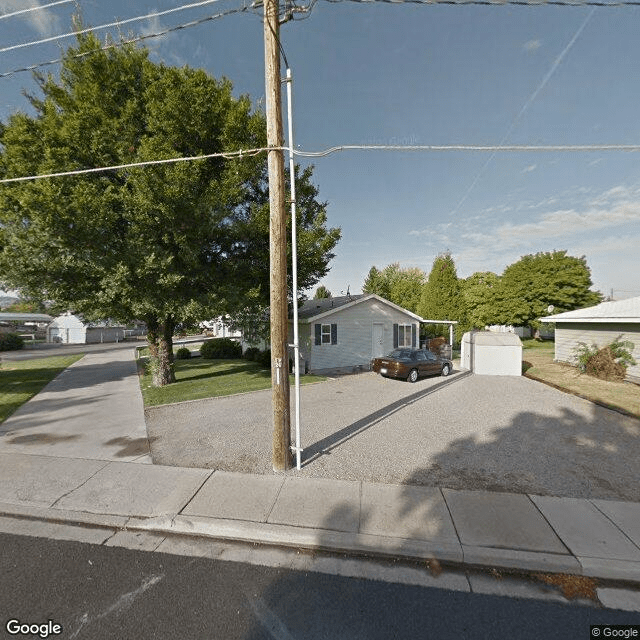
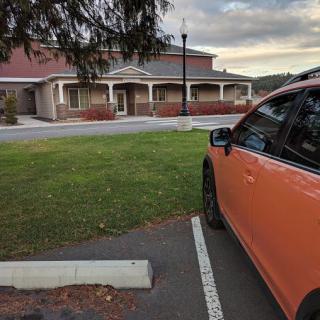
609 N. Bowdish Road, Spokane Valley, WA 99206
To contact a resident: (509) 922-0634
For more information about senior living options: (866) 208-4318
Able Adult Family Home Costs & Pricing
Able Adult Family Home offers competitive pricing for its private rooms, with a monthly cost of $4,000. This rate is notably lower than the average for Spokane County, which stands at approximately $4,111, and significantly more affordable compared to the broader state average of $4,772 in Washington. Such pricing positions Able Adult Family Home as an attractive option for those seeking quality care without straining their financial resources. The home's commitment to providing excellent services at this reasonable price reflects a thoughtful approach to supporting the needs of residents and their families in the community.
| Floor plans | Able Adult Family Home | Spokane County | Washington |
|---|---|---|---|
| Private | $4,000 | $4,111 | $4,774 |
Senior living communities with a similar price nearby
-
from +$245 / mo
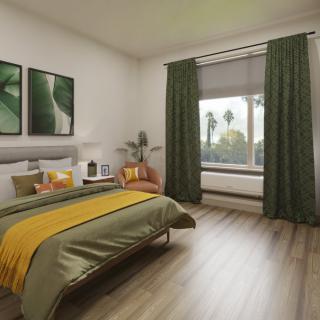
The Gallery at Spokane
$4,245 to $5,850 / month6.1 miles away -
from +$300 / mo
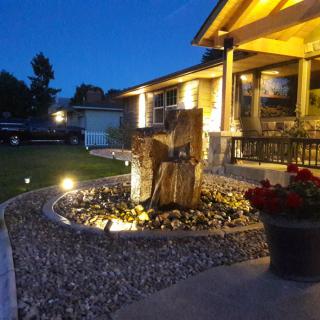
Valley Pines Retirement Home
$4,300 / month0.7 miles away -
from -$500 / mo
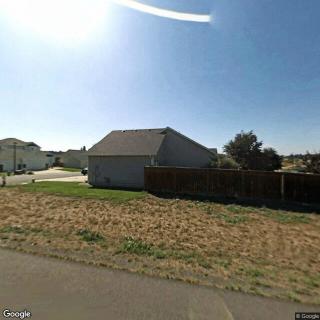
Mary Ann's Home Care
$3,500 to $4,000 / month10.0 miles away -
About the same
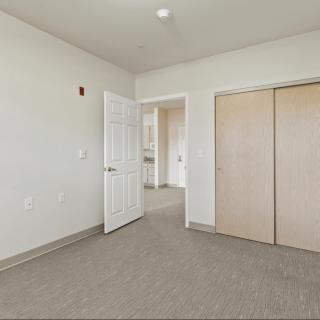
Legends Park Assisted Living Community
$4,025 to $5,950 / month20.7 miles away -
from -$400 / mo
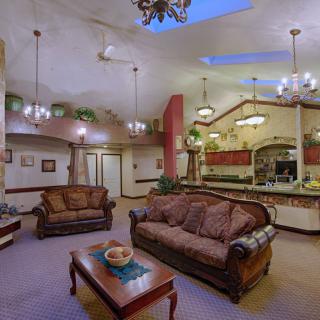
Courtyard At Coeur d'Alene
$3,600 / month23.0 miles away
Overall Review of Able Adult Family Home
Pros
 One reviewer thinks it is the nicest place of all the ones they looked at and is glad their aunt can live there.
- The reviewer had a long chat with the director and believes the dad would like the environment and the clients.
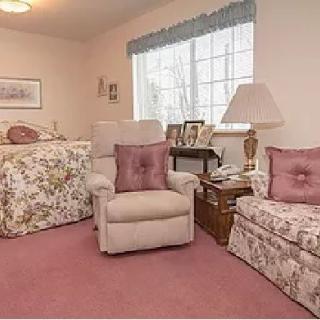
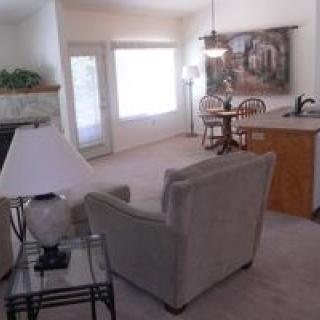
- The facility is clean and has all the furniture needed, including a bathroom and a bath wheelchair.
- The cheery home seems to offer good food.
Cons
 They worry the facility will only take mom until her money runs out.
- They fear they’ll have to move her once she’s on Medicaid.
Review
Able Adult Family Home in Spokane Valley is best for seniors who want a compact, homelike setting where cleanliness, comfortable furnishings, and a cheerful daily rhythm are prioritized, and who can pay privately or with arrangements that don’t rely on long-term Medicaid. The reviews consistently crown it as among the nicest options looked at, delivering a warm, cheery atmosphere that feels like home rather than a clinical facility. The environment reads as small-scale and personable, with staff and leadership accessible in a way larger campuses seldom match. Families can expect attention to daily details, furnished rooms, bathrooms designed for wheelchair access, and a kitchen that supports reasonable meals, within a non-institutional frame. This is not a setting designed for rapid transitions or high-intensity medical needs.
Those with heavy reliance on Medicaid, or those needing sustained skilled nursing or dementia-specific programming, may want to consider alternatives. The most notable limitation is a funding-related concern: one review notes the community will accept a resident only until private funds run out, implying Medicaid coverage may not sustain long-term placement in the same setting. For residents who require constant on-site nursing, complex medical oversight, or memory-care services, larger licensed facilities with dedicated nursing wings are likely a better fit. In short, this home excels for private-pay seniors who seek a small, social, home-like environment rather than a campus offering extensive clinical care.
Key strengths offset the main drawback in meaningful ways. The pros, perceived as among the nicest options considered, a clean and fully furnished environment with accessible bathrooms, and a cheery, home-like kitchen and dining vibe, translate into lower stress for families worried about comfort and safety. The presence of a director who engages in thorough discussions with families signals responsive leadership and a willingness to tailor the setting to individual needs. Those advantages help counterbalance the absence of hospital-level medical services, particularly for residents who prioritize daily living quality and social engagement over advanced clinical care.
Residents appear to integrate well with other clients, and the home presentation supports ongoing social interaction, a frequent driver of satisfaction in small homes. The practical setup, rooms that come ready with furniture, accessible bathrooms, and wheelchair-friendly features, reduces the burden of moving in and setup, a real plus for families juggling multiple commitments. Yet details about staff-to-resident ratios, continuous clinical oversight, and structured activity programs are not explicit in the notes, so prospective buyers should seek specifics during tours. This is not a setting that promises acute medical support; it is a comfortable, social alternative that relies on a hands-on operator to maintain a cohesive, family-like atmosphere.
The review pool is small, and the consensus is strongly positive, which creates a clear signal but warrants careful follow-up. Six reviews converge on a high rating and a consistent sense of warmth, yet the limited sample size means potential gaps in information about cost, meal variety, or long-term contingency planning. For families, the prudent move is to verify current policies on admission criteria, bed holds, and what happens if eligibility changes. Do not rely on impressions alone; confirm affordability and policy details before making a commitment.
For families weighing options in the Spokane Valley area, Able Adult Family Home presents a compelling case for those prioritizing a warm, clean, home-like environment with attentive leadership and straightforward furnishings. It is not the best fit for those requiring ongoing skilled medical care or guaranteed Medicaid stability over the long term. The practical path involves a decision framework: arrange a visit, demand explicit answers about Medicaid eligibility and transitions, meals, activities, and staffing levels, and compare with nearby facilities offering broader clinical services. When the budget supports private pay, this community stands out as a high-quality, low-stimulation option that keeps seniors engaged, comfortable, and well cared for in a small, neighborly setting.
 Board and Care Home
 Activities on-site
 Bath tubs
 Beautician on-site
 Cable or satellite TV
 Devotional services on-site
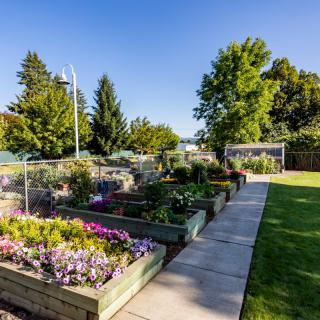
 Indoor common areas
 Outdoor common areas
 Private
 Wheelchair accessible showers
 Wi-Fi/high-speed internet available
 Spokane International (14 miles away)
 Diabetic care
 High acuity care
 Incontinence care
 Medication management
 Meals provided
 Birthday parties
 Live dance or theater performances
 Live musical performances
 A Detailed Examination of Nursing Home Costs Across the U.S.
 Exploring Nonmedical Home Care: Understanding Services, Costs, and Financial Approaches
 Engaging Brain Games and Innovative Apps to Keep Senior Minds Active