
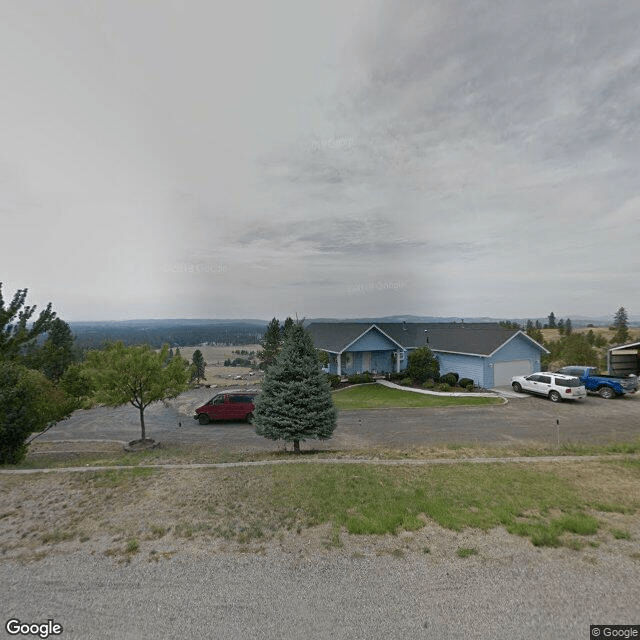
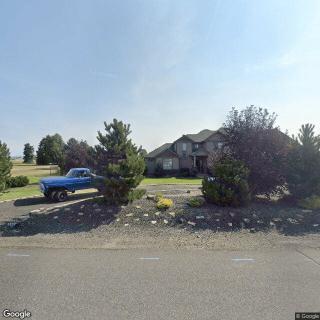
17025 N. Greenbluff Rd, Colbert, WA 99005
To contact a resident: (509) 238-4337
For more information about senior living options: (866) 208-4318
Greenbluff Terrace AFH Costs & Pricing
Greenbluff Terrace Adult Family Home (AFH) offers competitive pricing for its private room accommodations, with a monthly cost of $3,000. This rate is notably lower than the average in Spokane County, which stands at $4,111, and significantly less than the statewide average of $4,772 in Washington. By providing high-quality care at a more accessible price point, Greenbluff Terrace positions itself as an attractive option for families seeking supportive living arrangements for their loved ones while remaining cognizant of affordability.
| Floor plans | Greenbluff Terrace AFH | Spokane County | Washington |
|---|---|---|---|
| Private | $3,000 | $4,111 | $4,774 |
Senior living communities with a similar price nearby
-
About the same
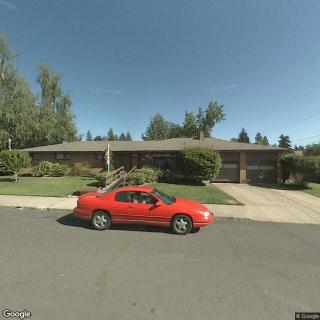
Beacon House
$3,000 / month9.6 miles away -
About the same
Wellspring Meadows Assisted Living
$3,000 / month24.1 miles away -
from -$516 / mo
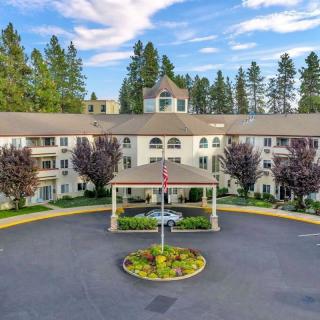
North Star
$2,484 to $4,482 / month24.5 miles away -
About the same
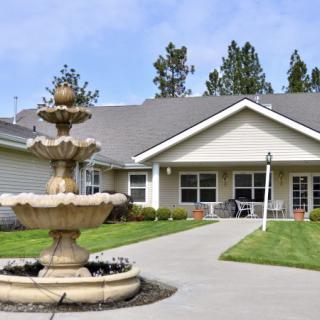
Windriver Place
$3,071 to $5,564 / month10.5 miles away -
from -$350 / mo
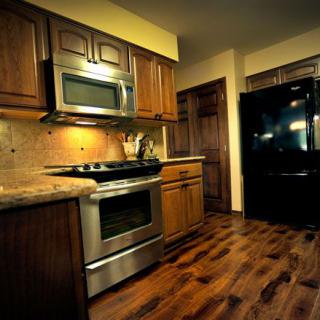
Riverview Terrace
$2,650 to $10,800 / month9.9 miles away
Overall Review of Greenbluff Terrace AFH
Pros
 The place is immaculate.
- The food is outstanding.
- The care is excellent.
- Debby the owner is super nice and accepting.
- Marcia the caregiver is very sweet and puts everyone before herself.
- The atmosphere is very homey.
- There are beautiful views.
- Activities are provided to the residents.
- Debbie and her family provide excellent care in a lovely location and a family-type setting.
- The meals are great.
- The staff are very loving.
- The care is all-around awesome.
- Being there has added years to her life and lifted her spirit.
- They would highly recommend this home to take care of a loved one.
Cons
 The home is not a good place for seniors with cognitive issues, incontinence, or mobility issues, as care falls short and staff are not trained to handle cognitive or dementia care.
- There is no overnight supervision, and a complicated button system often fails to alert a caretaker.
- The reviewer notes their father had to fumble in the dark to change his own soaked briefs because no one came to help.
- The owner would say she would take care of issues that arose but never followed through.
- There was no in-house doctor for a month due to Debbie's lack of following through on paperwork.
- The facility should only be recommended for residents who need minimal help and can do most tasks themselves.
- Debbie the owner is horrible.
- The reviewers warn not to let the beautiful views deceive them.
Review
Greenbluff Terrace AFH in Colbert, WA is best suited for seniors who want a warm, home-like setting with intimate, hands-on caregiving and strong daily companionship. It works well for residents who are largely independent or need only routine assistance with daily tasks, who prize home-cooked meals, meaningful activities, and a setting that feels like family. This is not the right choice for anyone with significant cognitive impairment, incontinence, or mobility limitations who requires around-the-clock supervision or on-site medical management. Families facing those higher care needs should look for alternatives that offer robust dementia care, full overnight staffing, and medical oversight.
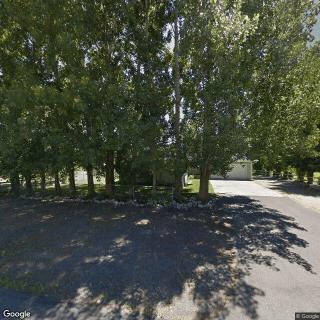
On the upside, the core experience at Greenbluff Terrace AFH is consistently described as pristine and welcoming. The facility is reported to be immaculate, with exceptional meals that feel like home cooking, and a setting that offers beautiful views and a genuinely homey atmosphere. The owner, Debby, is portrayed as deeply invested, with staff members like Marcia described as exceptionally caring and committed. Residents commonly receive attentive, personalized attention, and the togetherness of a family-type environment is repeatedly highlighted. For families prioritizing mood and engagement, the combination of caring staff and a lively activity program can translate into meaningful weeks and a sense of belonging.
However, serious caveats surface in the care domains that trouble families when immediate, practical needs arise. Multiple reviews flag gaps for residents who have cognitive issues or require help with incontinence or mobility. The facility is not described as equipped for dementia care, and overnight supervision is reportedly absent, with a complex alarm system that residents must navigate, systems that can fail to alert staff in time. Reports of neglect or delayed follow-through on essential tasks, such as personal grooming, medical paperwork, and timely doctor access, have appeared, including references to a lack of in-house medical oversight for extended periods. One family recounts a fear-driven incident that culminated in a fall, underscoring how quickly a lapse in supervision can become a safety concern. These issues are not theoretical: they are repeatedly echoed by reviewers who trusted the setting but encountered real risk when needs outpaced the home’s capabilities.
These strong positives and troubling gaps must be weighed against each other. For a resident who is mostly self-sufficient, values a nurturing, homey environment, and wants regular social activities with consistently good meals, the positives can meaningfully offset the risks. The warmth of Debby and her team, the beauty of the setting, and the sense of being cared for can significantly enhance day-to-day quality of life. Yet for anyone approaching cognitive decline, or who requires continuous, supervised care and timely medical intervention, the same positives do not fully offset the serious care gaps. The lack of overnight staff, uncertain responsiveness to escalating needs, and questions around medical oversight create a notable safety and reliability delta that cannot be ignored.
With a rating of 3.7 from nine reviews, the community presents a striking split: several families report outstanding, even transformative experiences, while a smaller but vocal subset cites serious shortcomings. This divergence signals a high-variance experience that depends heavily on individual staff performance and the specific needs of the resident. Potential entrants should approach with clear, stringent questions and visible assurances: exact staffing ratios by shift, the existence and rigor of overnight coverage, dementia-specific training, documented care plans for cognitive or mobility decline, the procedure for medical consultations, and a transparent system for incident reporting and follow-through. Prospective families should also request to speak with current residents or families privately and consider a trial period before committing long term.
If Greenbluff Terrace AFH remains under consideration, the prudent path is to treat it as a niche fit: a superb choice for a relatively independent senior who prize warmth, companionship, and daily consistency, and who can thrive with minimal specialized medical support. For any resident with cognitive issues, significant mobility challenges, or incontinence, it is essential to compare alternatives that offer robust 24/7 supervision, dementia-capable staffing, and reliable on-site medical access. In the end, Greenbluff Terrace AFH can be a wonderful home with the right resident and the right guardrails; families should insist on concrete assurances, a well-defined care plan, and a practical trial to confirm alignment with expectations before making a final commitment.
 Board and Care Home
 Activities off-site
 Bath tubs
 Beautician on-site
 Devotional services off-site
 Indoor common areas
 Outdoor common areas
 Private
 Private bathrooms
 Wheelchair accessible showers
 Spokane International (17 miles away)
 Diabetic care
 High acuity care
 Incontinence care
 Medication management
 Kosher


 Recognizing the Journey: Understanding and Navigating Anticipatory Grief
 Encouraging Participation in Adult Day Care: A Guide to Supporting a Hesitant Parent
 Comprehensive Exploration of Living Wills and Other Advance Directives