
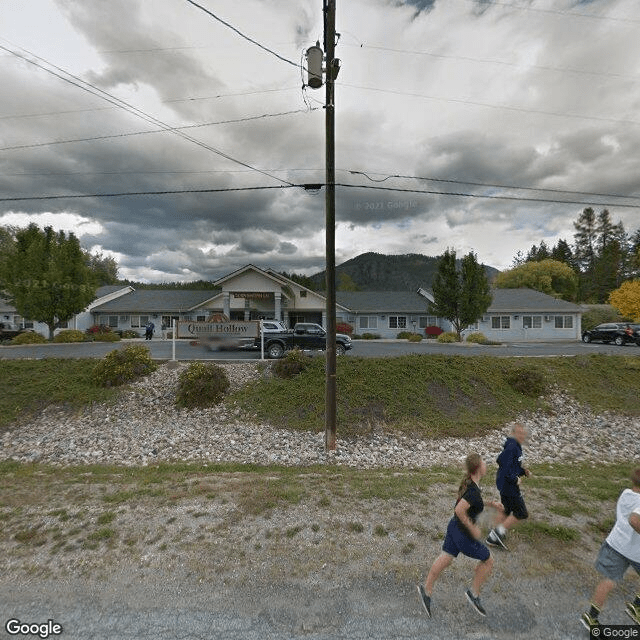
506 N. Ehorn Lane, Chewelah, WA 99109
To contact a resident: (509) 935-7800
For more information about senior living options: (866) 208-4318
Quail Hollow ALF Costs & Pricing
Quail Hollow Assisted Living Facility offers competitive pricing for its private rooms, with a monthly cost of $3,600. This is notably lower than the state average in Washington, which stands at $4,772 per month for similar accommodations. Compared to Stevens County's average of $4,008, Quail Hollow provides an appealing option for those seeking quality care without the higher price tag often found in the region. Residents can enjoy a supportive living environment that prioritizes comfort and well-being while benefiting from significant savings relative to nearby facilities.
| Floor plans | Quail Hollow ALF | Stevens County | Washington |
|---|---|---|---|
| Private | $3,600 | $4,008 | $4,774 |
Senior living communities with a similar price nearby
-
from +$590 / mo
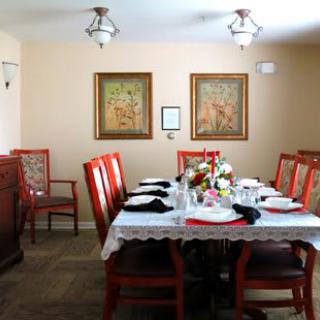
Parkview Assisted Living
$4,190 to $4,930 / month20.1 miles away
Overall Review of Quail Hollow ALF
Pros
 The reviewer is motivated by helping others avoid a negative experience.
- The reviewer values safety and due diligence when choosing a home.
- The reviewer aims to promote honesty and transparency in housing discussions.
- The reviewer believes sharing experiences can empower others to make informed decisions.
- The reviewer hopes their warning fosters greater awareness among potential renters.
Cons
 The reviewer warns others not to move into Quail Hollow.
- The reviewer wishes they could give zero stars to QH.
- In about 2.5 years of living there, they have heard and seen too much and paid too much out of pocket.
- Residents walk around with every body part showing, some soil themselves and leave wet marks on the couch and chairs; one should check before sitting.
- Some residents don’t even shower and smell horrid.
- The reviewer’s packages were stolen by other residents and staff wouldn’t help; they had to call the police, and this happened more than once.
- Shortly after moving in, the manager informed them that a level one sex offender lives at QH, with no warning until after move-in; the property is right across the street from a middle school/high school.
- Residents hassle/beg/plead/swap items with other residents or staff for money, cigarettes, food, etc.
Review
Quail Hollow ALF in Chewelah, WA is best considered for a senior who can tolerate significant gaps in safety, privacy, and daily management and who has strong external oversight to compensate for on-site weaknesses. The sole firsthand account paints a picture of a setting where basic standards of cleanliness, personal dignity, and resident safety are repeatedly called into question. In practical terms, this is not a place for someone who depends on consistent staff responsiveness, reliable personal care, and predictable routines to support independent living or gradual caregiving needs. The environment described demands vigilant family involvement and outside monitoring to prevent deterioration of quality of life.
Those evaluating options should explicitly consider alternatives if safety, dignity, and predictable care are nonnegotiable. The reviewer notes pervasive hygiene issues, residents exposed in public areas, and instances of unsanitary conditions that undermine comfort and privacy. If a family’s criteria include timely assistance, secure handling of personal belongings, and a respectful, well-supervised atmosphere, other communities will likely deliver far stronger confidence. The report also highlights a troubling lack of staff accountability when problems arise, suggesting that any facility with similar patterns should be scrutinized more closely than usual before a move is contemplated.
From the reviewers’ perspective, the main obstacles overwhelmingly overshadow any potential upside. The description emphasizes residents wandering in dirty conditions, with some not bathing and areas contaminated by urine or waste, conditions that erode dignity and raise health concerns. Theft of packages by other residents, accompanied by staff inaction, further damages trust in daily operations. The assertion that a Level One sex offender resides on the premises, with no advance warning, goes beyond a planning concern and touches on ongoing safety and risk management. The proximity to schools is cited as a note of public safety significance, underscoring that this is not a risk profile most families want to navigate.
In terms of how any possible advantages might offset the negatives, there are virtually none articulated. The only mention of cost comes through a sense that expenses are onerous, with out-of-pocket money described as being spent in ways that do not translate into meaningful improvements in care or environment. Without tangible benefits, such as consistently clean, well-kept spaces; reliable, proactive staffing; secure handling of resident belongings; and transparent communication, such cost burdens are not offset. The absence of demonstrated operational strengths means the balance sheet heavily leans toward caution and serious doubt about long-term satisfaction.
For families still weighing options, a disciplined evaluation plan is essential. Prioritize on-site tours at different times of day, speak with multiple residents and their families, and request detailed explanations of staff-to-resident ratios, turnover, and response times for care needs. Ask for documentation of security measures, incident reports, and how medication handling is supervised. Inquire about background checks, the presence of any local safety alerts, and how staff are trained to de-escalate conflicts or manage wandering residents. If any of these dimensions reveal inconsistencies, the choice should tilt toward communities with verifiable proof of clean living environments, strong supervision, and prompt, respectful support.
Bottom line: Quail Hollow ALF should be avoided by families prioritizing safety, cleanliness, and reliable care. It is not a fit for those with moderate or high care needs who expect compassionate, well-supervised daily life. For anyone who cannot tolerate the risks described, hygiene lapses, apparent resident-to-resident misconduct unaddressed by staff, and the troubling lack of proactive safety measures, exploring other assisted living options is not just prudent but essential. The decision to move forward with this community, given the reported realities, should be made only with substantial external oversight and a strong, trusted support system in place to intervene whenever concerns arise.
 Board and Care Home
 Activities off-site
 Air-conditioning
 Cable or satellite TV
 Devotional services off-site
 Ground floor units
 Indoor common areas
 Kitchenette
 Outdoor common areas
 Private
 Private bathrooms
 Wheelchair accessible showers
 Ambulatory care
 Diabetic care
 High acuity care
 Incontinence care
 Medication management
 Guest meals
 Art classes
 Bible study group
 Holiday parties
 Live musical performances
 Resident band or musicians
 Stretching classes
 Walking club

 8 Essential Assistive Devices for Older Adults
 Navigating the Financial Road to Nursing Home Care: In-Depth Guidance and Resources
 Supportive Employee Benefits That Help Caregivers Attain Better Work-Life Harmony