
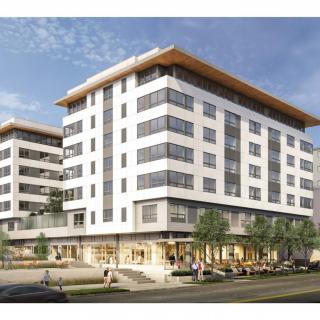
915 118th Avenue South East #110, Bellevue, WA 98005
For more information about senior living options: (866) 208-4318
Overall Review of Transforming Age
Pros
 Norse Home housed a beautiful community of people at affordable pricing and was a wonderful piece of the Phinney community.
- Transforming Age is a great local nonprofit that primarily operates continuing care retirement communities.
- The level of care provided to clients is apparent in Transforming Age’s facilities and reflected in their values of integrity, grace, respect, innovation, and partnership.
- The staff at Transforming Age demonstrated dedication and alignment with these values.
Cons
 Transforming Age's business practices are described as unethical.
 - It is alleged that Transforming Age moved residents in two months before announcing the closure, which is deemed unethical.
- The review conveys a sense of shame toward Transforming Age for its actions.
- They closed two Medicaid-accepting memory care homes and converted them to private pay.
- The mission statement is criticized as prioritizing capital investments, robotic clothing, and expansion over providing housing and care.
Review
Transforming Age Bellevue is best suited for families seeking a values-driven nonprofit with a real focus on continuing care and a mature community footprint. The model resonates with seniors who want a structured path from independent living through memory care under one umbrella, supported by a governance framework that prioritizes integrity, grace, respect, innovation, and partnership. In practice, that translates to well-kept facilities, attentive staff, and a culture that emphasizes relationship-building with residents and families. For families sensitive to mission alignment and a care-forward approach, Transforming Age offers a sense of stability. Those who rely on Medicaid-supported memory care or require aggressive affordability control may want to consider alternatives.
The strongest positives lie in the observable level of care and the quality of the environment. Reviewers repeatedly reference well-maintained facilities and a care ecosystem that reflects the nonprofit’s stated values. Staff across levels are described as dedicated, with administrators and caregivers seen as genuinely engaged in residents’ well-being. That kind of engagement matters for families navigating memory care and higher-acuity needs, where consistency, clear communication, and a sense of trust can make a meaningful difference in daily life and overall safety.
Yet a core concern shadows these strengths: shifts in how memory care is funded and delivered. The community reportedly closed two small memory care homes that accepted Medicaid and converted them to private-pay models. An industry insider views the move as a misalignment with the mission and questions whether capital investments, which include expansion and even development of robotic components, are diverting attention away from housing and direct care for residents who rely on government-supported pricing. The tension between care access and strategic financial decisions creates real uncertainty for families who depend on Medicaid-funded care.
These dynamics complicate how the positives balance against the negatives. On one hand, nonprofit status and a care-forward culture can sustain solid programming, stable staffing, and ongoing facility improvements. On the other hand, the withdrawal of Medicaid memory care beds and the shift toward private pay raise legitimate concerns about long-term affordability and continuity for residents who rely on government coverage. In practical terms, families must weigh the reassurance of responsive staff and a strong care ethos against the risk of reduced access to affordable memory care and potential relocations should needs change or pricing structures tighten.
Who should seriously consider alternatives? Families for whom Medicaid memory care is a non-negotiable requirement should examine options with stable Medicaid access and transparent, predictable pricing. If maintaining affordable access to memory care is essential, the possible erosion of Medicaid capacity at this community may tilt the balance toward other providers with proven, ongoing Medicaid pathways. Even for those drawn to the nonprofit mission and high-quality care, the strategic prioritization of capital investments and expansion may feel misaligned with immediate resident needs, suggesting that a careful comparison with other local options is prudent.
For prospective residents and families taking a measured, proactive approach, the next step is concrete: demand clarity around Medicaid beds and pricing, ask for a current and future capacity plan, and request a transparent outline of any capital projects and their impact on care delivery. Schedule candid conversations with leadership and frontline staff to gauge day-to-day responsiveness, staffing stability, and how memory care is funded and staffed. Compare total costs across independent living, assisted living, and memory care, including how transitions between levels are handled and what guarantees exist for continuity of service. If the response is clear, stable, and aligned with resident-centered care, Transforming Age Bellevue stands as a solid, principled choice; if not, the field offers other communities that emphasize predictable access and financing alongside sustained quality care.
 22 resident community capacity
 Assisted Living
 Continuing Care Retirement Community (CCRC)
 Independent Living
 Memory Care
 Respite Care
 Beauty salon
 Cable or satellite TV
 Fully furnished
 Garden
 Housekeeping services
 Kitchenette
 Move-in coordination
 Outdoor space
 Private bathrooms
 Seattle-Tacoma International (12 miles away)
 Community operated transportation
 24-hour call system
 Activities of daily living assistance
 Assistance with bathing
 Assistance with dressing
 Assistance with transfers
 Diabetes diet
 Meal preparation and service
 Medication management
 Special dietary restrictions
 Concierge services







 Understanding Dementia Behaviors: Practical Insights and Strategies for Caregivers
 When Dementia Sparks Anger and Aggression: Understanding the Connection and Ways to Cope
 Dementia Behaviors: In-Depth Understanding and Effective Coping Strategies