
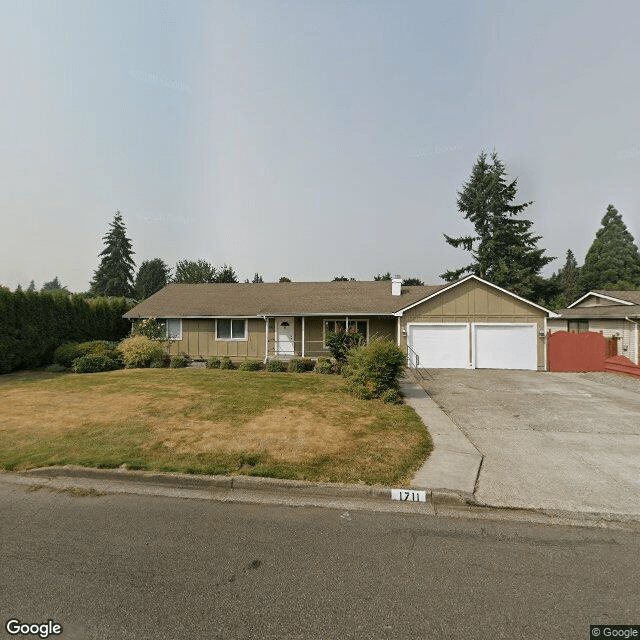
1711 4th St NE, Auburn, WA 98002
To contact a resident: (253) 833-2513
For more information about senior living options: (866) 208-4318
Dorothy's Angel Haven II Costs & Pricing
Dorothy's Angel Haven II positions itself at the higher end of the cost spectrum for assisted living in both King County and the broader state of Washington. With a monthly fee of $5,500 for both private and semi-private rooms, it exceeds the average costs found in King County, where private rooms average around $5,034 and semi-private rooms are approximately $4,430. Comparatively, statewide averages reflect similar trends, with private room rates at around $4,772 and semi-private options at $4,267. This pricing likely reflects Dorothy's commitment to delivering high-quality care and personalized services that meet the unique needs of its residents.
| Floor plans | Dorothy's Angel Haven II | King County | Washington |
|---|---|---|---|
| Semi-Private | $5,500 | $4,430 | $4,272 |
| Private | $5,500 | $5,034 | $4,774 |
Senior living communities with a similar price nearby
-
from +$900 / mo

The Park at Belle Harbour
$6,400 to $15,500 / month22.0 miles away -
About the same

Twin Lake Adult Family Home
$5,500 to $6,500 / month7.8 miles away -
from +$500 / mo

Valley Senior Care Center
$6,000 to $7,000 / month12.9 miles away -
from +$500 / mo

Blue Horizon Adult Family Home
$6,000 to $7,000 / month10.1 miles away -
from +$1000 / mo

Silver Creek Adult Family Home
$6,500 to $7,000 / month10.2 miles away
Overall Review of Dorothy's Angel Haven II
Pros
 Dorothy's homes are warm, and a place where any care staff would long to be for the right training and discipline in homecare.
- The clients are well taken care of; they are the primary focus for the entire care staff.
- Dorothy runs a great series of homes; well organized and caregivers treat residents like members of their own family.
- A wonderful family home that cares deeply for their residents like their own family members!
Review
Dorothy's Angel Haven II in Auburn, WA is best suited for families seeking a warm, home-like setting where residents are treated as part of a cared-for extended family and the care team operates with clear training and disciplined homecare practices. The homes feel intimate and personal, with caregivers who appear committed to making residents feel secure and valued. The residents are consistently described as the primary focus of the entire care team, and the operation is presented as well organized across multiple homes. This environment works particularly well for seniors who prioritize everyday comfort, predictable routines, and genuine warmth over larger, more institutional settings.
Those who may want to consider alternatives are typically the ones pursuing higher-acuity medical support or more formal clinical programming on-site. If a family needs robust on-site nursing, regular rehabilitation services, or a broader array of clinical resources, a larger or more medically centered community could be a better fit. Likewise, families seeking expansive amenities, extensive memory-care programming, or a campus with many specialized services might prefer facilities that emphasize scale and structured medical oversight over the intimate, home-based approach described here.
The strongest positives center on the emotional and relational quality of care. The warmth of the homes, the impression that staff treat residents as family, and the emphasis on staff training and disciplined caregiving combine to create a sense of security and belonging. The sense that Dorothy herself leads a well-run set of homes reinforces perceptions of consistency and accountability, while the perception of caregivers as devoted, family-like figures is repeatedly highlighted. In practical terms, this means residents are more likely to experience attentive supervision, timely responses to needs, and meaningful social engagement within a familiar routine.
These advantages offset, to a meaningful degree, the potential tradeoffs inherent in a smaller, home-centered operation. The most visible tradeoff, less on-site medical infrastructure and fewer formalized clinical programs, appears mitigated by a culture of responsiveness, clear care-planning, and strong personal connections between residents and caregivers. When care feels like a trusted, daily interaction among family members, tensions around unfamiliar faces or impersonal processes often recede. Families often report confidence in staff reliability and in the alignment between daily care and residents’ preferences, which can be the decisive factor for long-term placement.
To evaluate Dorothy's Angel Haven II effectively, prospective residents and families should ask pointed questions about staffing levels, the scope of on-site medical services, and how care plans are developed and updated. Clarifying who handles medical emergencies, how often clinicians visit, and what supports exist for transitions to hospital or hospice settings can reveal critical gaps or strengths. It is also prudent to explore day-to-day life details, meals, activities, transportation options, and opportunities for family involvement, to ensure the environment aligns with the resident’s lifestyles, interests, and independence goals. While the reviews emphasize warmth and family-centric care, confirming these practical aspects helps ensure a seamless fit.
In summary, Dorothy's Angel Haven II stands out as a highly appealing option for families prioritizing a homey, deeply resident-focused caregiving model with cohesive, well-trained staff. It earns strong consideration for seniors who value personal attention, a family-like culture, and a well-organized operation that centers the resident experience. For those whose priorities include intensive clinical services, broader amenities, or larger-scale medical resources, exploring alternatives remains wise. When the aim is to preserve familiarity, dignity, and daily comfort within a tightly knit community, this Auburn offering earns serious consideration and merits a serious visit.
 Board and Care Home
 Activities on-site
 Beautician on-site
 Indoor common areas
 Outdoor common areas
 Private
 Private bathrooms
 Respite or short term stays offered
 Wheelchair accessible showers
 Seattle-Tacoma International (11 miles away)
 Diabetic care
 High acuity care
 Incontinence care
 Medication management
 Meals provided




 Comprehensive Approaches for Arthritis: A Detailed Guide to Symptoms, Causes, and Care
 Comprehensive Insights and Practical Strategies to Help Older Adults Avoid Falls
 6 Crucial Ways an Elder Law Attorney Assists Families