

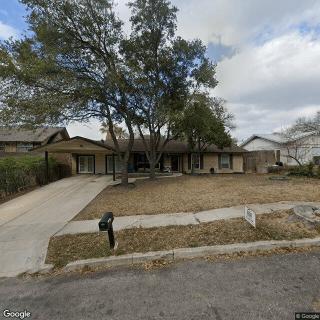
10218 Desert Sand Drive, San Antonio, TX 78216
For more information about senior living options: (866) 208-4318
South Texas Assisted Living Costs & Pricing
South Texas Assisted Living offers competitive pricing in comparison to both Bexar County and the broader state of Texas, making it an appealing option for those seeking assisted living services. For instance, a one-bedroom unit at South Texas is priced at $1,600 per month, significantly lower than the county average of $3,506 and the state average of $3,761. Similarly, their semi-private rooms are available at $1,800 per month, which again undercuts the costs found in Bexar County ($3,488) and throughout Texas ($3,680). Even for two-bedroom accommodations at South Texas, priced at $2,400 per month, the costs remain favorable when juxtaposed with regional averages of $3,962 in Bexar County and $4,215 statewide. This pricing structure not only highlights South Texas Assisted Living as a cost-effective choice but also reinforces its commitment to providing accessible care without compromising quality.
| Floor plans | South Texas Assisted Living | Bexar County | Texas |
|---|---|---|---|
| 1 Bedroom | $1,600 | $3,506 | $3,761 |
| Semi-Private | $1,800 | $3,488 | $3,680 |
| 2 Bedrooms | $2,400 | $3,962 | $4,215 |
Overall Review of South Texas Assisted Living
Cons
 The resident felt pressured into taking unnecessary medications and faced threats of eviction for not complying.
- The payee was unresponsive, causing disability benefits to cover food and an apartment that the resident couldn’t really use, leaving them without a proper room.
- Staff allegedly invaded the resident’s privacy by barging in during a shower, which was triggering for a sexual assault survivor.
- The reviewer claimed there was no punishment for alleged malpractice by staff.
- A staff member was described as very unprofessional and money-driven, with a lack of care.
- Other reviewers described staff as rude and unprofessional, with phone calls never returned and concerns not addressed.
Review
South Texas Assisted Living in San Antonio is best suited for seniors who are prepared to live with close family oversight and are pursuing a highly affordable option among assisted living choices. The community tends to work best for residents who can advocate for themselves or with family support and who can tolerate variability in day-to-day staff responsiveness. In short, it functions as a budget-conscious placement where ongoing, proactive monitoring is essential to safeguard quality of care.
Those who should consider alternatives are families prioritizing consistent professional boundaries, transparent medication management, and respectful, privacy-conscious staff interactions. The strongest cautions voiced in the available experiences center on medication practices, privacy, and communication. If reliability, timely follow-through from caregivers, and a culture of accountability are non-negotiables, this community deserves serious comparison with other options that demonstrate stronger track records in these areas.
Pros in this setting are difficult to pin down from the feedback provided, but the existence of a couple of high-star experiences suggests that not every resident encounters the same level of difficulty. However, those positive notes are overshadowed by a pattern of concern that points to systemic gaps in governance, oversight, and everyday client interaction. The juxtaposition implies that governance and culture at this community may vary enough to create meaningful risk for residents who depend on consistent, respectful care and clear boundaries.
The core issues described by families and residents center on medication management and the handling of personal information. One account alleges prolonged exposure to unnecessary medications, with financial and administrative chaos that left a resident without secure housing or an appropriate care plan, while privacy invasion during routine routines had an acute, triggering impact. Multiple accounts highlight staff unprofessionalism and a lack of accountability when concerns arise. The overlapping themes point to a pattern of disengagement and inconsistent safeguarding of resident rights, which cannot be dismissed as isolated incidents.
Responsiveness and communication emerge as another recurring fault line. Several reviewers report unanswered calls, missed updates, and a general sense that concerns are not elevated promptly or treated with seriousness. For families weighing options, this dynamic matters as much as direct care tasks. If the administrative backbone struggles to respond, even well-trained staff can be hampered from delivering reliable, person-centered care. In practice, this translates to a higher likelihood of unmet needs, delayed problem resolution, and increased caregiver stress across the spectrum of daily life in the community.
For families evaluating this facility, a practical playbook is essential. Request a candid tour focused on how medications are prescribed, reviewed, and reconciled, and ask to see the latest medication management policy, incident logs, and resident rights documentation. Interview the administrator and front-line supervisors about accountability mechanisms and the steps taken when concerns arise. Speak with current residents and family members outside the facility to gauge consistency of care and who is responsible for follow-up. Finally, compare licensing inspections, complaint histories, and references from other families to form a decision aligned with the values of safety, dignity, and reliable communication.
In the final assessment, South Texas Assisted Living presents a clear trade-off: potential affordability versus notable risks around medication practices, privacy protections, and staff responsiveness. This community is not recommended for anyone who cannot accept active family participation or who requires steady, professional oversight to prevent lapses in care. If such oversight is achievable and cost constraints are the primary driver, this option may work under vigilant family management. Otherwise, alternatives with documented consistency in medication safety, private, respectful care, and prompt, transparent communication should be the default choice for families prioritizing long-term well-being and peace of mind.
 42 resident community capacity
 Assisted Living
 Independent Living
 Respite Care
 Cats allowed
 Dogs allowed
 Activities off-site
 Bath tubs
 Beauty salon
 Cable or satellite TV
 Devotional services off-site
 Dining room
 Fully furnished
 Garden
 Housekeeping services
 Indoor common areas
 Kitchenette
 Move-in coordination
 Outdoor common areas
 Restaurant-style dining
 Small library
 Swimming pool / hot tub
 Telephone
 Wheelchair accessible showers
 Wi-Fi/high-speed internet available
 San Antonio International (1 miles away)
 24-hour call system
 Ambulatory care
 Assistance with bathing
 Assistance with dressing
 Assistance with transfers
 Diabetes diet
 Diabetic care
 Incontinence care
 Medication management
 Mental wellness program
 Special dietary restrictions
 Excellent access to dining, parks, healthcare, and transportation nearby.





 An Extensive Exploration of the VA Aid and Attendance Benefit
 Senior Transition Services: Understanding Their Role, Cost, and Importance
 Exploring the Path to Senior Living: A Comprehensive Look at Independent Living and Assisted Living